
How to Improve Your Memory (The Science-Backed Way)

You meet someone at a party. They tell you their name. After two minutes, you don't remember it at all. You stumbled upon an interesting piece of information yesterday. Today, you can't recall it. You study for hours but the knowledge doesn't stick. You think you have a bad memory.
You don't. You just have a normal memory which has not been trained.
This is what no one tells you: your memory is not fixed. You were not born with a certain capacity and forced to live with it all your life. Memory is similar to a muscle. It is changeable, trainable, and can get better substantially if the right methods are used.
The science is clear. Through memory training, the brain can enhance memory function. It can regain lost function after injury. It can become more flexible and efficient in learning new things. The limit is not your genes but your methods.
Why Most People Struggle with Memory
Most of the time people use willpower to remember something, repeating it over and over to memorize it. They overcrowd their brain with information for an exam. They see a text once and believe it will be stored in their mind. They are under the impression that the more they put their memory to work, the more they will succeed in memorizing.
Actually, it's not. The most important thing is the method.
The difference between having an "amazing memory" and a "bad memory" is not found in intelligence or genetics. Most of the time it is one individual who knows the memory techniques that the other one doesn't. They practice spaced repetition. They build mental images that are very clear. They relate new information with things they already know. They take tests instead of just reading the material again.
These are not secrets. These are facts. And when you grasp them, your memory changes.
Why You Forget (And When)
In order to enhance your memory, it is necessary first to know why you forget in the first place.
Hermann Ebbinghaus was a psychologist who investigated this question in detail in the 1880s. In a very unusual way, he memorized nonsensical syllables and later checked how much he still remembered.
The result of his research was the so-called "Forgetting Curve." It functions this way:
- If you do not refresh the information, half of it will be forgotten in the first hour
- After one day, the amount of forgotten information is around 80%
- After one month, if you totally abandon the information, retention is only about 5%
That sounds pretty bad. But the saving part is: every time you bring the information back to your mind before you have forgotten it, the curve changes and becomes less steep. Your forgetting interval is longer the second time. And even longer the third time.
The Solution: Spaced Repetition
This is the concept of memory improvement in total. It is not about putting more effort into studying. The essential thing is to retrieve the information from your memory bank right before it slips away.
Most people either stuff their head with information just before the exam (thus, they forget very quickly) or they do their revision at irregular times (which is not efficient). The right approach is known as spaced repetition: reviewing at longer intervals from one another. The first review happens soon after learning, then a few days later, then a week, then two weeks.
It is not a wonder. It is neuroscience. Every time one recalls something, it creates stronger connections in the brain. The information is then transferred from short-term memory to long-term memory. It becomes an automatic process, not a conscious one.
Memory Palace or Method of Loci (Still Works After 2,000 Years)
Rome's ancient orators were not in possession of note cards. They were not able to scribble down their speeches and have them at hand. As a result, a technique called the Memory Palace or Method of Loci was developed by them.
How It Works
The premise of the method is simple: you visualize a place that is familiar to you (your house, a path you take routinely, your childhood home). The information you desire to keep in your memory is, in your mind, placed in different parts of that place. When you want to retrieve the information, you walk through the place in your mind and "collect" the information you had put there.
This may sound strange. But it is amazingly powerful because it leverages something the brain naturally excels at: spatial memory and visual imagination.
Example: Memorizing a Grocery List
Imagine you are supposed to memorize the following list of groceries: milk, eggs, bread, chicken, tomatoes. In your mind you put:
- Milk that is all over your front door with big splashes
- Eggs that are broken on your doormat
- A loaf of bread that is lying on your kitchen counter
- A whole chicken that is sitting in your chair
- Tomatoes that are rolling across your floor
This is not at all a subtle image. The more awkward and vivid the image is, the better it works. The brain remembers visual, unusual, emotional information much more easily than abstract facts.
Chunking: How to Remember More by Remembering Less
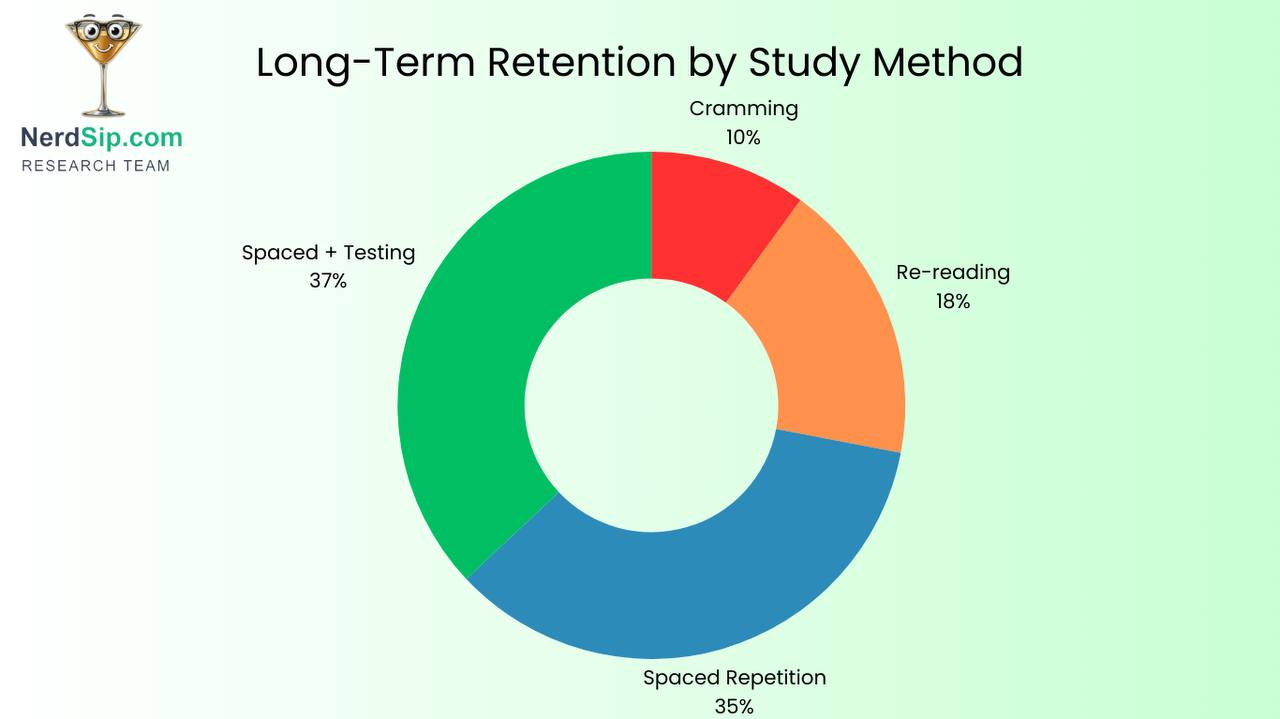
Your working memory is only capable of holding about 7 pieces of information at a time. It is limited. You can't go against that limitation, but you can find a way around it.
Chunking is the method of dividing information into smaller units of understanding so that it occupies less space in the mind.
How Chunking Works
If I present to you the number sequence: 1492 1776 1969, you may opt to remember 9 individual digits. That's quite difficult. However, when these are grouped as three dates (Columbus, America, Moon landing), you can remember them easily because they're chunks that make sense to you.
Similarly, phone numbers are the same. 5551234567 is a sequence that is difficult to remember. However, 555-123-4567 is easier as it is chunked into a pattern that your brain is already familiar with.
This applies to everything. When you are learning something new, try to find ways of grouping the information into fewer units that are still meaningful. Don't attempt to memorize 20 individual facts. Instead, find the 4-5 main ideas under which those facts consolidate.
The Testing Effect: Why Self-Testing Beats Re-Reading
Here's something that surprises students: the best way to improve your memory is not to study harder. It's to test yourself more.
This is known as the testing effect and it is probably the strongest learning science discovery. When you test yourself with given information, you recall it much better than if you only re-read the material, even if the number of exposures is the same.
Why Testing Works
Because retrieval is more difficult than recognition. When you re-read, you are only recognizing the information. Your brain is aware that it has already seen it. However, when you test yourself, you are forced to retrieve the information from memory. This retrieval process is what makes the memory stronger.
Additionally, testing uncovers the knowledge you truly have as opposed to the knowledge you only think you have. You stumble upon the gaps in your knowledge. You realize what needs to be worked on more.
The Micro-Learning Memory Advantage
Here's something interesting: most memory improvement doesn't come from long study sessions. It comes from consistent, spaced practice.
Let's say you have to memorize 100 facts. Doing that in one night might help you pass the test. However, most of it you will forget by next week. But if you learned 5 facts a day for 20 days, and you tested yourself on them at intervals, you would retain 80% of that information long-term.
Why Micro-Learning Works
This is where micro-learning becomes a memory superpower. Instead of blocking off two hours to study, you do 5-minute focused sessions daily. You study a small piece. You practice retrieving it. You move on.
The following day you go over what you learned yesterday (spaced repetition). Then you learn something new. This rhythm—learn, review, test, repeat—is the science of memory.
Platforms like NerdSip are designed to follow this very structure. You do a 5-minute lesson. You are tested on it immediately (testing effect). You come back tomorrow and the information reappears to review (spaced repetition). Literally, this is the usage of every science-backed technique simultaneously.
The Practical System: Build Your Memory in 30 Days
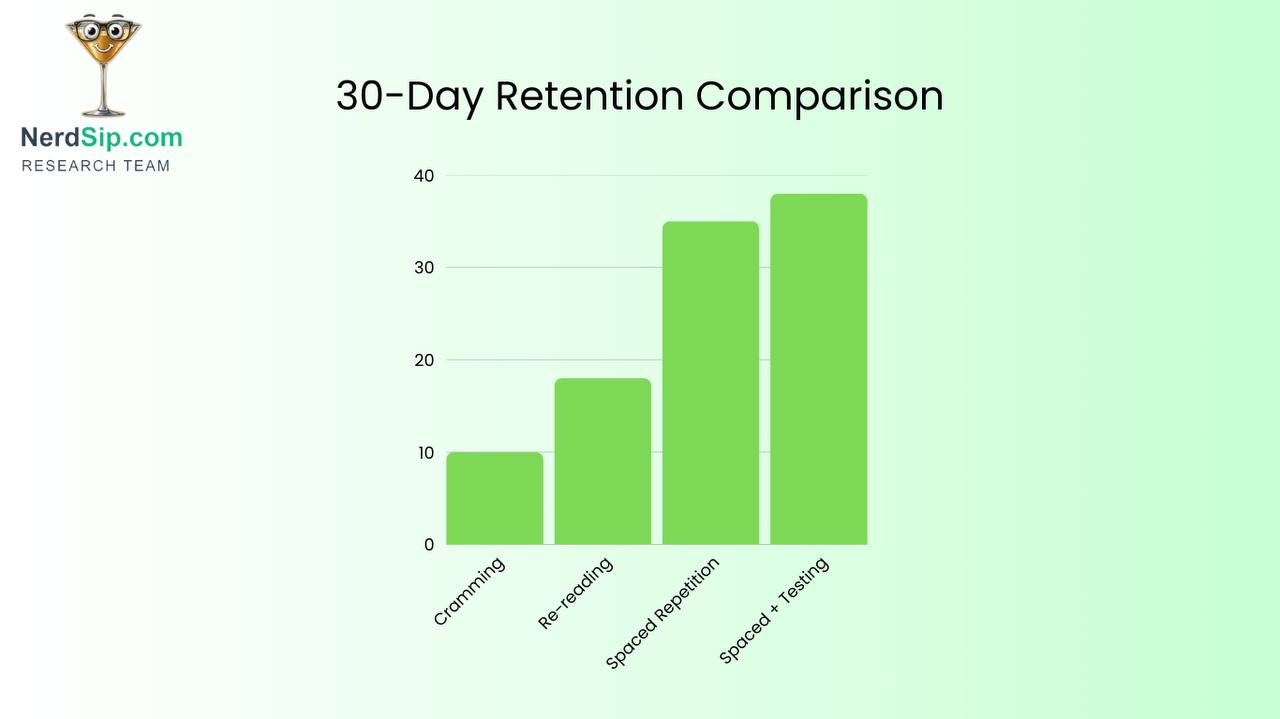
If you really want to enhance your memory, this is the system that actually works.
Week 1: Learn the Techniques
Don't overwhelm yourself with memory work. Just learn and apply one technique this week. Experiment with Memory Palace. Pick a route that is familiar to you and, in your mind, attach information to it.
Week 2: Add Spaced Repetition
Choose something you want to remember. Learn it. Then commit to reviewing it regularly. Tomorrow, three days later, a week later.
Week 3: Add Testing
Immediately after learning, start testing yourself. Don't wait. Do a practice test. Teach someone what you have learned. Recall it from memory.
Week 4: Make It Automatic
At this point, you have practiced using these techniques with real material. You have noticed your retention getting better. Now, you are not just doing this as an experiment. You are actually forming habits that will stay with you.
The Real Payoff
When you enhance your memory, it is not only facts that you remember—you are transforming into a more capable person.
Complex topics become understandable because you have retained the basic concepts. Your conversations become richer as you recall what others have told you. You can continue learning from where you left off rather than always going back to the beginning.
You actually become as smart as you think you are. You have more knowledge at your disposal. More background. More ability to link ideas.
Give yourself the gift of knowledge.
Join thousands of learners who are mastering their memory with bite-sized nuggets.
Join the Waitlist →