Imagine yourself standing at a networking event, a dinner party, or in the office kitchen. Someone comes to you. You greet each other. Then silence. Awkward silence. You are looking for words to say. They are looking for words to say. Neither of you wins.
This is the situation for millions of people. Small talk seems to be a source of pain, as well as terror and your brain just goes blank. You overthink every word you say. At the end of the day, you stand there looking uncomfortable and you haven't said a word, whereas everyone else seems to effortlessly move from one conversation to another.
What you don't realize is this: small talk is not about being charismatic by nature. It's not some inborn ability that you either have or you don't. It's a skill. And just like any other skill, it can be learned, practiced, and perfected.
The people who handle small talk well are not brilliant. They are simply following a pattern. Once you get the pattern, small talk becomes a walk in the park. You will be able to go into rooms and actually be happy to talk with people you don't know. You will be able to keep conversations going. People will remember you. Opportunities will come your way.
This guide shows you exactly how.
Why Small Talk Actually Matters
Most people regard small talk as a mere superficial and boring exchange of words that doesn't add any value to their lives. They think that real conversations are only about deep and meaningful topics. Small talk is just something to keep the conversation going.
That is exactly the opposite.
Small talk is what connects you to other people in your life. Every situation that you need other people for and that is in your life starts with small talk. Your job interview? You start with small talk. Your business deal? You have small talk before the negotiation. Your relationship? Small talk on the first date. Your promotion? Small talk with your boss in the elevator.
Small talk is the entry point to everything else.
The main reason that people fail most of the time is not because they cannot have deep conversations. It is that they never get to that point. They fumble through small talk, get awkward and both people decide to leave as quickly as possible. The connection doesn't get to be formed. The opportunity doesn't come to be.
People who are good at small talk are not necessarily more socially active or have better jobs than others because they are more intelligent. They have them because they have been able to create the necessary conditions for relationships to develop. They made the other person feel comfortable. They found common ground. They left a positive impression.
That is the whole game.
The Biggest Small Talk Mistake You're Making
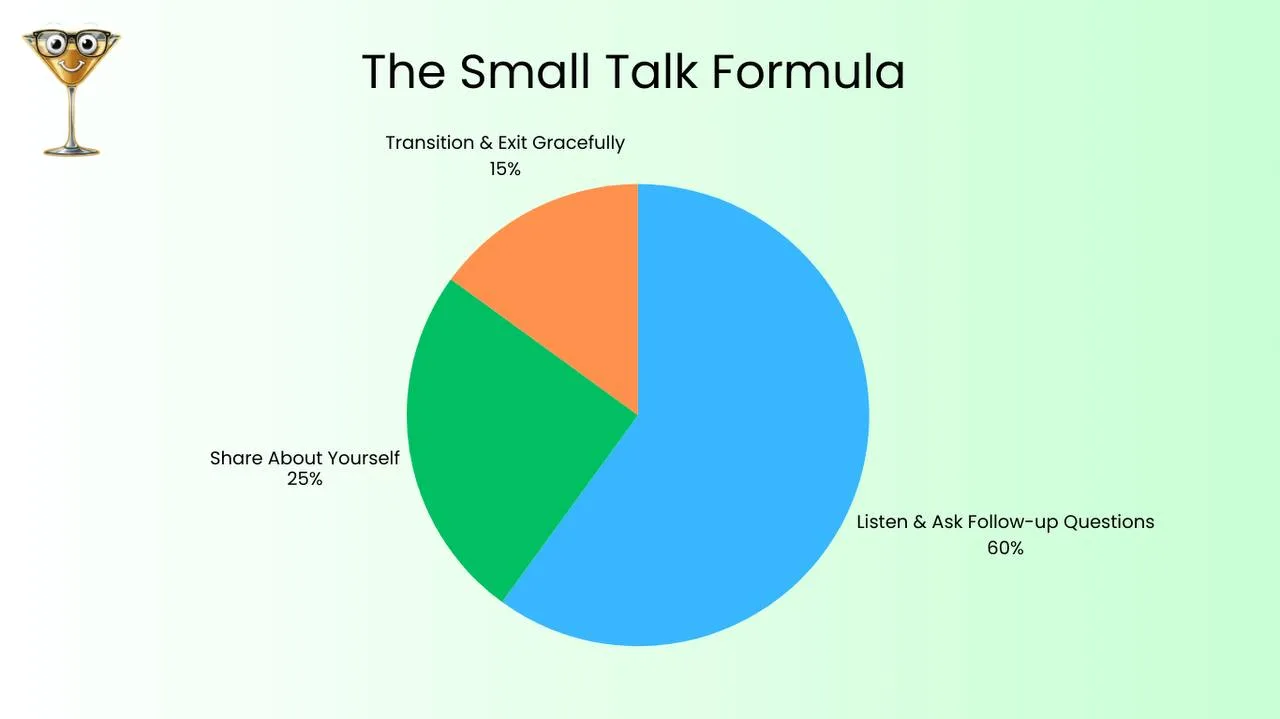
You're trying to be interesting.
This is the problem. You are there by yourself thinking, "What can I say that will impress this person?" So you don't say anything until you find the perfect thing to say. You consider your choices. You overthink. And at the time when you finally come up with something, the moment has gone and you say nothing.
People who are good at small talk, in the meantime, are not trying to be interesting. They are being interested.
There is a huge difference.
Being interesting means revealing more of yourself, your achievements, your views, your story. Being interested means inquiring about the other person, hearing them out, and then asking them some more questions.
Here is the trick: people adore talking about themselves. They adore being listened to. When you ask someone about themselves and then you really listen to the answer, they leave the place thinking "That was a wonderful conversation" and "That person is really interesting." You didn't do or say anything that was particularly clever. You just made them feel that you heard them.
This is the basis of small talk mastery.
Step 1: The Opener (Opening Question)
Initiate your conversation with an opening statement or question that is light and easy to handle from your surroundings. You are not discussing any deep topics. You are just opening the door.
Some good starters are:
- "Have you been here before?" (at an event)
- "Do you know the host?" (at a party)
- "How do you know [mutual connection]?" (if you have one)
- "What brings you here?" (at an event)
- "What do you do?" (classic, but works)
The opener is not that important. It is just a way to start talking without awkwardness. The magic happens in step two.
Step 2: Listen & Follow Up
They provide an answer to your inquiry. This is the point where most people fail: they decide what they're going to say next instead of really listening.
Quit that.
Hear their response. Then, by asking a follow-up question, you communicate that you were really listening.
Good example:
You: "What do you do?"
Them: "I'm a graphic designer."
You: "Awesome, what kind of design? Like branding, web design, that sort of thing?"
This follow-up question is absolutely necessary. It demonstrates that you were listening. It tells them that they can go deeper if they want. It helps the conversation to continue in a natural way.
Step 3: Find Common Ground
While they are speaking, try to find something that you can relate to. Perhaps they mention a hobby that you have. Maybe they mention a place that you have been. Maybe they mention a frustration that you have experienced. When you find it, bring it up.
"Oh man, I completely understand that. I had the very same problem with [similar situation]."
It connects you. Suddenly you are not just two strangers doing the usual small talk. You are two people who have found something that you understand in each other's lives. The conversation moves from transactional to relational.
Step 4: Share Something About Yourself
Once you have made the connection, you may introduce yourself. But keep it short and relate it back to them.
Good: Them: "I'm learning to cook." You: "Oh good, that's great. What made you get into cooking? I started out because I was fed up with eating out all the time, but then I actually ended up liking it."
See the difference? You brought up something that was relevant, but you didn't go into details and made it about them again.
Step 5: Get a New Topic or Leave in a Nice Way
Engaging in small talk doesn't necessarily mean that you have to spend 30 minutes talking. There are times when it is just 2-3 minutes and then you both go your separate ways. It's okay.
In case you desire to exit: "Well, it was really nice talking to you. I'm going to get a drink, but we should definitely catch up later."
The Topics That Always Work
In case you are out of ideas, these topics will almost always lead to good conversations:
- Travel: People are addicted to talking about trips.
- Food: Restaurants they've tried, things they're learning to cook.
- Work: How they got their job, what they like about it.
- Hobbies: What do they do in their free time?
- Pets: If someone mentions pets, milk this.
The 30-Day Challenge: Build Your Skill
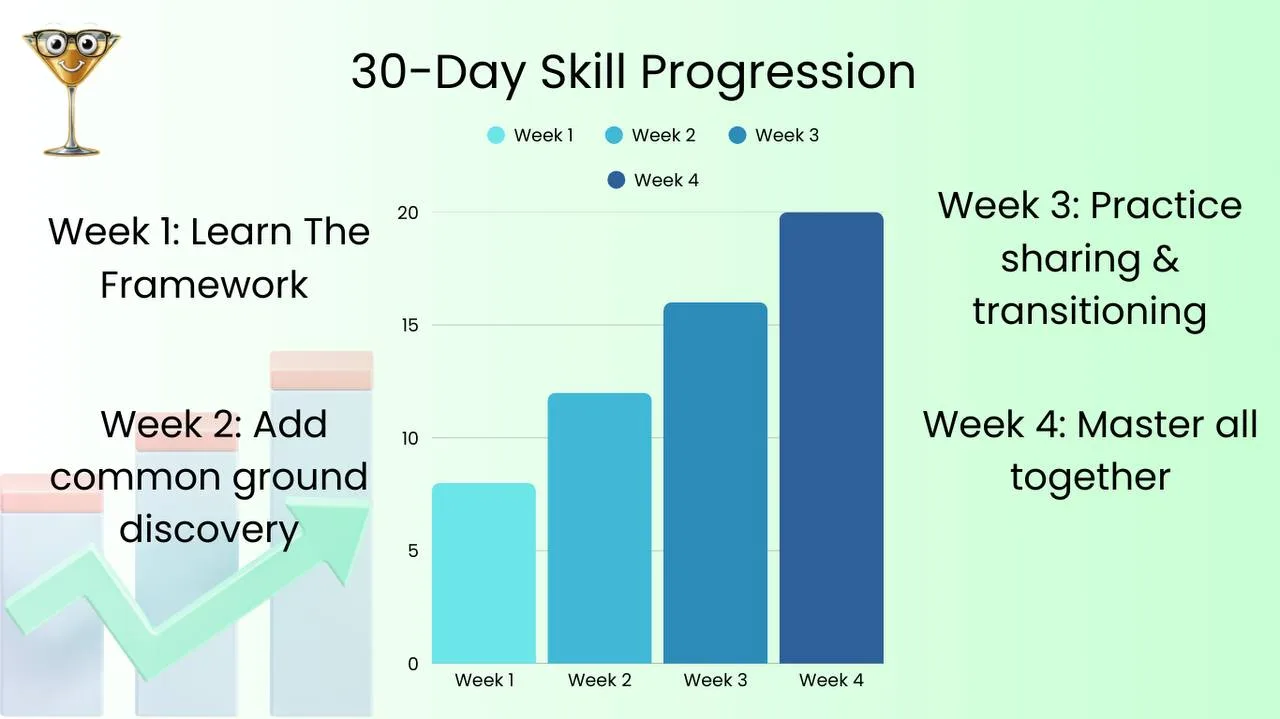
Small talk is a skill, which means it gets better with practice. Start anywhere: work, coffee shops, events. Every conversation is practice. After 30 days of deliberate practice, small talk doesn't feel like a hardship anymore, it feels natural.
Want the complete map? We built a dedicated hub for this topic: How to Never Run Out of Things to Say. It brings together small talk, FORD, active listening, better follow-ups, and the deeper habit of becoming a more curious person.
For an outside collection of small-talk links, prompts, and extra practice material, SmallTalkMaster is a useful page to keep around.
📚 Keep Learning
Ready to Level Up?
Turn your screen time into knowledge. Download NerdSip and start learning in just 5 minutes a day.