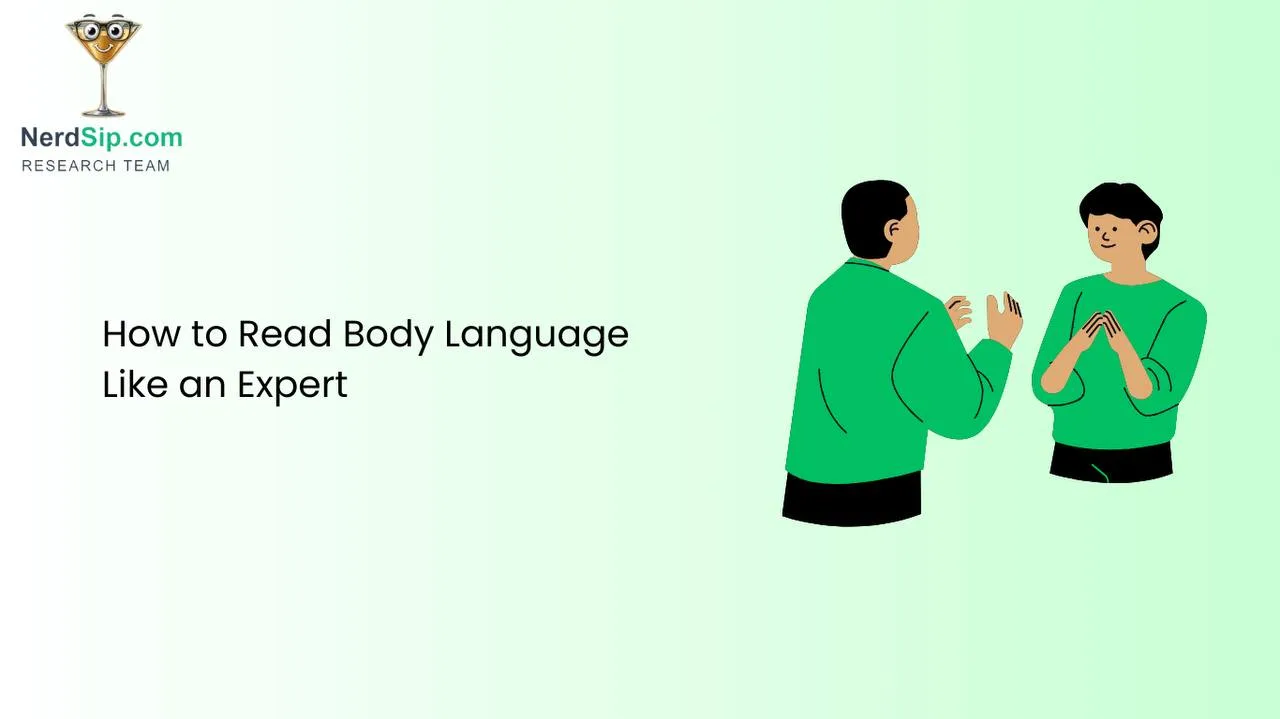
Someone might tell you that they're fine. But at the same time, you can see their jaw is clenched. Their eyes are lowered. Their shoulders are tight. Are they really fine? No. They are not telling the truth. What most people don't understand is this: words can easily be faked, but not body language. When the words of a person are different from their body language, it is their body that is honest.
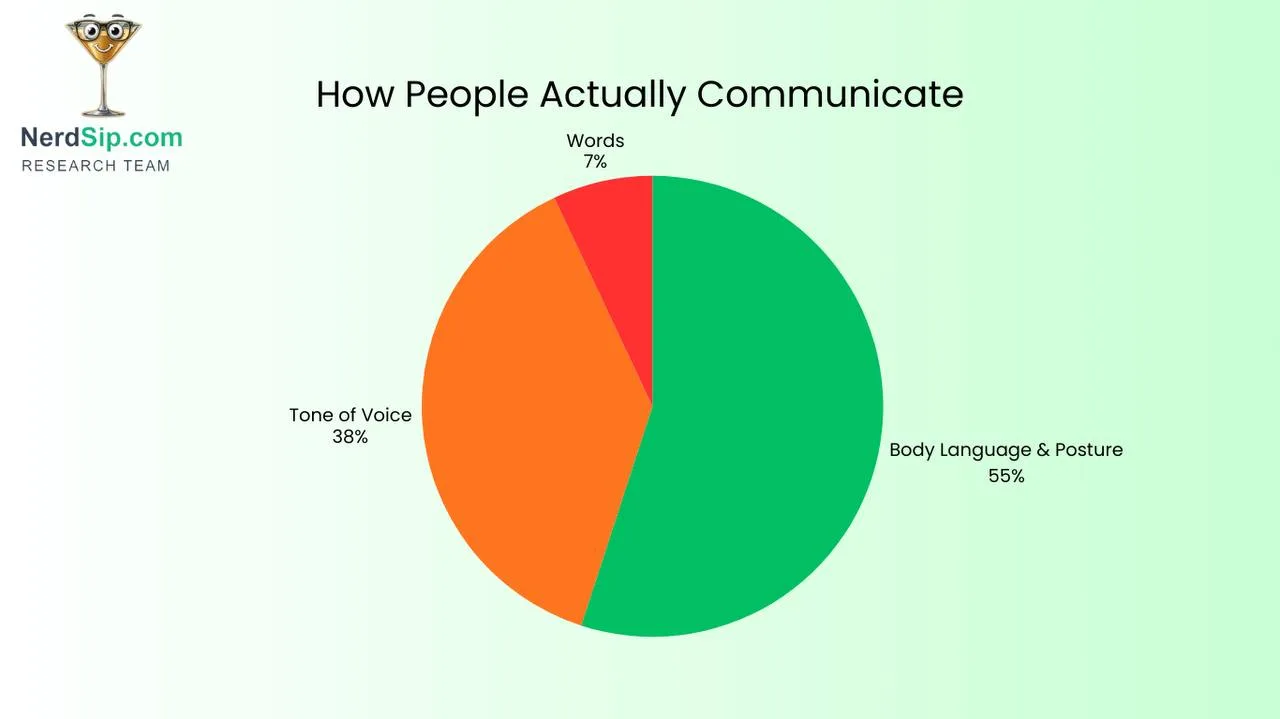
According to research, only 7% of communication is done through words. The remaining 38% is done through the tone of voice. The last 55% through body language. So the majority of the communication of a person is not the words they speak but their body gestures. Just think about it. You go around only listening to the words and you are wrong 93% of the time.
This is why some people seem to have an intuitive understanding of others—they are interpreting body language. They see the micro-expressions, notice movement of hands, and sense even the tiniest changes in posture. They understand what people really mean, not what they say. This trait is a learnable skill, not some inborn talent. And this skill is more valuable than ever in 2026. Whether it is business, relationships, negotiations or interviews, the ability to figure out what people actually mean instead of what they say is a competitive advantage. This article shows you the way.
Your body signal is in a different language, which your conscious mind does not control. When you experience an emotion, your body reacts even before the thought crosses your mind. A microexpression reveals to the world your inner feeling in less than a second. Your shoulders become stiff. Your hands move. Your breathing changes.
These are all involuntary reactions. You cannot fake them consistently. Even when your mouth is lying, your body knows the truth. This is the reason why body language is so effective. It is the unfiltered truth. It is the real thing.
Liars are aware of this as well. This is the reason why they concentrate on the control of their words and facial expression. But, they often think less about their hands, their feet, their posture, their breathing. These are the ones that reveal the truth.
Experts in reading body language are aware of this. They do not only look at facial expressions. They look at the entire body. They notice the cluster of signals. One crossed arm doesn't mean anything. But crossed arms plus looking away plus closed posture plus tense jaw? That's a pattern. That's truth.
The Baseline: Know What Normal Looks Like For Each Person
Before you can interpret someone's body language, you have to know their baseline. What do they look like when they are relaxed? What do they look like when they are thinking?
People are different. Some people have a serious face naturally. Some people gesture a lot. Some people sit still. Some people avoid eye contact because they are anxious or are neurodivergent and not because they are lying.
The skill is to see what changes from their baseline. If someone normally doesn't make eye contact and suddenly they are looking right at you, that's a change. It means something. If someone normally gestures a lot and suddenly their hands are still, that's a change. It means something.
Spend five minutes with someone in neutral conversation. Notice how they normally sit. How often they blink. How much they gesture. How they hold eye contact. This is their baseline.
Now when the stakes are higher—when they are negotiating, or nervous, or lying—you will notice the deviations.
The same rule applies to you: a quick free emotional intelligence test shows your own empathy baseline before you start reading anyone else's.
The Signals: What Body Language Actually Means
These are the body language signals that matter most.
Eyes and Eye Contact
Eyes are the most honest parts of a human body. If a person is telling the truth, he/she will maintain a natural eye contact with the other person, meaning the interaction will be eye-to-eye—not staring, but usual contact. They can look away if they want to think but will come back right away.
Those who lie to you may engage in much more eye contact than is necessary (to look honest) or not look at you at all (shun connection). They also increase the frequency of their blinks. Their pupils either dilate or constrict.
True distinguishing factor: When someone is reminiscing a genuine memory, his/her eyes move normally. When they're fabricating a story, their eye movement is often stiff or improbable.
Facial Expressions and Microexpressions
Your face will let you down for just one tiny fraction of the second. A microexpression is a facial expression that is evident for 1/25th of a second before it is suppressed.
If one says "I'm so happy for you" while his/her face shows the expression of disgust for a microsecond, this person is not happy for you. This person is envious.
The fastest microexpressions to recognize are: contempt (one-sided smile), disgust (nose wrinkles, upper lip rises), and fear (eyebrows rise, eyes widen). They occur involuntarily and hence are the truest emotions.
Hand Movements and Gestures
The truth is that hands can tell a lot about a person. When a person is lying, his/her hand movements typically lessen or become stiff. He/she may touch his/her face, throat, or mouth (as a way of comforting oneself when experiencing stress).
True emotion opens the hand gestures. Deception closes or binds the hand movement.
True distinguishing factor: If a person is telling you the truth, then his/her hand gestures will be more lively and open. If he/she is lying, his/her hands will either be still or he/she will touch his/her body (self-protection).
Posture and Body Orientation
Intuitively an open posture (for example chest facing, arms uncrossed, leaning in) is understood as signaling honesty and engagement. Conversely, a closed posture (for example arms crossed, turned away, hunched) is associated with defensiveness or dishonesty.
In reality, context significantly matters. For instance, an individual with arms crossed in a cold room shouldn't necessarily be considered defensive. They might simply be cold. The most accurate way to interpret body language is: Look for consistent clusters. For example, if a person has open posture but is looking away and their jaw is tight, then it indicates that something is off.
Voice and Tone
Your voice can divulge your stress. For instance, when someone is lying, their vocal pitch often rises slightly (indicative of stress). They might also speak faster (due to anxiety) or slower (if they are calculating). In addition, they might clear their throat more. Their breathing might also become shallow.
Consistency in tone is a sign of confidence. On the other hand, inconsistency—sudden changes in pitch, speed, or volume—indicates stress. The most accurate way to interpret voice and tone is: Pay attention to the elements that do not match the spoken words.
Feet and Lower Body
Here is the secret that most body language readers are unaware of: people can control their face and hands but they often forget about their feet. Feet indicate the direction towards which someone wants to go. For instance, if you are in a meeting and someone's feet are angled toward the door, then they want to leave. On the other hand, if their feet point toward you, then they are engaged.
In addition, when someone is lying or stressed, their feet often bounce, tap, or shift. They cannot keep their lower body still even when they are controlling their face.
Real tell: Watch the feet. They don't lie. They reveal anxiety, disengagement, and readiness to escape.
The Clusters: Never Read One Signal Alone
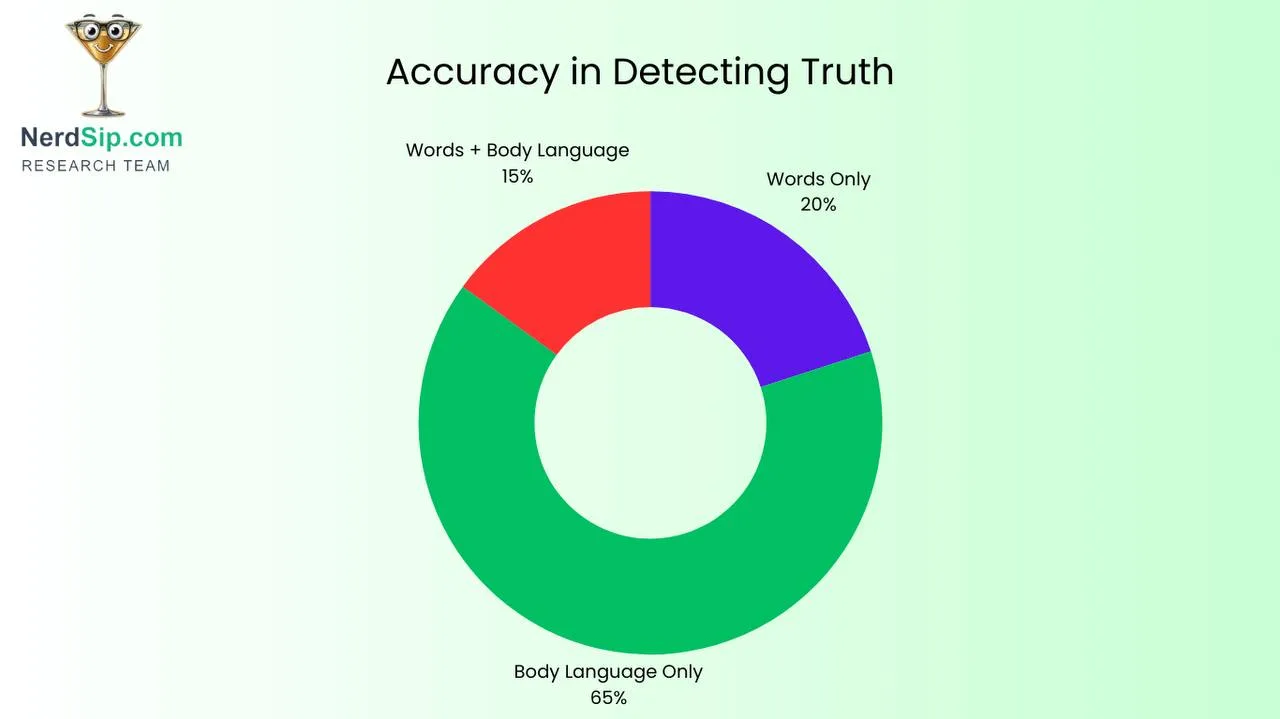
This is critical: one signal means nothing. You need clusters. Someone looking away could mean they're thinking, they're shy, they're anxious, or they're lying. You don't know from that one signal. But if they're looking away AND their hands are still AND their voice pitch is higher AND their feet are bouncing AND their jaw is tense, now you have a cluster. Now you know something's off.
The power is in the pattern. One signal is noise. A cluster of signals is truth. Real skill: Notice clusters. When you see three to five signals pointing in the same direction, you're seeing the truth.
The Micro-Learning Advantage
Here's what's interesting: you can get genuinely good at reading body language through daily practice with micro-lessons. Instead of reading a giant book on body language, you learn one signal per day. Day one: learn eye contact patterns. Practice spotting it in videos. Day two: learn microexpressions. Practice spotting them in videos. Day three: learn hand signals. Practice again.
By day 30, you've studied 30 different signals. You've practiced spotting them. Your brain is pattern-matching these signals in real conversations without you even thinking about it. This is where platforms like NerdSip actually shine for interpersonal skills. You don't need to study for two hours. You need five minutes daily to learn one signal, then practice spotting it.
The gamification element adds another layer of engagement: watching video clips, trying to identify the body language signal, receiving feedback, earning points. You see that others are also learning body language. You're building a streak of daily practice. Suddenly you're motivated to get better because it feels like a game, not study. And because you're practicing daily on realistic video examples, the skill actually sticks.
The 30-Day Body Language Mastery Challenge
If you really want to acquire this skill, here is the method.
Week 1: The Basics
Learn the five foundational signals: eyes, face, hands, posture, voice. One per day. For each signal, spend 5 minutes learning it. Then spend 10 minutes watching videos and practicing spotting it. Keep notes on what you notice.
Week 2: Video Practice
Now that you know the signals, watch videos with the sound off. Practice reading body language without relying on words. Watch interviews. Watch conversations. Try to guess what people are feeling based only on their body language. Then turn the sound on and see if you were right.
Week 3: Real-World Application
Stop using videos for practice. Start practicing with real people in meetings, conversations, and social interactions. Practice spotting the signals you've learned. Notice clusters. Try to see if you can predict what someone's about to say based on their body language.
Week 4: Master Your Skill
At this point, you're reading body language without even thinking about it. It's becoming instinctive. Challenge yourself: In a conversation, predict someone's emotions or truthfulness based on body language before they actually speak. Keep a record of how often you're correct.
The Real Payoff
When you can read body language, it is a completely different experience. In business, you know when someone's actually interested in your proposal or just being polite. You know when a negotiation is working or falling apart. You know when someone is lying about their objections.
In relationships, you understand what your partner really feels. You know when someone's upset even if they say they're fine. You understand what's really going on beneath the surface. In interviews, you know if an interviewer is genuinely interested in you or just going through the motions. You can change your approach based on what their body is telling you.
This isn't manipulation. It's merely recognizing what is already there. Grasping the truth beneath the words.
Start Today: The One Signal
From this article, choose one signal. Eyes, face, hands, posture, or voice. Be committed to noticing it throughout the day. In conversations, meetings, social media videos—any place where you see people—notice your chosen signal.
What patterns do you perceive? Who seems to be lying? Who appears to be telling the truth? Write down what you see. Compare it with what people actually say. Tomorrow, pick up another signal. Combine it with what you already know.
After 30 days of this, you won't be a body language novice anymore. You will be a person who understands what people really mean. A person who reads the truth beneath the words. That's a superpower in 2026.
Want the complete map? We built a dedicated hub for this topic: How to Never Run Out of Things to Say. It brings together small talk, FORD, active listening, better follow-ups, and the deeper habit of becoming a more curious person.
Every NerdSip course clears a four-layer fact-checking pipeline before it reaches the app: grounded in live sources, scored nightly, gated on failure, and reviewable by a person at one tap. Articles on this blog are drafted with AI assistance, then researched, verified, and edited by our team.
Editorial responsibility: ai51 UG (haftungsbeschränkt). Responsible editor named in the imprint.
📚 Keep Learning
Explore the NerdSip learning hubs
The blog is our editorial layer. When you want to move from reading into doing, these hubs organize the rest of NerdSip by format, including the app itself and the press that has written about it.
Keep going: five-minute courses on this
Pick one and finish it before your coffee cools. Every lesson ends with a quick question, so it sticks instead of scrolling past.
Courses on this topic
4.7 stars from 510 reviews · 10,000+ learners