
The world is changing faster than traditional textbooks can keep up with. If you're not "Sipping" your skills, you're already behind. Here's your survival guide to AI Literacy in 2026, and the tool that will make learning your daily habit in a very nice way.
Introduction: Why Your Brain Feels Like It's Melting
Let's not fool ourselves for a second. You know what we mean, don't you? That mild anxiety that tingles every time you open LinkedIn. It looks like all the people in the world have become overnight "Prompt Engineers" while you were in your dreams.
We are witnessing the "Great AI Acceleration" right now. At the end of 2025, AI ceased to be a trifling thing only good for show, and it was found to be the co-pilot in everything from nursing to architecture. The only way to keep pace with this is to use our brains more efficiently.
The question remains, however: how do you keep up with all this?
A $2,000 Masterclass that goes on for six weeks isn't something you can make time for. After an 8-hour shift, you certainly don't have the energy to plough through dense academic papers. You're caught in a "Digital Brain Rot" cycle of endless scrolling, but no real learning is taking place.
This is where NerdSip enters the picture. Just imagine: Duolingo, but for everything. We believe the modern mind doesn't require more information; what it needs is more concise and insightful information. We're spearheading a micro-learning revolution, turning the most intimidating topics—from Neural Networks to Stoic Philosophy—into 5-minute, gamified "Sips" that are easy to understand and remember.
But before you decide to join the waitlist, let's discuss the one skill that will determine your salary in the coming ten years: AI Literacy.
Section 1: What Is "AI Literacy" (And No, You Don't Need to Code)
It's a huge misconception that in order to understand AI you have to be a math prodigy or a coder. Totally wrong.
Being AI literate doesn't mean putting together the robot—it means being capable of handling it.
It's basically Cognitive Collaboration. It means understanding when the machine should be doing the work and when you have to take control. It's the equivalent of having "street smarts" in the digital era.
AI isn't just changing how tech bros work. It's gradually infiltrating various fields such as spreadsheet analysis, medical diagnosis, and classroom teaching. To be AI-literate means that you comprehend the situation:
- You realize that AI is not magic, but just mathematics
- You know how to identify bias or misinformation
- You know how to interact with AI tools without unintentionally disclosing your company's secrets
In essence, it's about being the pilot—not the passenger.
Section 2: The 5 Rules of the Road
If you want to keep your job in the 2026 labor market and not be substituted by a machine, then you ought to have these five principles tattooed on your mind.
1. Start at Square One (The Basics)
It's impossible to operate a car if you don't know what a steering wheel is. Artificial Intelligence depends on data, algorithms, and models that are capable of recognizing patterns. That's all.
The Reality Check: Many people are scared that AI might think like a human. The truth is, it doesn't. It's simply a super-advanced autocomplete. By using the patterns it has seen, it predicts the most logical next step. Once you understand that, the fear goes away, and you can start using it to speed up your workflow.
2. The Mirror Effect (Eliminating Bias)
Artificial Intelligence behaves like a mirror—it reflects what we present to it. If we provide it with trash data, it will definitely give us trash results.
The Danger Zone: We're referring to everything from racially biased stereotypes to statistically skewed data. For example, some AI algorithms used in healthcare have shown a 20% higher error rate when analyzing data from minority groups compared to majority groups due to unrepresentative training sets. Being "AI Literate" implies that you don't put 100% trust in the chatbot. You verify its work. You identify the bias. You are still the filter.
3. Know What It Can't Do (Limitations)
AI can compose a sonnet in just three seconds, yet it cannot experience the pain of a broken heart. Similarly, it can surely explain a concept, but it can never replace the passion and empathy of a teacher to inspire a student.
Your Edge: The "Human Touch" is what will keep you employed. AI cannot "read the room." It has zero emotional intelligence. Focus on the skills that a robot cannot perform—that's where your worth lies.
4. Don't Be Reckless (Ethics)
Using AI and using it correctly are two different things. "Responsible" usage is synonymous with following the regulations. "Ethical" use means doing the right thing.
The Test: Whether at work or in school, you have to be aware of the limit. Are you pretending to have done the work when it was done by a bot? Are you being morally correct? Helping your colleagues (or students) master this skill is like having superpowers.
5. Lock It Down (Privacy)
By talking to an AI, you might be unintentionally feeding a big data machine with your information.
The Shield: You have to be aware of the rules (e.g., GDPR or FERPA). You should be aware that putting confidential client information in a publicly available chatbot is a gigantic mistake for beginners. Guard your information like your bank PIN.
Section 3: Why This is Your Career Insurance
Still believe this is merely a passing trend? Let's analyze the statistics. They're quite surprising, to be honest.
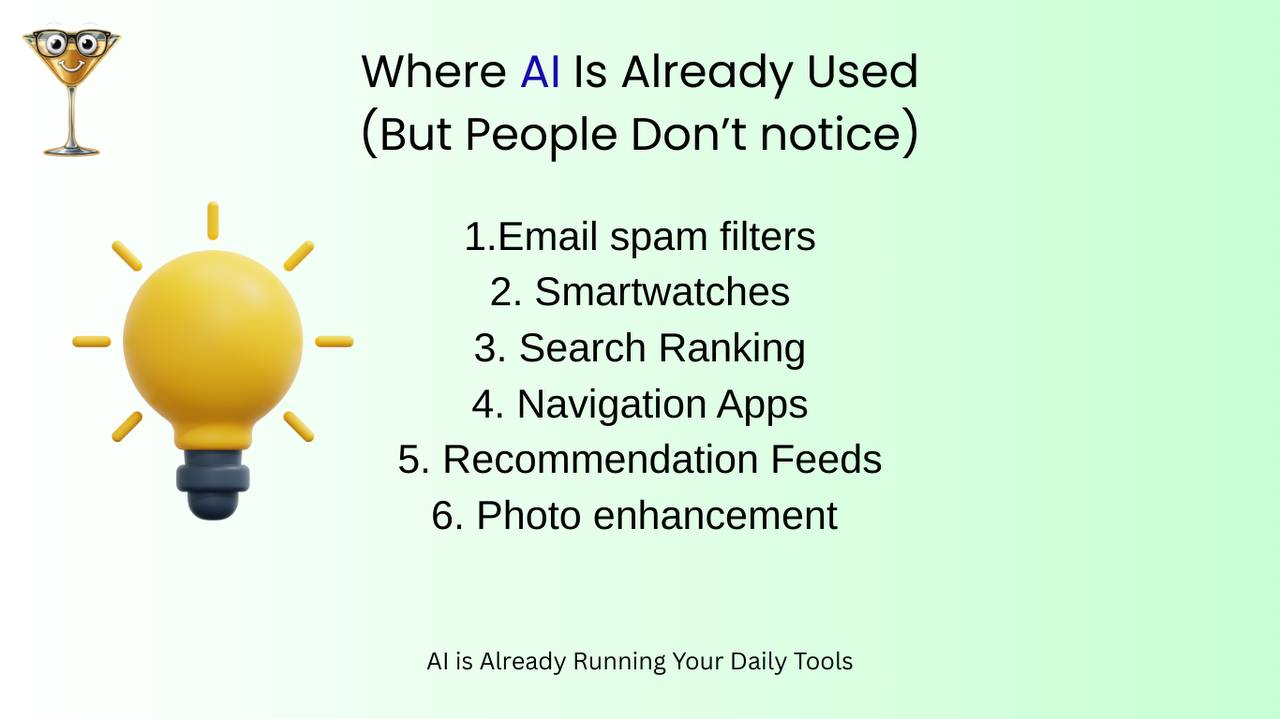
A recent Pew Research study analyzed six daily technologies (smartwatches, email filters, etc.) and found that only 30% of people realized all six were powered by AI. This means that most people are totally unaware of the technology that controls their lives.
Another statistic to consider: IBM discovered that 35% of companies are already implementing AI while another 42% are in a hurry to start it.
The Massive Opportunity Gap
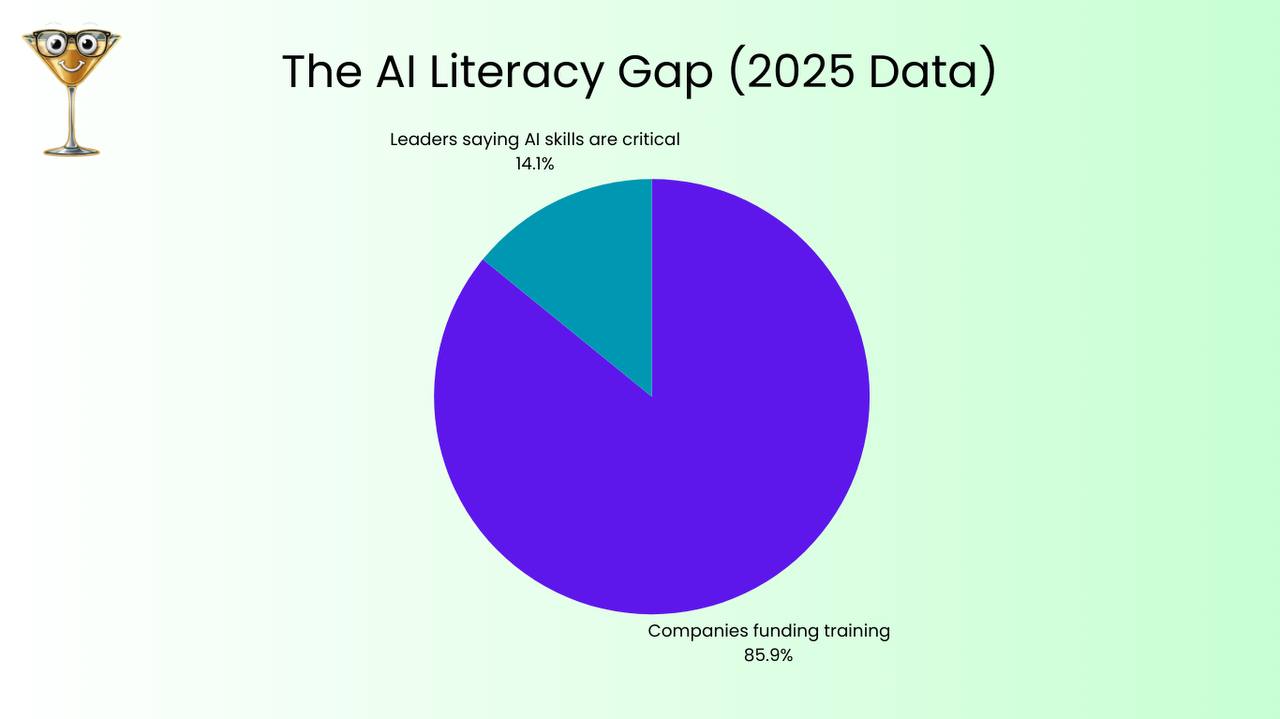
This is the statistic that matters most to you: In the "State of Data Literacy" report, 85% of leaders acknowledged that their workforce must learn this skill right away. However, only 14% of those leaders actually pay for their employees' training.
Do you see the gap? Companies are eager to find people who are good with AI, but they're not providing training. This is where NerdSip comes in as a winner. You don't have to wait for your boss to give you the green light for a seminar. You can close the gap on your own during your morning commute.
For the Teachers: A Real-World Example
Working in education, you may feel as if an overwhelming amount of tools are being thrown at you. Take Edcafe AI, for example—it's tech that doesn't give you a headache but rather alleviates it. Need a lesson plan? It spits one out for you. Need a quiz? It builds it for you. Need a chatbot to answer student questions at 9 PM? It handles that. The point isn't to replace the teacher; it's to automate the boring stuff so the teacher can actually teach.
📚 Additional Resources
Ready to Start Your AI Literacy Journey?
Join thousands of learners who are building their AI skills in just 5 minutes a day with NerdSip. No coding required—just bite-sized knowledge that sticks.
Join the Waitlist →