How to Build Real Confidence: The Science-Backed Method

You're about to do something that matters. Present in front of your team. Ask for a raise. Start a conversation with someone you admire. Go for something you've always wanted.
And then doubt shows up. Your voice gets quiet. Your palms sweat. Your mind floods with reasons why you'll probably fail. Why you're not qualified. Why this person is out of your league. Why everyone else is more prepared than you.
So you don't do it. Or you do it, but you're so nervous it goes badly. And then you have proof: you're not confident. You're not cut out for this.
Here's what you don't realize: confidence isn't something you're born with. It's not a personality trait that some people have and others don't. Confidence is a skill. And like any skill, you can get dramatically better at it with practice.
Most people think confidence comes before action. You feel confident, then you take action. So you wait to feel confident. You practice in your head. You prepare obsessively. You wait for that feeling to show up.
It won't. The feeling comes after the action, not before.
This is the distinction that changes everything. Confidence isn't something you build in isolation. You build it by doing things that scare you, surviving them, and realizing you're more capable than you thought. Then you do slightly scarier things. Your actual capacity grows. And your confidence catches up.
Why You Don't Feel Confident
Let's be honest with ourselves. It is most likely not your abilities that are lacking. What you lack is proof that you are able.
Still, the mind does not care what you think about yourself. What really matters is what you demonstrate to be able to do. After each difficult thing you achieve, your mind updates its understanding of your abilities. "You did that difficult thing? Ok, you are one of those people who can do difficult things."
However, here is the trap that most people fall into: they only do what is easy. They remain in their comfort zone. As a result, they do not get new evidence of their capabilities. Thus, their confidence remains at the same level.
At the same time, the ones you think of as confident? They did difficult things. Not just once, but many times. They have also failed, learned from it, and done it again. Therefore, their brain contains overwhelming proof of their capability. So, they feel confident.
The difference is not ability. It is proof.
Another reason why you don't have enough confidence is comparison. You compare your insides (your doubts, your struggles, your weaknesses) to other people's outsides (what they show the world, their accomplishments, their calm demeanor).
You are not seeing their doubts. You are not seeing their struggles. What you are seeing is only the finished product—their confidence. So, you think that they are just naturally confident, while you are naturally doubtful.
They aren't. They just have more evidence that they can do it because they have challenged themselves more.
The Paradox: Confidence Comes After Action
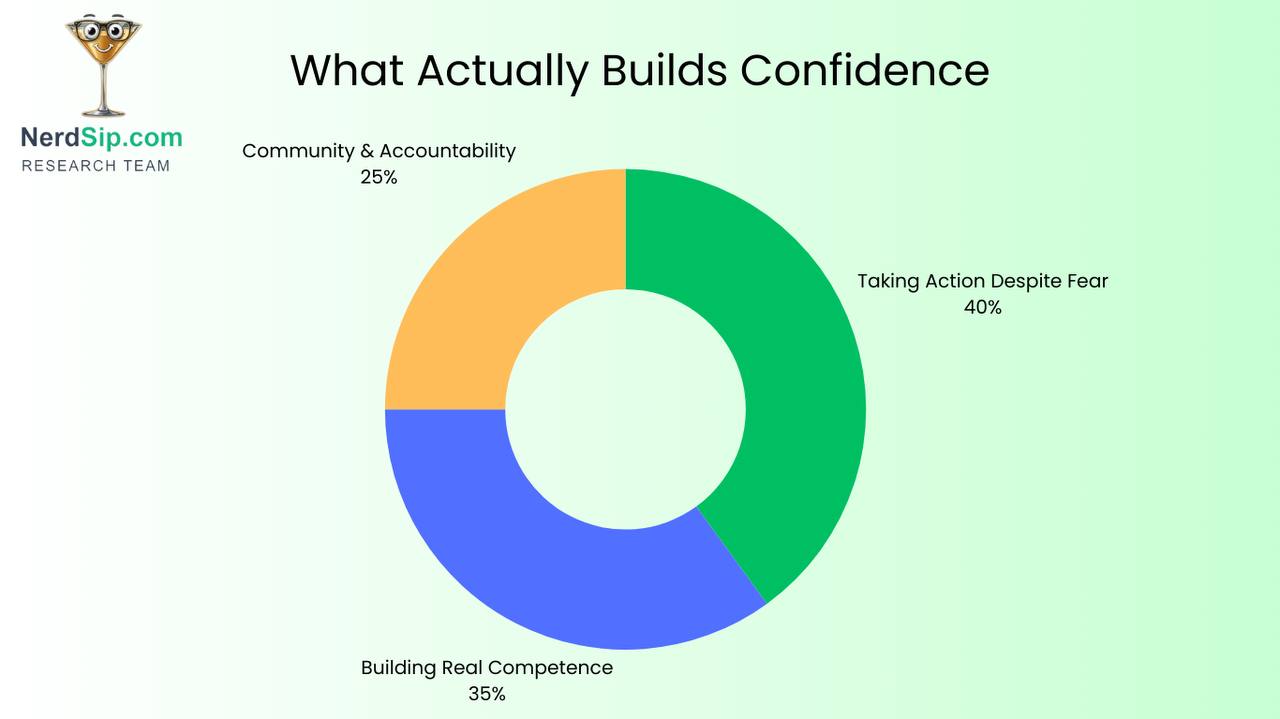
Most of the time, the counterintuitive truth that confidence advice gets wrong is: you don't create confidence by positive thinking or imagining success. You create it by doing what you believe in spite of your doubt.
Research supports this claim. When you do something that frightens you, your brain changes its view. It adjusts to the new level of your capability. Not because you had a nice feeling. But because you actually did it.
It doesn't happen all at once, rather a series of small steps. You don't have to do something enormously terrifying. Actually, that can sometimes have the opposite effect. You need to do something that is a little beyond your comfort zone. Something that makes you nervous but is still doable.
Then you do it. You get through it. Your brain is aware. You are now a little bit more confident with similar situations.
Then you do something a little bit more frightening. And once again, your brain changes its view.
Eventually, your real potential becomes greater. And so does your confidence—the right kind, that comes from evidence.
That's why pretending confidence cannot work for a long time. You cannot think your way into real confidence. You have to act your way there.
The NerdSip Confidence Framework
Here's a pretty interesting thing: micro-learning platforms have an unnoticed benefit for building confidence. They are not only for learning content, but also for building evidence of capability.
Every time you finish a 5-minute lesson, your brain gets a small win. You learned something. You tested yourself. You succeeded. That's evidence.
When you see that you've completed 7 days in a row, that's evidence of consistency. When you see others learning the same thing, that's evidence that you're not alone. When you climb a leaderboard or earn badges, that's social proof of your progression.
But here's the real power: by learning many different things, you create meta-confidence. You demonstrate to yourself that you are able to acquire new skills. You're not confined. You are capable of growth. This gives you confidence in the other areas of your life.
One who learned Python, studied history, and got copywriting in the past year has evidence that he/she is a learner. He/she's adaptable. He/she can figure things out. That generalized confidence shows up in interviews, relationships, and challenges.
The gamification—streaks, XP, leaderboards—isn't just engagement. It's confidence architecture. It creates consistent small wins that accumulate into genuine evidence of capability.
Architecting Unshakeable Confidence: Advanced Psychology
Master the evidence-based protocols to dismantle self-doubt and build a foundation of genuine self-assurance.

The Three Pillars of Real Confidence
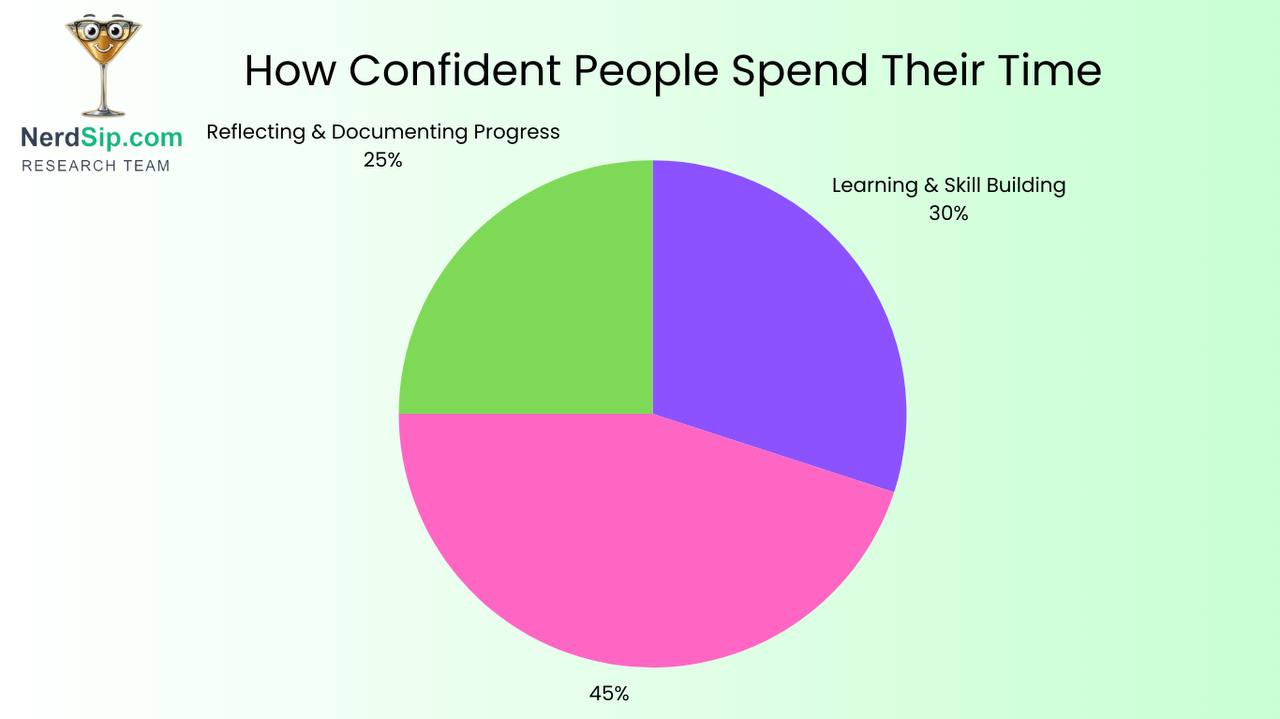
Building genuine confidence has three components:
Competence (You Know What You Are Doing)
This is not something you can fake. You have to have real skill in those areas where you want to be confident. This is the main reason why micro-learning is so effective: you really learn the material, test yourself, and review. In this way, you acquire real competence.
Do not attempt to be confident without the necessary skills. You'll notice the inconsistency and feel like a fraud. On the contrary, go down the road of actually becoming good at the things that make you want to be confident and then you'll have no problem with confidence.
Evidence (You Have Demonstrated Your Ability)
You need real and tangible proof of your ability. Not only in your mind—but also in the real world. Finished projects. Made presentations. People you've benefited. Situations you've conquered.
That is the reason why action should matter most, rather than thought. Every action that is completed is a proof. Every risk you took and had a positive outcome is a proof. Your brain becomes the evidence collector and updates your self-model accordingly.
The amount of evidence you have is directly proportional to the amount of self-doubt. It is not that self-doubt is gone, it is just that it is based less on feelings and more on facts.
Community (Others Support You)
This may sound a little bit emotional, however, it is real from a neurological point of view. The fact that people around you think and show that you are capable influences your self-image. Not because their belief in you transforms you into a confident person, but because it creates accountability and social proof.
When your friend says: "You will rock that presentation", and then you really do it, that is evidence. When you notice others from your learning community getting better, it tells you that progress is possible.
When other people give you upvotes and recognition for a thing you made, that is external validation that you are doing the right thing.
Community support cannot replace internal self-assurance, but it surely helps to grow it faster.
The 30-Day Confidence Building Protocol
If building confidence is your goal, here is the system that actually works.
- Week 1: Build Competence - Choose one area in which you want to have more confidence. Master the basics.
- Week 2: Take Small Actions - In this area, do something just a little beyond your comfort zone.
- Week 3: Document Evidence - Put into words what you have done. Create your personal portfolio of proof.
- Week 4: Do It Again - Now do something just a little bit more frightening.
The Valuable Skill: Nervous Competence
The last thing to understand is: real confidence is not the lack of nervousness. It's still doing your stuff, even if you are nervous.
Do the people seem to be confident by nature? They also get nervous. But they've got enough proof that they are capable so that the nervousness doesn't stop them.
This is "nervous competence"—you are nervous. But you also know that you are able to do this. So you do it anyway.
Ready to build unshakeable confidence?
Join NerdSip and master the psychology of self-assurance in just 5 minutes a day.
Join the Waitlist →