Your commute is 200+ hours a year. Used well, it becomes the most reliable self-improvement slot in your day.
The most effective way to use it is simple: give the trip one job and match it to how you travel. Audio when you drive, visual and hands-on when you ride. Everything below is how to make that real, and how to actually stick with it.
My 45-minute commute used to wreck me. Nearly an hour a day, three and a half hours a week, roughly 180 hours a year. Seeing the number written down stung, because it looked like entire work weeks poured down a drain. So I asked a simple question: what would happen if I put that dead time to work?
The Math That Changed Everything
Let us be honest about how progress actually works. It does not require two-hour nightly grinds through textbooks. Most of the barrier comes down to one thing, and it is consistency, not capability. Life gets in the way, and a plan you started in January is forgotten by February.
The commute solves the hardest part of that problem. You are already there. You do not have to carve out new time, rearrange your evening, or find the motivation to start. The slot exists whether you use it or not. The average commuter travels around 27 minutes each way, close to 200 hours a year. Reclaim even 15 minutes of it, five days a week, and that is over 60 hours annually, more intentional growth than many adults manage in a decade.
What Can You Do During Your Commute? 12 Ideas
The right activity depends entirely on how you travel. Behind the wheel your eyes and hands are busy, so stick to audio and keep it hands-free. On a bus or train you have a screen and both hands, which opens up everything visual. Here is the menu.
- Learn a topic in 5-minute lessons. Psychology, AI, history, money, science. One concept per trip, with a quiz so it sticks. Transit, or audio versions when driving.
- Pick up a language. Short lessons fit neatly between stops and add up fast. Transit.
- Listen to an audiobook. The single best use of a longer drive. Driving or transit.
- Play a podcast, or a personalized AI one. Turn any topic into an audio episode you choose. Driving or transit.
- Read the articles you saved. Curate during the day, read offline on the train, ad-free. Transit.
- Plan and prioritize your day. Decide the three things that matter before you arrive. Transit, or a voice note when driving.
- Reconnect with someone. A hands-free call to a friend or family member you never quite find time for. Driving or transit.
- Decompress with a short meditation. Ten calm minutes before the office changes the whole morning. Driving or transit.
- Reflect or journal by voice memo. Think a problem out loud and capture it. Driving or transit.
- Review flashcards. Spaced repetition turns spare minutes into durable memory. Transit.
- Catch up on the news or an industry briefing. Arrive informed instead of anxious. Driving or transit.
- Do nothing, on purpose. Sometimes the productive move is a quiet window to let your mind wander. Use it deliberately, not by default.
If learning is the job you pick, the format matters as much as the topic. We broke it down app by app in our guide to the best apps to learn during your commute, sorted by exactly how you get to work.
How to Be Productive During Your Commute (Without Overhauling Your Life)
A good commute routine runs on structure, not willpower. You do not need a new morning system. You need five simple moves.
- Pick one job for the trip. A lesson, a chapter, a plan. One clear job beats a vague intention to be productive.
- Match it to how you travel. Audio for driving, visual and hands-on for transit.
- Commit to 15 minutes each way. A floor, not a ceiling. Some days you will do more.
- Anchor it to the trip. Start the moment you sit down or pull out. Attaching the habit to something that already happens removes the hardest step, which is deciding to begin.
- Track a streak. Give momentum something to hold on to, and let two good weeks turn into a habit.
The Confidence Compound Effect
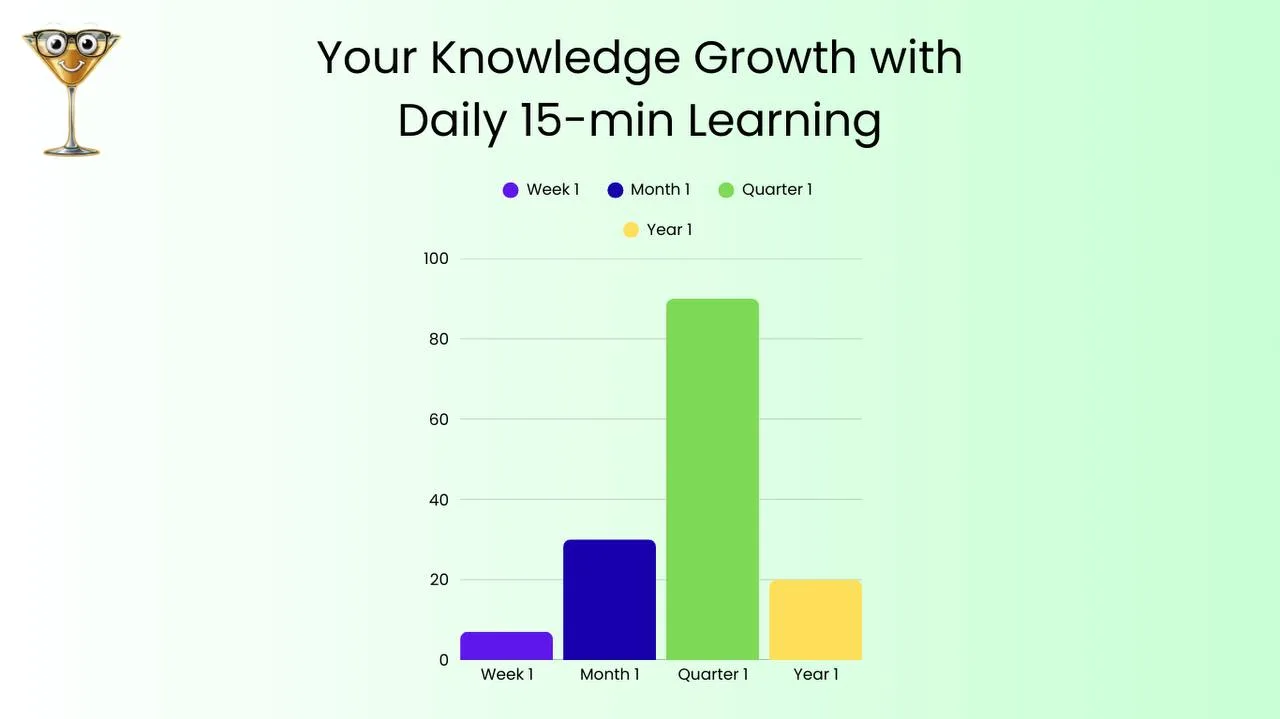
If the job you keep choosing is learning, something quiet happens after a few weeks, and it stops being about facts.
You notice it in conversations. Someone raises the topic you studied last week, and you find you actually have something worth saying. You are not pretending to follow along. You genuinely know this. It reads as a different kind of energy, and people pick up on it. The moment by the coffee machine stops feeling like a minefield. A colleague mentions a book you covered, your family argues about something you learned last month, and suddenly you are in the conversation instead of nodding along and hoping the subject changes.
This is not about becoming an expert. It is about carrying enough real knowledge across enough topics to take part, ask a good question, and hold your own. That is where genuine confidence comes from. Not the performed kind. The real kind, built on actually knowing things.
Picking What to Learn
The quiet advantage of microlearning is that you set the curriculum. Nobody hands you a syllabus. Want to understand how AI works? Spend your commute there. Curious about Renaissance history, or what is really happening in world politics? Now you have the time.
When you learn something you chose out of genuine curiosity, you actually focus. It does not feel like homework. It feels like finally scratching an itch that has been there for years. The best learners I know are not driven by pressure to succeed. They are driven by wanting to understand more, and that is exactly what keeps the habit alive month after month.
Making It Actually Stick
Consistency is the whole game. Nothing is built in one commute, or ten. Three months of steady practice is what creates real change, and you get there by keeping friction near zero.
Keep something on your phone you can open instantly. No clumsy logins, no waiting for a video to buffer. Open the app, do your session, done. People underestimate how much that frictionless moment matters. Our comparison of the best microlearning apps for 2026 can help you find one that fits your trip.
Gamification helps here too, and not the annoying, try-hard kind. I mean systems that make you want to show up. XP that accumulates. Streaks you would rather not break. The chance to share what you are learning and see others doing the same. When someone in your feed finishes a course, you want to finish yours. When people climb the leaderboard, you push a little harder. It is the same reason we run faster on a track alongside other people. Positive friction, not manipulation.
The Real Transformation
After about a month, you start to feel different. Not smarter exactly, since smarter is a strange word, but more engaged. More informed. More present in the room.
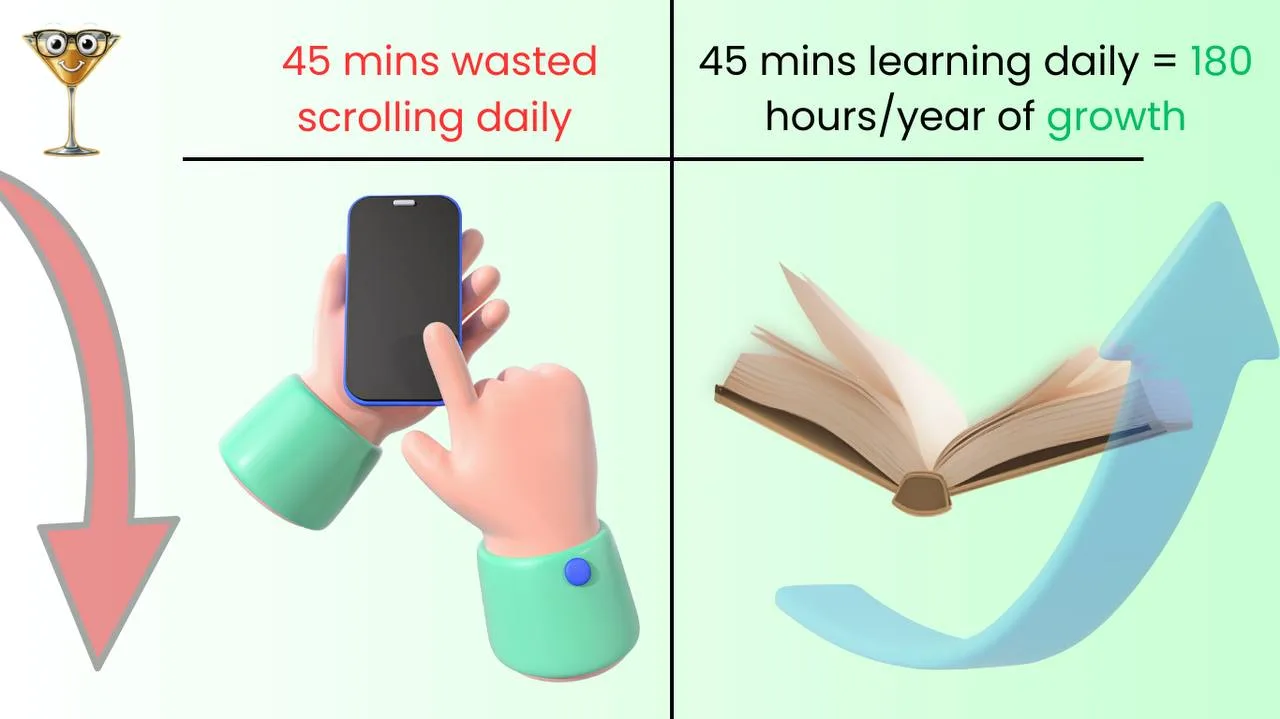
You stop zoning out on the commute and start looking forward to it. Those 15 minutes become something you control instead of time that gets stolen from you. Here is the part nobody admits: it also ends the doomscroll. Those minutes used to be the same five apps on a loop, scrolling yourself into a worse mood. Now they mean something. You are building instead of numbing.
Start Small
You do not need to change your whole life or become a productivity fanatic. Pick one thing from the list above. Do it on your next commute for 15 minutes. Do it again tomorrow. Feel how it lands.
By the second week it stops being effort and becomes habit. By the second month you will miss it on the days you do not travel. Your commute was never lost time. You just were not using it. The question was never whether you have time. You already have it, every single day. The only question is whether you keep wasting it or use it to change how you show up in the world.
Frequently Asked Questions
How can I use my commute time effectively?
Give the trip one clear job and match it to how you travel. Audio like podcasts and audiobooks when you drive, short visual lessons, reading, or planning when you ride transit. Commit to 15 minutes each way and start the moment your commute begins. Done consistently, that turns roughly 200 dead hours a year into real progress.
What can I do during my commute?
Plenty, depending on whether you drive or ride. Learn a topic in short lessons, pick up a language, listen to an audiobook or podcast, read saved articles, plan your day, call someone you care about, do a short meditation, review flashcards, or catch up on the news. If you drive, keep it audio only and hands-free for safety.
How can I be productive during my commute?
Productivity on a commute comes from a routine, not willpower. Pick one activity, match it to your travel type, set a minimum of one session per trip, and anchor it to the start of the journey. A streak or XP system gives you a reason to keep going. After about two weeks it runs on its own and skipping feels wrong.
Should I read or listen during my commute?
It depends on how you travel, not on preference. Driving leaves your eyes and hands busy, so audio formats like podcasts and audiobooks are the safe, effective choice. On a bus, train, or subway you can use your screen, so visual lessons, quizzes, and reading apps work well. If you switch between the two, pick an app that covers both.
What is the best thing to do on a long commute?
Long trips reward deeper formats. A 30-minute drive suits an audiobook or a full podcast episode, while a long transit ride is enough for several short lessons plus reading. The key is consistency over intensity: a small session you actually finish every day beats an ambitious plan you abandon by Friday.
How do I stay consistent with a commute routine?
Lower the friction and lean on the routine. Keep one app on your phone that opens instantly, set a minimum of one session per trip, and start it the moment your commute begins. A streak or XP system gives momentum something to hold on to. After about two weeks the habit runs on its own.
Every NerdSip course clears a four-layer fact-checking pipeline before it reaches the app: grounded in live sources, scored nightly, gated on failure, and reviewable by a person at one tap. Articles on this blog are drafted with AI assistance, then researched, verified, and edited by our team.
Editorial responsibility: ai51 UG (haftungsbeschränkt). Responsible editor named in the imprint.
📚 Keep Learning
Explore the NerdSip learning hubs
The blog is our editorial layer. When you want to move from reading into doing, these hubs organize the rest of NerdSip by format, including the app itself and the press that has written about it.
Ready to Level Up?
Turn your screen time into knowledge. Download NerdSip and start learning in just 5 minutes a day.
4.7 stars from 510 reviews · 10,000+ learners