It's been several years that you've been working at your job. You perform well. You are punctual. You complete your work. You get good enough scores. But there is no promotion for you.
Another person who came after you just got promoted. They might seem less qualified by the resume. They don't put in more hours than you. What is the reason for this?
The reason is not that you are not good enough. The reason is that you are invisible.
Being promoted is not the same as being the best at your job. It is about being the most visible person doing a great job. It is about ensuring that the right people see, know, and trust your work and consider you as the next one to take the higher level. It's not about just working harder but about being strategically positioned.
Most people don't get this. They think that if they just keep their head down and do excellent work, one day someone will notice them and promote them. That's not the way it works. Employers promote people they know, people they trust, and people who have made their case.
This guide instructs you on the precise plan to be that person over the next 12 months.
Why You Haven't Been Promoted Yet
Be honest with yourself, you probably haven't been promoted because one of these things is the case:
- Your manager is unaware of the full extent of your work. You may be doing excellent work, but no one acknowledges it. From their point of view, you are just doing what is expected of you.
- You have not created a strong enough reason for the business to keep you. You are not presenting yourself as someone who deserves the next level. You have not demonstrated leadership qualities or strategic thinking.
- You have not developed relationships with decision-makers. A promotion is most likely a result of good relationships and a positive reputation. If your boss's boss doesn't know you, they can't be your advocate.
- You are only waiting when you should be asking. The majority of people never directly ask for a promotion. They believe that it will happen if they are good enough. It won't.
- It is unclear to you what is actually required at the next level. You might be excellent in your current job, but you do not know which skills or outcomes are expected at the next level.
Here is the thing: none of these points concern your abilities. They are all about strategy and being seen. You can sort all of them out.
The Promotion Strategy: Four Phases
Moving up the ladder is a fairly predictable pattern. If you carry out this pattern, promotions will be handed to you much more often. But remember: this is a marathon, not a sprint. Real corporate change takes time.
Phase 1: Understand the Game (Months 1-2)
Before you make a move, you have to understand exactly what you are aiming for.
Step 1: Identify the Next Level
Which one is the next position above you? What are the duties? What skills do people at that level have? Meet a few people who hold that position and get from them what they do all day.
Step 2: Identify the Requirements
Not the official job description. The real requirements. Ask your boss straight: "What would I have to do to be considered for the next level?"
Step 3: Identify the Decision-Makers
Who is the one that decides if you will be given a promotion? It is your direct boss, of course. But his boss, as well. Find out who the main decision-makers are and get to know them.
Step 4: Bridge the Skill Gap with NerdSip
Once you know what the next level requires, you'll likely find gaps in your "soft skills"—leadership, communication, or strategic thinking. This is where the NerdSip app becomes your secret weapon. Spend 5 minutes a day during your commute or morning coffee mastering these exact skills.
Phase 2: Become Visible (Months 3-8)
Having figured out what your target is, you have to make sure the people see you doing it. This is the longest phase because you are rebuilding your reputation.
Step 1: Make Your Work Visible
Begin to talking about your successes. During team meetings, state what you have achieved. Write a weekly email to your boss giving a brief of what you did during the week and the impact it had.
Step 2: Take on High-Visibility Projects
Choose projects that are visible, important, and have clear outcomes. They give you the opportunity to be seen by the decision-makers.
Step 3: Demonstrate Leadership
It is given to those who act as if they are already at the next level. This means initiating actions without waiting for orders, helping junior team members, and suggesting solutions to problems.
Your boss wants to be surprised. They want to see that this professional—this rising star—simply aces every task they get. Don't complain. Whatever you do, ace it. Display confidence: nothing takes as much load off a boss's shoulders as hearing a quick "Understood, I will handle it," and then actually seeing it handled with excellence. You want them to think: "I don't have to worry about this person; they are ready for more responsibility."
"The reason why people listen to you during meetings is that you don't talk often, but when you do, it is impactful. Quality rather than quantity."
Pro Tip: Use the NerdSip "Effective Communication" course to practice how to speak with authority without being aggressive. It’s about the subtle cues that signal you are ready for more responsibility.
Phase 3: Build Your Case (Months 9-11)
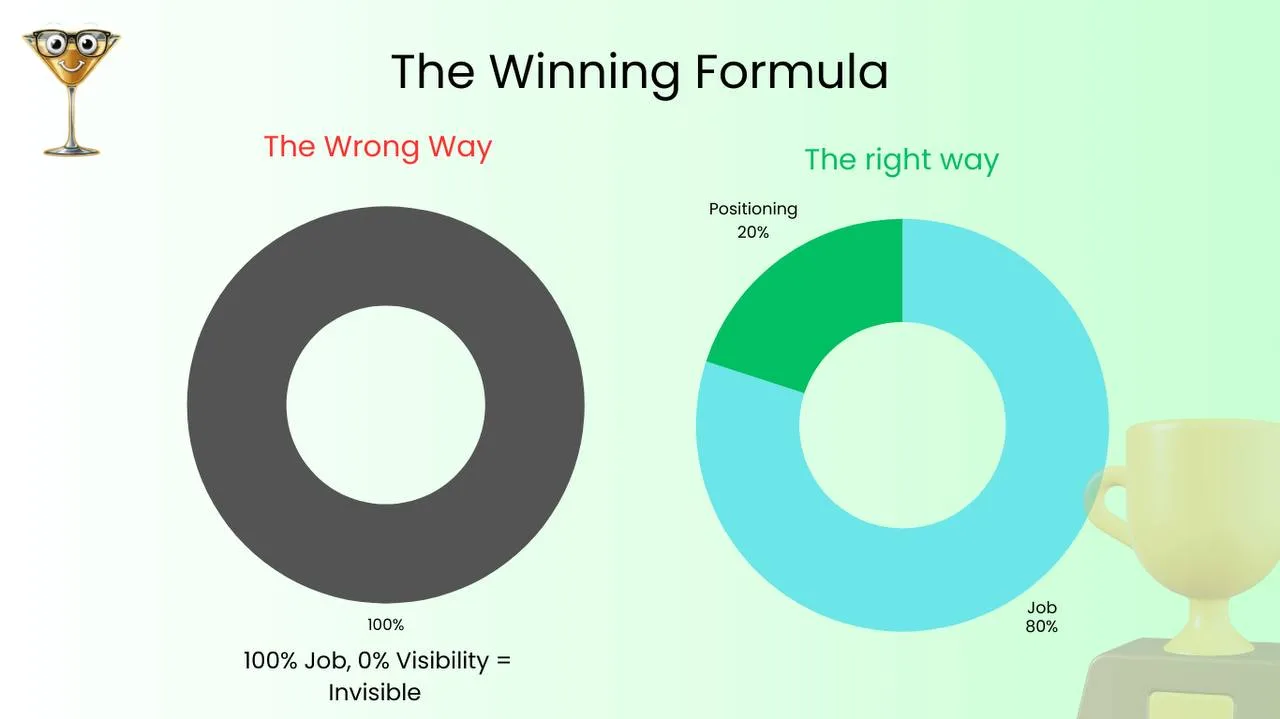
It's great to see that you are doing excellent work, but now it is necessary to demonstrate that you are the one to be promoted.
Step 1: Document Your Impact
Make a list of all your accomplishments. Use numbers as much as possible. "I led the X project which increased efficiency by 30%, saving the company $100K annually."
Step 2: Show Leadership Results
Write down the times when you behaved like the next level. Instances when you took the initiative or mentored someone.
Phase 4: Request It (Month 12)
The thought of waiting for a promotion to be offered to you is not an option. You need to make the request yourself.
Step 1: Arrange a Session
Request your boss to allocate time just for talking about your career progression. Turn it into a formal discussion.
Step 2: Defend Your Position
Be ready. Have your proof ready with you. Demonstrate the ways you have made a difference. Tell them you deserve the next level.
Step 3: Ask the Direct Question
"Based on our conversation, I think I am ready to be promoted to [next role]. How would I make that happen?"
The 1-Year Promotion Plan Summary
- Months 1-2: Research & Skill Up (Start your daily 5-minute NerdSip habit)
- Months 3-8: Build Visibility & Reputation (Volunteer for high-visibility projects)
- Months 9-11: Document Impact & Find Advocates (List accomplishments with numbers)
- Month 12: The Ask (Present your case formally)
Ready to level up your career?
Master the soft skills that get you noticed. Download NerdSip and start your 5-minute daily growth habit today.
Get the AppThe promotion won't be coming to you. You need to go and get it.
Links you may find useful:
1. How to Make Small Talk: Complete Guide
2. How to Turn Your Commute Into Classroom
3. AI Literacy for Beginners
📚 Keep Learning
Ready to Level Up?
Turn your screen time into knowledge. Download NerdSip and start learning in just 5 minutes a day.