How to Make Better Decisions (Stop Decision Paralysis)
You are at a junction in your life. Should you accept the job offer? Change your career path? Relocate to a new city? Break up? Request a raise? Purchase the house?
It keeps going through your head. You make a pros and cons list. You sleep on it. You talk to friends. You research more. You analyze every angle. And yet, you still can't make up your mind. Days turn into weeks. Weeks turn into months. In the meantime, nothing changes. You are stuck.
That is decision paralysis. And it is one of the most costly disorders of modern life which is very expensive not only because it costs you the missed opportunities—it costs you the mental energy, stress, and gradual loss of confidence as well.
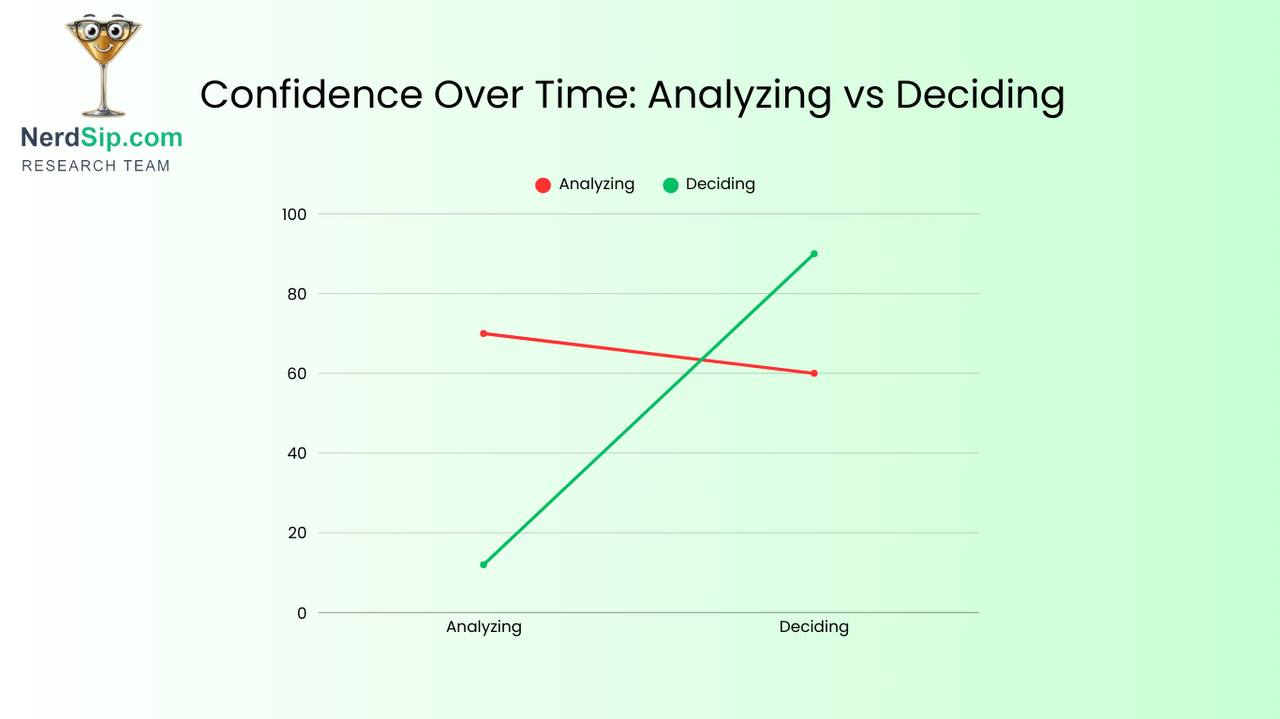
This is the thing no one tells you: the longer you mull over a decision, the less sure you are. You do not need more data to take a decision. What you really need is the approval to make an imperfect decision and to move on.
Why You Are Stuck
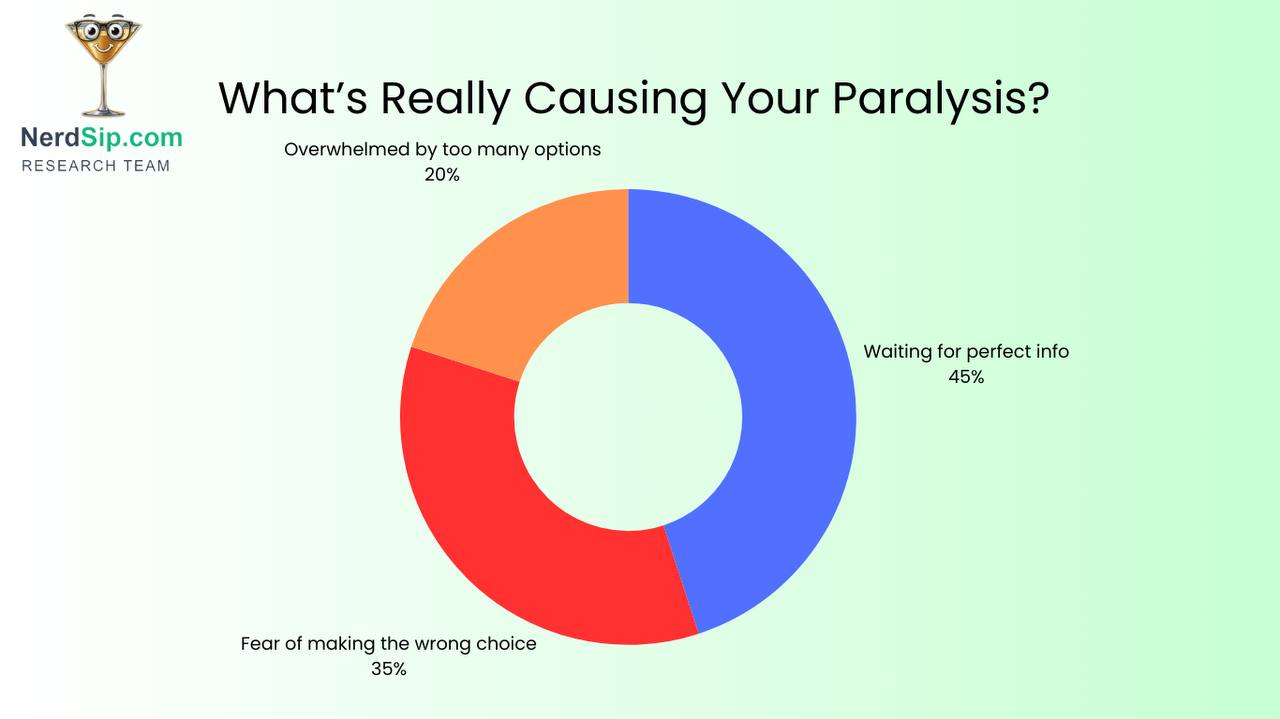
As a general rule, people assume that their being stuck is a result of their lacking information. They are missing just one more data point, one more opinion, or one more day to think about it. So they can be absolutely sure.
However, that is exactly the trap. The fact is that you will never hold the perfect set of information. There will always be an element of uncertainty, risk, or something that you didn't account for. You could be deciding and analyzing for half a year and still feel uncertain because the future can never be known.
It is not lack of information that is the reason why you are stuck and unable to move. Rather, it is the belief that you need to be certain before you can take action that is behind your paralysis.
You think: "When I have enough clarity, then I'll move forward." However, clarity does not result from thinking, it comes from doing. By doing, you get to know, not by analyzing. You get to know if a job is right for you by taking the job, not by researching the company for three months. You figure out if a relationship works by committing to it, not by endlessly weighing pros and cons.
This is the core philosophy behind NerdSip: we believe in giving you the 20% of knowledge that drives 80% of results in just 5 minutes, so you can stop analyzing and start executing.
Those who make good decisions are not the ones that hold perfect information. They are the ones that make a decision with incomplete information and then alter their decision as they move forward.
The Cost of Not Deciding
Comfort paralysis. You keep telling yourself that not deciding is the safest way of avoiding risks. And so, you are actually protecting yourself.
But, not deciding is the biggest gamble of all.
Every day that you refrain from making a decision is a day you do not move towards what you desire. It is a day in which you waste your mental energy on deliberating the decision itself. It is stress. It is the passing of the opportunities that you let go of without noticing. It is also the fact that other people, by default, become the ones making the choice for you.
Moreover, the unpleasant thing about it is that the longer you linger in indecision, the more you increase the significance of the decision. It enlarges in your mind. It becomes this enormous, life, changing thing. And it becomes impossible to make a choice.
By the way, those who are successful—the ones who have been promoted, discovered good partners, started thriving businesses—are not necessarily more intelligent than you. They have just made their decisions quicker than you have and kept on adjusting. They took 80% certainty and went on, rather than waiting for 100%.
The Framework: How to Actually Decide
Unsticking yourself is easier than you assume. It is not about getting more information. It is about adhering to a process.
Step 1: Define What "Good" Looks Like
In order to make a good decision, you first need to know what success looks like. What are you actually optimizing for?
If you are choosing between two jobs, is it money? Flexibility? Learning? Status? Growth potential? You cannot make a good decision until you figure out this.
Put it on paper. Be as specific as possible. "I want to optimize for learning new skills and working with a team I respect." Now you have a lens. Each option can be assessed against this.
Most people fail to perform this step. They compare options without understanding what they are actually looking for. No wonder they feel perplexed.
Step 2: Set a Decision Deadline
It's the thing that changes the entire game. Choose a day. Not "at some point soon." A definite day. "By Friday I will decide" or "I will decide by the end of the month" are good examples.
The due date performs two functions. Firstly, it puts an end to the search for more data and lets one take a decision. Getting more information can be your pastime for ages. A deadline puts a stop to it.
Secondly, it generates a need for action in a proper way. Our brain functions better if we put it under a little pressure. When a deadline is set, one makes the most important things first. One concentrates on those things which really matter. One stops the turning force.
Step 3: Gather Information (But Have a Time Limit)
Alright, get some data. Interview people who have made the same decision as you. Read some articles. Get some input. But limit yourself in time. Maybe two weeks. Maybe a week. It depends on what is reasonable.
The essential thing here is: you are not seeking total certainty. You are seeking viewpoint. What opinion do the people who have made this decision hold? What are the genuine disadvantages? What am I not seeing?
If you're in the research phase, avoid the trap of 300-page books. Use a tool like NerdSip to quickly "sip" the core concepts of a new topic. It’s the fastest way to get the perspective you need to make an informed call without the data bloat.
But decide on a cutoff point. At some point, further data doesn't help, it is just causing the paralysis.
Step 4: Trust Your Gut, Then Reason It
By the time, you must have a gut feeling about the decision to make. You may not give it a thought but inside you already know. Put it on paper. What is it that your gut is telling you?
Then use your reason to check it. Is it in line with what "good" looks like? Are there any obvious red flags? If your gut is telling you yes, but there's a dealbreaker, then maybe listening to that is the best thing to do.
However, here is the point: your gut is most of the time right. Your subconscious has been handling all of this. It finds the patterns that your conscious mind is not aware of. Don't overthink it.
Step 5: Make the Call
This is the point where most people fail. They do all the analysis, their gut tells them something but they still hesitate.
Don't hesitate.
Make the decision. Do it on your own. Speak it out loud. Share it with someone. Writing it down. Make it real.
When you decide, it is the moment that something changes. The anxiety does not disappear—but it changes. Instead of the anxiety of indecision, you now have the anxiety of commitment. Which, in fact, is rather energizing. You can work with that.
Step 6: Commit to the Decision (Not the Outcome)
What most people misunderstand here is the fact that they commit to the outcome, not the decision.
They think: "If I take this job and it doesn't work out, then I have made a bad decision."
That's not the way it works. A good decision is a decision that you made on the basis of good information and good reasoning at the time of the decision. Whether the result is good or bad, it doesn't change that.
Commit yourself to the decision alone. Commit yourself to discovering it. Commit yourself to giving it a real try. Commit yourself to changing as you get more information.
But don't commit yourself to a certain outcome. You don't control that.
The Truth About Regret
One thing about regret that will liberate you is this: you are quite likely to regret your decision. Not because it was a bad decision, but because every decision entails tradeoffs.
You take the safe job, and regret not taking the risky one. You take the risky job and regret the lost security. You move to the city and miss home. You stay home and wonder what you've missed.
It's all quite normal. It doesn't signify that you have made the wrong decision. It means that you are human.
The key difference between those who thrive and those who suffer is this: thriving people make up their mind, commit, and then make the best out of the situation. Suffering people, on the other hand, make up their mind but still keep doubting their decision and wishing they had chosen differently.
Don't be the second group. If you decide, then stop questioning it. Make your decision work.
Common Decision Paralysis Mistakes
- Waiting for Certainty: Certainty does not exist. Act from 75% confidence and adjust as you go.
- Gathering Endless Information: At some point, it becomes procrastination. Set a cutoff point.
- Not Defining "Good": If you don't know what you're optimizing for, you'll never decide.
- Making Decisions Based on Fear: Fear can be a hint, but not the determining factor.
- Not Setting a Deadline: Deadlines demand clarity about what you want.
- Forgetting You Can Change Course: Most decisions are not permanent.
- Ruminating After You Decide: Once chosen, stop thinking and start acting.
The 72 Hour Decision Protocol
In case you are stuck with a decision right now, just try this:
- Today: Define what "good" means on paper.
- Tomorrow: Get input and investigate (max 24 hours).
- Day 3: Reflect on your instinct and note your intuition.
- End of Day 3: Choose. Agree. Inform someone.
- Day 4 and on: Carry out the decision. Don't doubt yourself.
Everything changes when you become good at deciding. Your speed of working increases. Your speed of learning increases. You figure out what you really want instead of just thinking about it. Your confidence grows as you are going through with your commitments.