Quick Answer: To ace an exam, use active recall (testing yourself rather than re-reading), spaced repetition (studying over multiple days using the 1-2-7-14 rule), retrieval practice (flashcards and self-quizzing), and strategic test-taking skills. Research shows students using these evidence-based techniques score 12-18% higher than similarly prepared students who only passively review material.
Key Statistics (2026):
- Students using structured test-taking strategies score 12-18% higher than those without strategies
- Active recall techniques improve retention by 25-60% vs passive reading
- Students overestimate their study time by 30-50% (quality beats quantity)
- 4 focused hours outperform 8 distracted hours
- Spaced repetition using the 1-2-7-14 day rule maximizes long-term retention
- It takes 23 minutes to regain full focus after an interruption
The Problem: Why Most Students Study Wrong
Here's what doesn't work (but almost everyone does):
- Reading and re-reading textbooks or notes → Retention: 10%
- Highlighting important passages → Retention: 12%
- Cramming the night before → Retention: 8% after 3 days
- Passive reviewing without testing yourself → Creates illusion of knowledge
Why these fail: Your brain isn't storing information, it's recognizing it. Recognition feels like knowing, but it's not. When exam day comes, you can't retrieve what you only recognized.
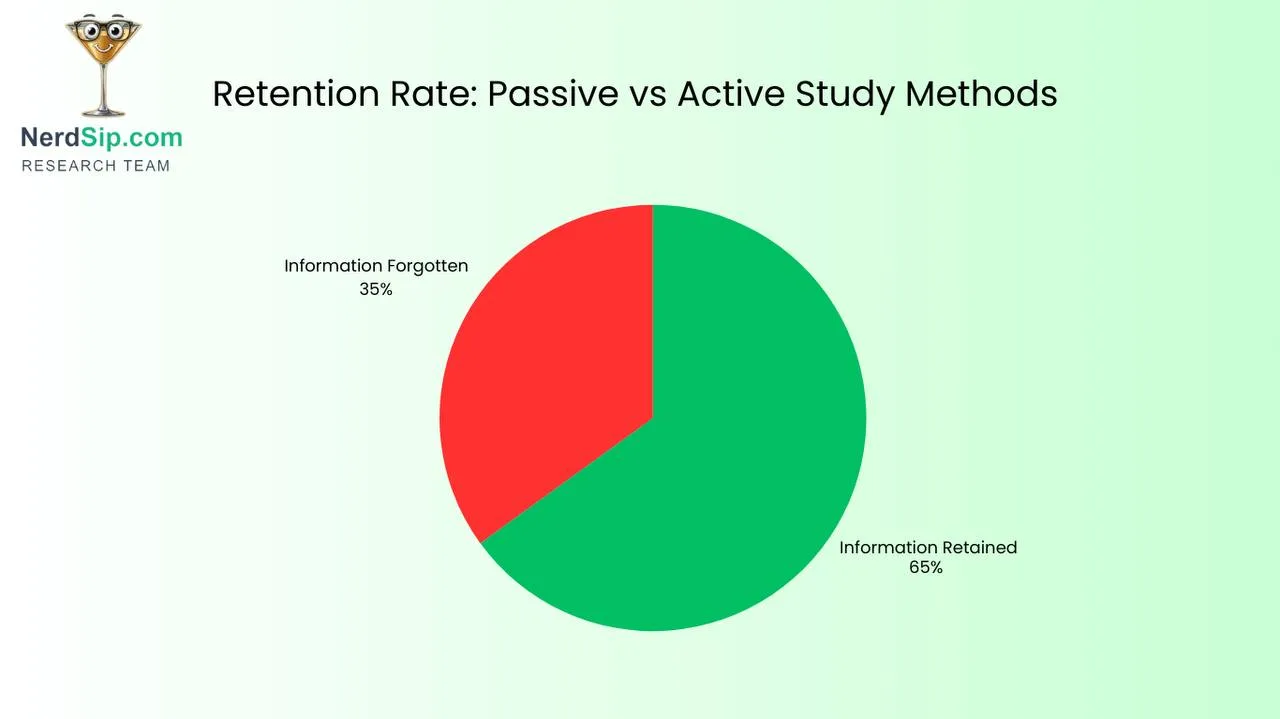
Research published in 2026 confirms: Students who use active learning strategies retain 25-60% more information than those using passive methods like reading and highlighting.
The solution? Active recall, spaced repetition, and strategic test-taking, the three pillars of acing exams.
Strategy 1: Active Recall (Test Yourself Before the Test Tests You)
What it is: Actively retrieving information from memory without looking at notes or textbooks.
Why it works: Retrieval strengthens neural pathways associated with memory. Each time you successfully recall information, you make that knowledge easier to access in the future.
Studies show retrieval practice improves memory because it forces active recall, the exact skill you need during exams.
How to Implement Active Recall
The Feynman Technique:
- Write the topic at the top of a blank page
- Explain it as if teaching a 10-year-old
- Identify gaps where you struggle to explain simply
- Go back to source material, relearn those gaps
- Simplify and teach it again
Example: If studying "Glycolysis," explain the process in story format without jargon. If you can't, you don't understand it yet.
Practice Problems Method:
- Work through textbook problems WITHOUT looking at solutions first
- Do previous assignments and old exams under test-like conditions
- Create your own practice questions from lecture notes
Self-Quizzing:
- Hide your notes and write everything you remember about a topic
- Use flashcards (digital or paper) and test yourself regularly
- Teach the material to a classmate or study group
The 80/20 Rule for Active Recall
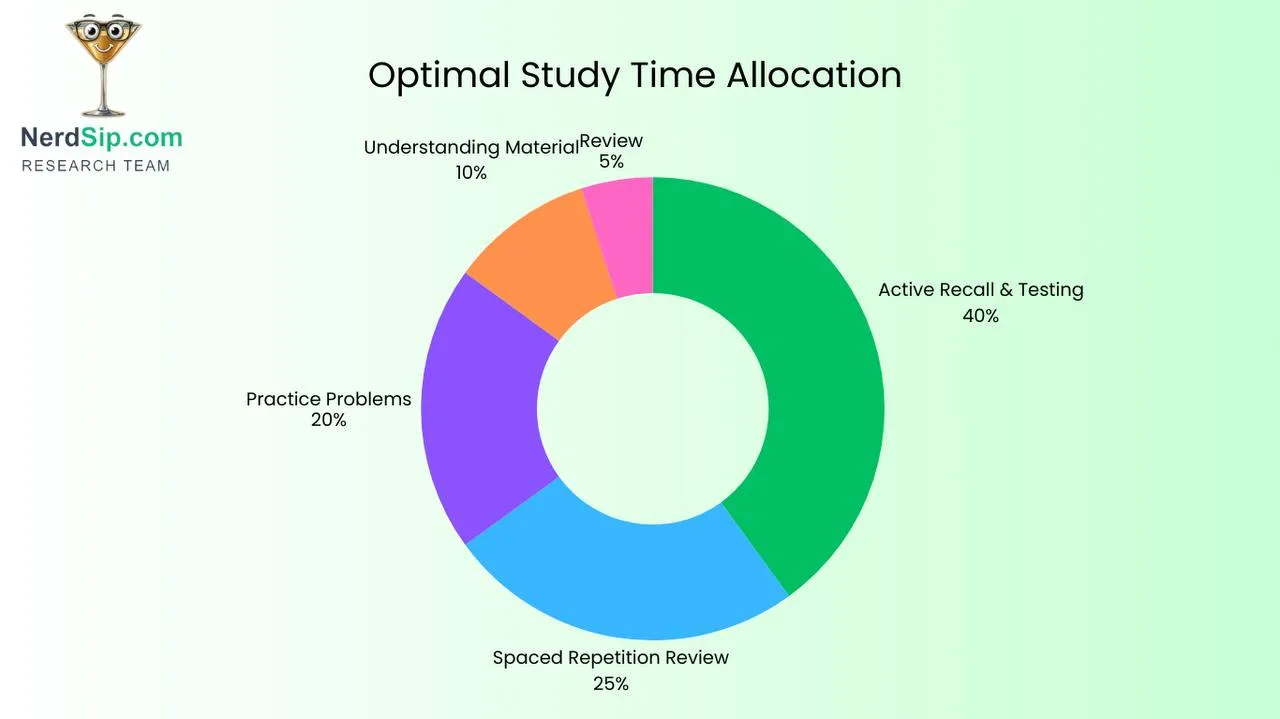
Spend 80% of study time testing yourself and only 20% reviewing material. Most students do the opposite (80% reading, 20% testing) and wonder why they forget everything.
Strategy 2: Spaced Repetition (The 1-2-7-14 Rule)
What it is: Reviewing information at increasing intervals to combat forgetting.
Why it works: Memory fades over time (called the "forgetting curve"). Reviewing just before you forget reinforces the memory and extends retention.
Research shows spaced repetition increases long-term retention by up to 65% compared to massed practice (cramming).
The 1-2-7-14 Day Spaced Repetition System
After learning new material:
- Day 1: Review within 24 hours of initial learning
- Day 2: Review 2 days after first review
- Day 7: Review 1 week later
- Day 14: Review 2 weeks later
Digital Tools for Spaced Repetition
| Tool | Best For | Platform | Cost |
|---|---|---|---|
| Anki | Customizable flashcards with built-in spaced repetition | Desktop, Mobile | Free |
| Quizlet | Pre-made study sets + custom cards | Web, Mobile | Free/$35.99/year |
| RemNote | Note-taking integrated with spaced repetition | Web, Desktop, Mobile | Free/$8/month |
| Brainscape | Confidence-based repetition | Web, Mobile | Free/$9.99/month |
Strategy 3: Retrieval Practice (Turn Passive Study into Active Testing)
What it is: Constantly testing yourself on material rather than re-reading.
Why it works: Students who engage in retrieval practice (self-testing) score significantly higher than those who only review. Research shows students who reported higher instances of self-testing had higher GPAs.
Proven Retrieval Practice Techniques
1. The Blank Page Method
Open a blank document or page. Without looking at notes, write down everything you know about a topic. Identify gaps by checking your notes afterwards.
2. The PQ4R Method
Preview → Question → Read → Reflect → Recite → Review.
3. Practice Tests
Create and take practice tests under exam conditions using a timer and no notes.
Strategy 4: Strategic Test-Taking Skills (Maximize Points You Already Know)
Research from 2026 confirms: Students using structured test-taking strategies score 12-18% higher than those without strategies.
During the Exam: The Strategic Approach
- Step 1: Read ALL Instructions Carefully (Note point values and choice options).
- Step 2: Do a Quick Survey (Scan the entire exam to identify easy and hard questions).
- Step 3: Answer Easy Questions First (Build momentum and secure guaranteed points).
- Step 4: Budget Time Strategically (Allocate minutes based on point value).
- Step 5: Eliminate Wrong Answers (Use systematic elimination for multiple choice).
- Step 6: Review with Fresh Perspective (Use final 10 minutes to verify answers).
Strategy 5: Manage Your Energy, Not Just Your Time
Research shows 4 focused hours outperform 8 distracted hours. Sleep is also critical for memory consolidation.
Strategy 6: Study Smarter with Science-Backed Techniques
Interleaving (Mix Up Your Study Topics)
Studying different topics in one session rather than blocking by subject boosts cognitive flexibility.
The Pomodoro Technique
25 minutes study / 5 minutes break. Maintains high focus while preventing fatigue.
Strategy 7: Prepare Mentally and Physically
Combat test anxiety with breathing exercises and positive visualization. Prioritize protein and complex carbs before the exam.
About NerdSip: Exam preparation requires deep understanding of concepts, not just memorization. NerdSip provides 5-minute microlearning sessions designed to build genuine comprehension through active learning, perfect for spaced repetition and retrieval practice. NerdSip is live in the App Store and on Google Play to integrate evidence-based learning into your exam prep routine.
Frequently Asked Questions
What is the fastest way to ace an exam?
The fastest reliable way is active recall plus spaced repetition. Spend about 80 percent of your study time testing yourself from memory and only 20 percent reviewing, and space those reviews across several days using the 1-2-7-14 day pattern. Students who use these evidence-based methods consistently outscore those who only re-read or highlight.
How many hours a day should I study for an exam?
Quality matters more than raw hours. Research shows four focused hours of retrieval practice beat eight distracted hours of re-reading. Build your day from 60 to 90 minute focus blocks with real breaks, and put your hardest material in your sharpest hours rather than counting total time in the chair.
Does cramming work?
Cramming can rescue a near-term exam but is weak for long-term memory, and all-nighters hurt the sleep that consolidates what you learned. If your window is short, cram with active recall and past-paper practice instead of re-reading. See our short-time study plan for a structured approach.
What study technique has the strongest evidence?
Retrieval practice, also called active recall, has the strongest research support, followed closely by spaced repetition. Both force your brain to reconstruct knowledge, which strengthens memory far more than passive review like reading and highlighting.
Every NerdSip course clears a four-layer fact-checking pipeline before it reaches the app: grounded in live sources, scored nightly, gated on failure, and reviewable by a person at one tap. Articles on this blog are drafted with AI assistance, then researched, verified, and edited by our team.
Editorial responsibility: ai51 UG (haftungsbeschränkt). Responsible editor named in the imprint.
📚 Keep Learning
Explore the NerdSip learning hubs
The blog is our editorial layer. When you want to move from reading into doing, these hubs organize the rest of NerdSip by format, including the app itself and the press that has written about it.
Ready to Level Up?
Turn your screen time into knowledge. Download NerdSip and start learning in just 5 minutes a day.
4.7 stars from 510 reviews · 10,000+ learners