Brain training for seniors is a crowded, noisy market built on a simple fear: losing your mental edge. The good news is that your brain remains changeable at every age. The catch is that most of what gets sold as brain training does little, while the things that genuinely work are cheap or free. This guide covers the honest science, the best brain games and alternatives to sudoku, and a simple routine you can start today.
What brain training really means
Strip away the marketing and brain training is any activity that forces your brain to do something it has not yet mastered. That definition matters, because it explains why so much popular advice fails. The ten-thousandth crossword is not training. Neither is level 400 of a matching game you could play half asleep. Your brain builds new connections in response to novelty and effort, a property called neuroplasticity that persists into your 80s and beyond.
So the real question is not "which puzzle should I buy?" It is "what would genuinely stretch me right now?" Everything in this guide flows from that question.
The honest science: what works and what is hype
Brain training has been studied intensively, and the results are clearer than the ads suggest.
- Training transfers narrowly. The large ACTIVE trial found that seniors who trained a specific skill, such as processing speed, improved at that skill and kept some benefit for up to ten years. But improvement in one game rarely spills over into everyday memory or reasoning.
- Regulators agree. In 2016 the U.S. Federal Trade Commission fined Lumosity's maker 2 million dollars for claiming its games could stave off cognitive decline. The evidence did not back the claims.
- Old-fashioned puzzles held their own. A Duke and Columbia study found that ordinary crossword puzzles beat commercial computer brain games at slowing memory loss in older adults with mild cognitive impairment.
- Lifestyle beats software. The strongest protective factors in the research are physical exercise, social connection, sleep, and learning demanding new skills. No app replaces them.
We break down the four evidence-backed pillars, novelty, active recall, movement, and social connection, in our guide to brain exercises for seniors that actually work. Consider that article the companion piece to this one.
Tired of sudoku? 12 alternatives that stretch different muscles
Sudoku is a fine puzzle. But if you have done it daily for years, your brain solves it on autopilot, and autopilot is the opposite of training. These alternatives to sudoku keep the pleasure of puzzling while forcing fresh effort. Rotate through them rather than settling into one.
Number and logic puzzles
- Kakuro. The closest cousin to sudoku. You fill runs of cells so they add up to clue totals without repeating digits. The arithmetic layer makes it noticeably harder than it looks.
- KenKen. A grid puzzle where outlined cages must hit a target number using addition, subtraction, multiplication, or division. Latin-square logic plus mental math.
- Killer sudoku. Standard sudoku rules plus cage sums and no starting digits. Familiar enough to enjoy, hard enough to count as new.
- Nonograms (Picross). Number clues reveal a hidden picture. Trains a different kind of spatial deduction than any number grid.
Word and memory games
- Cryptic crosswords. If quick crosswords have gone stale, cryptics are a genuine step up. Every clue is a small riddle with its own grammar.
- Wordle and its variants. Short daily deduction with a built-in social angle: compare results with family.
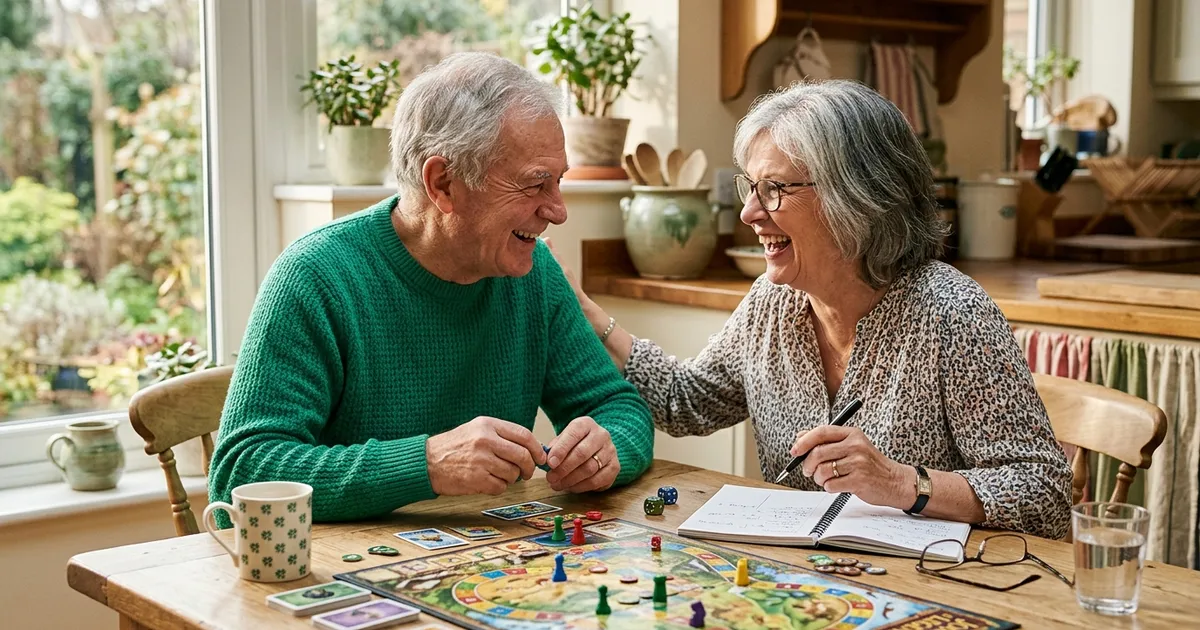
- Scrabble or Boggle. Vocabulary, pattern recognition, and an opponent. Games against people add the social benefit solo puzzles lack.
- Trivia quizzes. Retrieval practice disguised as fun. Pulling facts from memory is one of the best-documented ways to strengthen it.
Strategy and social games
- Chess. Planning, foresight, and pattern memory. Online play makes opponents available at any hour and any level.
- Bridge. Perhaps the most cognitively complete card game: memory, probability, and reading a partner. Bridge clubs also solve the isolation problem in one stroke.
- Mahjong. Tile matching, strategy, and traditionally a table of four. Popular for good reason.
- Go. Simple rules, bottomless depth. Ideal if you want a challenge that will never run out.
The biggest upgrade of all
Every puzzle above shares one ceiling: once you get good, the benefit fades. The alternative with no ceiling is learning an entirely new subject or skill. In a landmark University of Texas study, seniors who spent months learning digital photography improved their memory measurably. Those doing familiar, comfortable activities did not. If you suspect you are too old for that, the research says otherwise, and we wrote up the evidence in Is It Too Late to Learn Something New at 60? For concrete inspiration, browse our list of the best things for retirees to learn. This is also where an app like NerdSip becomes the easiest sudoku replacement of all: instead of the same grid every morning, it hands you a short, quiz-driven lesson on a genuinely new topic each day, which is exactly the novelty the research rewards.
Brain training apps: how to pick one that helps
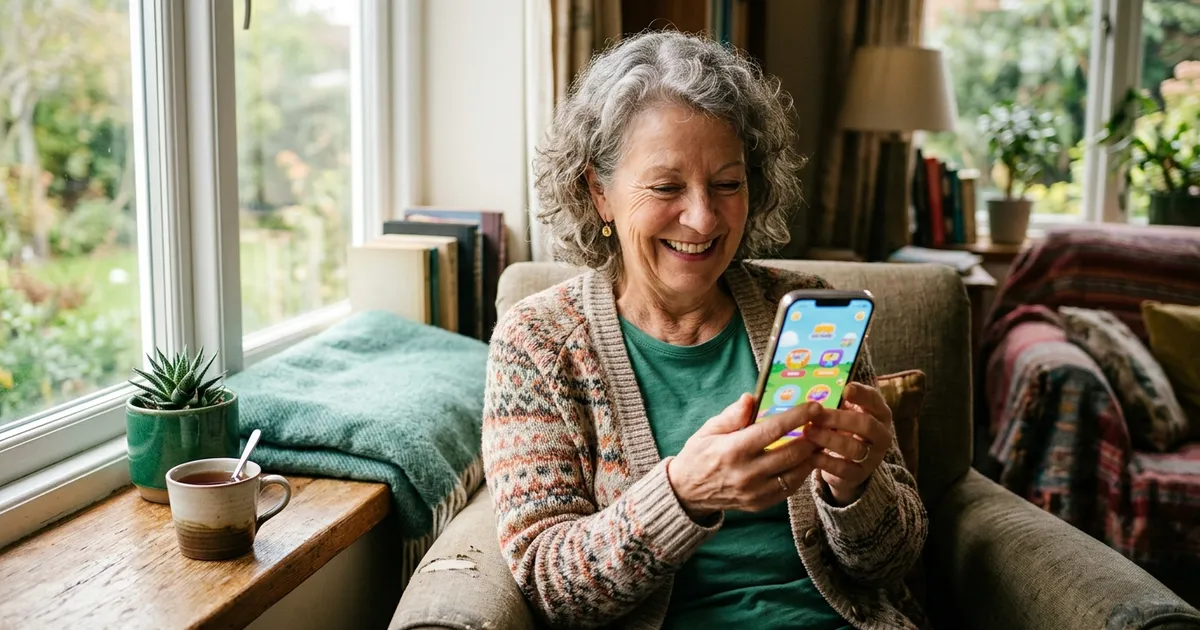
Apps are not magic, but the right one solves the two problems that kill most brain-training habits: deciding what to do each day, and staying consistent. Judge any app against four tests.
- Does it feed you novelty? New topics and new challenge types, not the same six mini-games forever.
- Does it make you retrieve? Quizzes and recall beat passive watching or matching.
- Is it honest? Beware apps promising to prevent dementia. No app can claim that.
- Will you actually use it? Large text, simple navigation, and short sessions matter more than feature lists.
We have done the comparison shopping for you. Our roundup of the best brain apps for seniors rates the popular options honestly, and our science-checked review of brain training apps that actually work separates evidence from advertising. If technology itself is the hurdle, start with our guide to easy learning apps for older adults, which favors simple, uncluttered designs.
NerdSip sits in the learn-something-new camp: pick any topic that sparks curiosity, get a short gamified lesson with quiz questions that force recall, and come back tomorrow for something fresh. That is the novelty-plus-retrieval combination the research favors. A good first stop is the course on learning faster or mastering the memory palace.
A simple weekly brain training routine
Structure beats good intentions. Here is a complete routine that takes under 30 minutes a day, most of it pleasant.
- Daily, 5 to 10 minutes: learn something new with active recall. A lesson on an unfamiliar topic, a language app, or flashcards. Effort is the active ingredient.
- Daily, 20 minutes: brisk physical movement. A walk counts. Exercise raises blood flow and growth factors that protect the brain, and pairing it with an audio lesson stacks the benefit.
- Every other day: one puzzle from the rotation above, chosen because it still feels hard.
- Weekly: one social, mentally demanding activity. Bridge night, a class, a long phone call with a sharp friend.
- Always: guard your sleep. Memory consolidation happens overnight, and no amount of daytime training compensates for chronic short sleep.
For a deeper version of this plan built around life after work, see how to keep your mind sharp after retirement. And if memory specifically is your concern, our science-backed guide to improving your memory covers the techniques that hold up in studies.
What the evidence supports, ranked
Time and attention are finite, so spend them in this order. The ranking reflects how strong the research is, not how heavily each thing is marketed.
| What you do | Evidence | What it actually changes |
|---|---|---|
| Regular physical exercise | Strongest | Blood flow and growth factors that protect brain tissue directly |
| Learning a demanding new skill | Strong | Memory measured months later, not just on the task you trained |
| Staying socially connected | Strong | Slower decline across long-term population studies |
| Protecting your sleep | Strong | Overnight consolidation of everything you learned that day |
| Active recall and self-testing | Good | Retention far above rereading or passive review |
| Traditional puzzles, kept genuinely hard | Moderate | Modest benefit, and only while the puzzle still resists you |
| Commercial brain-game apps | Weak | You get better at those games |
Look at what sits on top. The two strongest interventions available to you are a brisk walk and a real conversation. Neither costs a penny. Neither appears in an advertisement, which is precisely why you hear so little about them.
Five mistakes that waste the effort
Most people who give up on brain training were doing a reasonable thing badly. These five failures account for nearly all of it.
- Staying comfortable. The puzzle you can finish while half-listening to the radio is recreation, not training. Pleasant, but it is not doing the work you think it is. If you never feel slightly stuck, nothing is being built.
- Judging progress by score. Your score on any single game rises for a boring reason: you learn that game. That improvement almost never travels to the rest of your life, which is the whole point of the ACTIVE trial finding above.
- Starting too big. An ambitious hour on Monday reliably becomes nothing by Thursday. Ten honest minutes a day, sustained for a year, beats every burst of enthusiasm that collapses in a week.
- Doing all of it alone. Solo puzzling misses one of the strongest protective factors in the entire literature. A bridge table delivers challenge and company at once, which is why it keeps outperforming apps.
- Buying a promise instead of building a practice. No product can honestly claim to prevent dementia. Any that does is telling you something about itself. What protects you is the ordinary thing you repeat, not the thing you purchase.
How to tell whether it is working
This is where most guides go quiet, because the honest answer is unsatisfying. You will not feel your brain getting sharper the way you feel a muscle after the gym. Cognitive change is slow, uneven, and easy to misread from the inside.
Watch for the practical signals instead. Do you pick up new information faster than you did six months ago? Does an unfamiliar app or form frustrate you less? Can you follow a complicated argument on the radio without losing the thread? Do names come back to you a little more readily? Those everyday moments are better evidence than any score.
Give it three months before you judge anything. The University of Texas photography study ran for months, not weeks, and that is roughly the timescale on which measurable change appears. If you want something more concrete, keep a short note once a week: what you learned, and one thing you found difficult. Reading it back after a season is far more revealing than a graph inside an app.
One expectation to drop early: none of this restores a twenty-year-old brain. The realistic goal is a gentler slope, more capability retained for longer, and a mind that stays interesting to live inside. That is a worthwhile prize and it is achievable. Reversal is not on the menu, and anyone selling it is selling something else.
Normal aging, or something more
Almost everyone reading this has had the thought after losing a word mid-sentence. It is worth naming plainly, because the fear itself keeps people from acting.
Ordinary aging looks like this: names arrive slowly and then arrive, you walk into a room and the reason returns after a moment, you need the list you used to hold in your head. Annoying, common, and compatible with a completely sharp life.
What deserves a conversation with your doctor is a change in kind rather than degree. Trouble with familiar routines you have done for decades. Getting lost somewhere you know well. Repeating the same question within a short conversation. Family noticing before you do. Struggling to follow a recipe you have cooked a hundred times.
None of that is a diagnosis, and reading a list on the internet is not an assessment. It is a reason to book an appointment rather than to worry privately for another year. Many causes of memory trouble are treatable, including thyroid problems, vitamin deficiency, medication interactions, depression, and poor sleep. Finding out early opens more doors than waiting does. Brain training is a good habit. It is not a substitute for a clinician.
Your first week
Start smaller than feels satisfying. The goal this week is not progress, it is proof that the routine survives contact with a real life.
- Day 1. Pick one topic you have been quietly curious about for years. Not useful, just interesting. Spend five minutes on it.
- Day 2. Same topic, five minutes, but close the page first and say aloud what you remember before you check. That awkward pause is the part that works.
- Day 3. Add the walk. Twenty minutes, brisk enough that talking takes slight effort.
- Day 4. Swap your usual puzzle for one from the rotation above that you have never tried. Expect to be bad at it. That is the point.
- Day 5. Phone the sharpest person you know and argue about something harmless.
- Day 6. Repeat whichever day you enjoyed most.
- Day 7. Write three lines on what stuck and what you would rather drop. Then run the same week again.
After a month, this stops feeling like a program and starts feeling like how you spend your mornings. That transition is the entire objective. Everything else is detail.
The bottom line
Brain training for seniors works when it means what it should: regular, slightly uncomfortable mental effort on unfamiliar ground, supported by movement, sleep, and other people. It fails when it means repeating a comfortable puzzle or trusting an app's promises. Keep sudoku if you love it. Just make sure something in your week still makes your brain sweat. If you want a ready-made way to do that, NerdSip serves you a genuinely new, quiz-driven lesson every day, in five minutes, with no clutter.
Sources and Further Reading
- National Institute on Aging: Cognitive Health and Older Adults
- Duke University: Crossword Puzzles Beat Computer Games in Slowing Memory Loss
- FTC: Lumosity to Pay $2 Million Over Deceptive Advertising
- The ACTIVE Trial: Ten-Year Effects of Cognitive Training in Older Adults
- APA: Learning New Skills Improves Memory in Older Adults
One thing worth knowing before any of this: what actually changes with age, and what does not. Our guide to the human brain covers the development and ageing data, sources included.
Everything in this guide
This page is the map. Each article below goes deeper into one part of it.
Is It Too Late to Learn Something New at 60? Science Says No
Is it too late to learn something new at 60? No. Here is what neuroscience says about the aging brain, and…
Brain Exercises for Seniors That Actually Work
Evidence-based brain exercises for seniors that beat generic crossword advice. What the science really says…
Best Brain Apps for Seniors in 2026 (That Actually Help)
The best brain apps for seniors in 2026, compared honestly. What brain-training games can and cannot do, and…
Easy Learning Apps for Older Adults (Simple, Not Overwhelming)
Easy learning apps for older adults that stay simple, not overwhelming: large text, gentle onboarding, short…
8 Best Brain Training Apps That Actually Work in 2026 (Science-Checked)
Do brain training apps actually make you smarter? We checked the science and tested 8 apps. Here's what…
How to Keep Your Mind Sharp After Retirement
How to keep your mind sharp after retirement: build daily structure, add mental stimulation, and use a…
Best Things for Retirees to Learn (50+ Ideas Worth Your Time)
The best things for retirees to learn, from history and astronomy to gardening, cooking, money, and…
Frequently Asked Questions
Does brain training actually work for seniors?
Partly. Training a specific skill improves that skill, and some benefits can last for years. But commercial brain-game apps rarely transfer to everyday memory or thinking. The strongest evidence supports learning genuinely new skills, active recall, physical exercise, and social connection rather than repeating familiar puzzle apps.
What are the best alternatives to sudoku?
For similar logic with a fresh challenge, try kakuro, KenKen, killer sudoku, or nonograms. For language and recall, try cryptic crosswords, Wordle, or Scrabble. For strategy plus social benefit, chess, bridge, and mahjong are excellent. The single best upgrade is learning an entirely new subject or skill, because novelty is what drives brain change.
How many minutes of brain training should a senior do per day?
Five to ten focused minutes daily beats a long weekly session. Consistency matters more than duration, and the task should feel slightly difficult. If it feels easy and automatic, it has stopped being training. Pair the mental work with a daily walk for the biggest combined effect.
Are free brain games good enough, or do I need a paid app?
Free is fine. A library book on an unfamiliar subject, a new puzzle type, a language exchange, or a free learning app all provide real challenge. Pay for an app only if it adds structure you will actually stick with, such as daily lessons, quizzes, and progress tracking.
Every NerdSip course clears a four-layer fact-checking pipeline before it reaches the app: grounded in live sources, scored nightly, gated on failure, and reviewable by a person at one tap. Articles on this blog are drafted with AI assistance, then researched, verified, and edited by our team.
Editorial responsibility: ai51 UG (haftungsbeschränkt). Responsible editor named in the imprint.
📚 Keep Learning
Explore the NerdSip learning hubs
The blog is our editorial layer. When you want to move from reading into doing, these hubs organize the rest of NerdSip by format, including the app itself and the press that has written about it.
Train your brain with something genuinely new
NerdSip turns any topic into a quick, gamified lesson with quizzes built on active recall, the kind of effort research links to a sharper mind. Large text, simple design, free to start.
4.7 stars from 380 reviews · 10,000+ learners