The brain exercises that actually work for seniors are the ones that feel a little hard. Novelty and genuine effort, not another familiar crossword, are what the research links to a sharper mind. That means learning a new skill, testing yourself instead of passively reviewing, moving your body, and staying connected to other people. Here is what the evidence supports, and what is mostly hype.
Why "just do a crossword" is weak advice
Crosswords and sudoku are not bad for you. But if you have done a crossword every morning for twenty years, your brain has long since figured out how they work. That is the problem. A task only exercises your mind while it is still unfamiliar and effortful. Once you are good at something, it becomes a comfortable routine rather than a challenge, and the cognitive benefit fades.
Think of it like walking the same flat loop each day. It is pleasant and worth doing, but it will not build new strength the way a fresh, steeper trail would. The brain works the same way. It grows when you ask it to do something it has not mastered yet.
The one that matters most: learn something genuinely new
If you take one thing from this article, take this. Learning a demanding new skill is the most reliably effective brain exercise there is. In a well-known study from the University of Texas, older adults who spent months learning digital photography or quilting, both cognitively demanding and unfamiliar, showed measurable memory improvements. Those who only socialized or did easy, familiar activities did not gain the same benefit. The difficulty was the active ingredient.
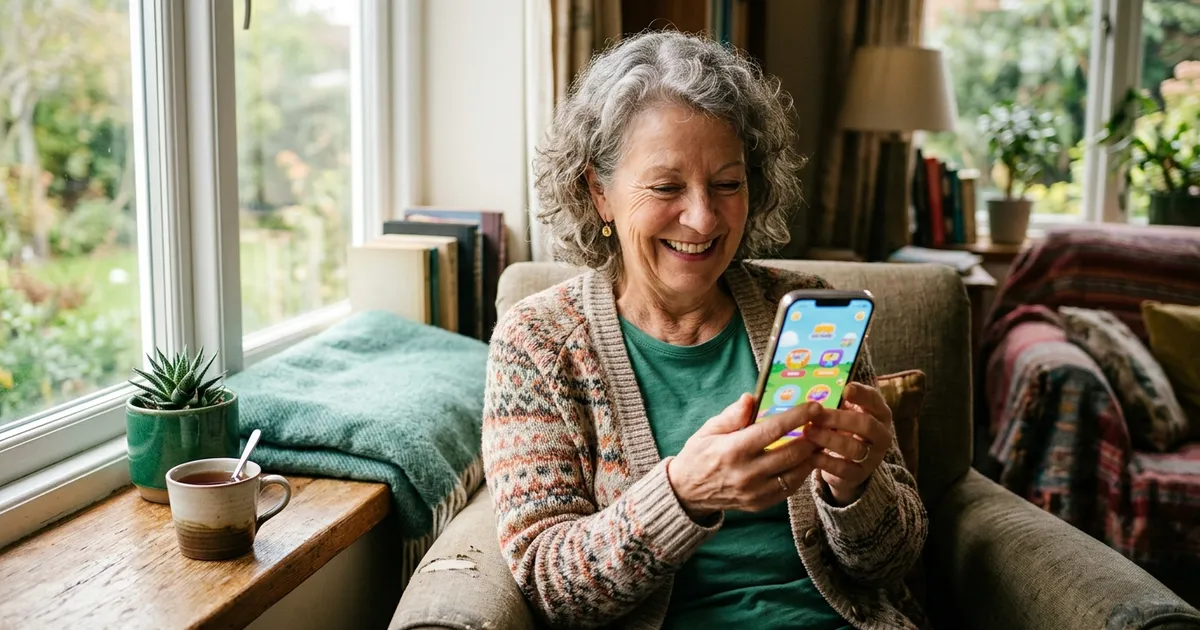
This is neuroplasticity in action, your brain's lifelong ability to form new connections in response to challenge. It does not switch off at 60 or 70. A short, structured way to feed it is a quick daily lesson on an unfamiliar topic, which is exactly what an app like NerdSip is built for. You can start with a course on how to learn faster or dig into how the brain adapts with the gut-brain axis. For a fuller tour of the evidence on staying sharp, see our guide to keeping your mind sharp after retirement.
Use active recall, not passive review
How you learn matters as much as what you learn. Most people study by rereading, which feels productive but does little. The far stronger method is active recall: closing the book and forcing yourself to retrieve the answer from memory. This effortful retrieval, sometimes called the testing effect, strengthens memories more than any amount of rereading.
You can build it into daily life easily:
- After reading an article, look away and summarize it out loud from memory.
- Try to name the streets on your route before you look at a map.
- Use flashcards or quiz-based apps that make you produce the answer, not just recognize it.
- Tell a friend what you learned today; teaching forces recall.
This is why quiz-based learning tools help more than passive video watching. Every quiz question is a small act of retrieval. Our science-backed guide to improving your memory goes deeper on this, and the memory palace course teaches a classical technique for locking in names and lists.
The comparison: hype versus real evidence
| Activity | Evidence strength | Why |
|---|---|---|
| Learning a new skill or subject | Strong | Novelty and difficulty drive new brain connections |
| Active recall and self-testing | Strong | Effortful retrieval strengthens memory |
| Regular physical exercise | Strong | Boosts blood flow and brain-derived growth factors |
| Staying socially connected | Strong | Conversation is complex mental work; isolation harms cognition |
| Commercial brain-training games | Weak | Gains rarely transfer beyond the games themselves |
| Repeating familiar puzzles | Weak | No longer challenging once mastered |
Do not forget your body: exercise is brain exercise
Some of the strongest evidence for protecting the aging brain comes not from puzzles but from physical movement. Aerobic exercise increases blood flow to the brain and raises levels of a protein called BDNF that supports the growth and survival of neurons. The National Institute on Aging and countless studies point to regular activity as one of the most protective things you can do for your mind.
You do not need a gym. A brisk daily walk, gardening, dancing, or swimming all count. The best results come from combining physical and mental challenge, so a walk while listening to an audio lesson is a genuine two-for-one. Speaking of the body, healthy sleep matters enormously for memory consolidation; our course on the science of better sleep separates the real rules from the myths.
Stay social: conversation is a workout
Talking with other people is one of the most demanding things your brain does. You track meaning, read tone, recall shared history, and plan your reply all at once. That complexity is why staying socially connected is consistently linked to better cognitive aging, and why loneliness and isolation are risk factors for decline.
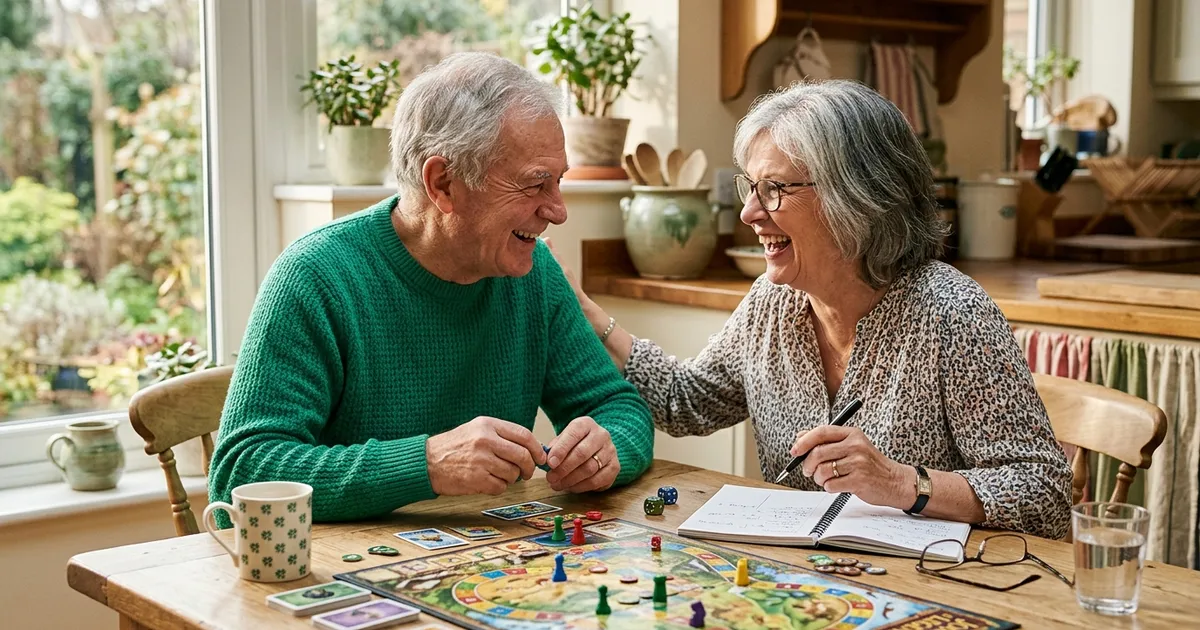
Join a club, take a class, call a friend, or find a group built around learning something new. Combining the social and the novel, like a shared language class, stacks two proven benefits at once. You can browse learning topics to share with a friend in the health and wellness hub or across all of NerdSip's courses.
Novelty is the secret ingredient
If there is a single thread running through everything the research supports, it is novelty. Your brain pays attention to what is new and largely tunes out what is routine. That is why a familiar puzzle stops helping and an unfamiliar subject keeps working. Novelty forces your brain to build fresh pathways instead of coasting on old ones.
You can inject novelty into an ordinary week without turning your life upside down. Take a different route on your walk. Cook a cuisine you have never tried. Read about a subject you know nothing about, whether that is Roman law, the night sky, or how money evolved. On NerdSip you could wander into the science of sleep one day and something completely different the next, which is novelty by design. The variety itself is part of the exercise.
What about commercial brain-training games?
You have seen the ads promising to ward off memory loss with a few minutes of colorful puzzles. Approach them with healthy skepticism. In 2016 the U.S. Federal Trade Commission fined the maker of Lumosity 2 million dollars over exactly those kinds of claims, because the evidence did not support them. A consensus statement from dozens of scientists reached the same conclusion: brain games mostly make you better at brain games.
That does not mean they are worthless, and they can be a pleasant habit. But do not mistake them for the real thing. If your goal is cognitive exercise that carries into daily life, spend your minutes learning something new instead. We compare the popular options honestly in our guide to the best brain apps for seniors, and our complete guide to brain training for seniors covers the full landscape, including the best alternatives to sudoku.
A simple weekly plan that actually works
- Daily: five to ten minutes learning something new, using quizzes or recall rather than passive reading.
- Daily: a brisk walk or other physical activity, ideally outdoors.
- Weekly: one genuinely new challenge, a recipe, a skill, a topic you know nothing about.
- Weekly: real social time, especially anything that involves learning or conversation.
- Always: prioritize good sleep, which is when memories are consolidated.
None of this requires special equipment or a big budget. It requires a little novelty, a little effort, and consistency. That combination, repeated most days, is what genuinely keeps an older brain sharp.
Common mistakes that waste your effort
Even well-meaning people sabotage their own brain exercise without realizing it. A few patterns come up again and again.
- Sticking to what is comfortable. If a task feels easy, it has stopped being exercise. Comfort is the enemy of growth. Keep nudging into the unfamiliar.
- Rereading instead of recalling. Passive review feels productive and does little. Close the book and retrieve the answer instead.
- Chasing brain-game high scores. A better score in a puzzle app is not the same as a sharper mind. Do not confuse the two.
- Doing it once a week. A single long session cannot replace daily practice. Little and often wins.
- Neglecting the body. Skipping physical activity undercuts everything else. Movement and sleep are foundations, not extras.
Fix these, and the same amount of effort delivers far more. The goal is not to do more, it is to do the right things consistently. A quiz-based tool like NerdSip quietly steers you away from the two biggest traps, comfort and passive review, because every lesson is new and every question demands recall.
The bottom line
Skip the guilt about not doing enough sudoku. Real brain exercise means stretching into the unfamiliar, testing yourself instead of rereading, moving your body, and staying connected. Pick one new thing to learn this week and make it a daily five-minute habit. If you want a ready-made way to do that, NerdSip turns any topic into a quick, quiz-driven lesson that gives your brain exactly the kind of effort it thrives on.
Sources and Further Reading
- National Institute on Aging: Cognitive Health and Older Adults
- Harvard Health: 6 Simple Steps to Keep Your Mind Sharp
- American Psychological Association: Learning New Skills Improves Memory in Older Adults
- CDC: Physical Activity Basics
Frequently Asked Questions
Are crossword puzzles good brain exercise for seniors?
Crosswords are fine, but if you already do them often, they stop being a real challenge and offer little new benefit. The brain grows most when a task is unfamiliar and effortful. Learning a brand-new skill gives you more cognitive exercise than repeating a puzzle you have mastered.
What is the single best brain exercise for older adults?
Learning something genuinely new and demanding, such as a language, an instrument, or an unfamiliar subject, has the strongest evidence. In one landmark study, seniors who learned digital photography improved their memory, while those doing familiar activities did not. Novelty and difficulty are what matter most.
How often should seniors exercise their brains?
A little most days beats a long session once a week. Short, daily mental challenges build the consistency your brain responds to, and they pair well with regular physical activity. Even five to ten focused minutes a day of learning something new can make a difference over time.
Every NerdSip course clears a four-layer fact-checking pipeline before it reaches the app: grounded in live sources, scored nightly, gated on failure, and reviewable by a person at one tap. Articles on this blog are drafted with AI assistance, then researched, verified, and edited by our team.
Editorial responsibility: ai51 UG (haftungsbeschränkt). Responsible editor named in the imprint.
📚 Keep Learning
Explore the NerdSip learning hubs
The blog is our editorial layer. When you want to move from reading into doing, these hubs organize the rest of NerdSip by format, including the app itself and the press that has written about it.
Give your brain something genuinely new
NerdSip turns any topic into a quick, gamified lesson with quizzes that use active recall, the exact kind of effort that keeps your mind sharp. Free to start.
4.7 stars from 380 reviews · 8,900+ learners