Let us start with the conclusion most habit-tracker roundups never reach: the best habit you can build is one that becomes so natural you stop needing to track it. A tracker is scaffolding. It helps you put the building up. But scaffolding is not the building, and if you are still leaning on it years later, something is off.
That said, scaffolding is genuinely useful while you build. So this is an honest, two-part guide. First, the best habit trackers of 2026 - Habitica, Streaks, Way of Life, Loop, Finch, and Atoms - with a fair account of who each one suits. Second, the more important question: when a tracker actually helps, when it quietly becomes a chore, and how to build a habit so rewarding that you can put the tracker down for good. If you want the broader picture first, our build good habits hub ties it all together.
Here is the test that decides everything. A good habit leaves you fulfilled, not empty. Doomscrolling is the empty kind - stimulation now, regret later. A healthy habit is the full kind - the reward arrives while you do it and lingers afterward. The most self-sustaining habit we know fits that test perfectly: swapping 5-10 minutes of social media for a micro-learning app. It is intrinsically rewarding, so it does not need a streak to keep it alive. We will come back to that. First, the trackers.
The Best Habit Trackers of 2026
These are real, well-built apps, each with a genuine strength. The right one depends on what motivates you: games, minimalism, data, gentleness, or method.
1. Habitica - Best for Gamers and Group Accountability
What it is: A habit tracker built as a role-playing game. Habits, dailies, and to-dos become quests; completing them earns gold, gear, and XP for your avatar, and you can join parties for group challenges.
Why it works: Habitica makes the boring part of habits fun by turning it into a game, and the social parties add real accountability - letting your team down stings more than letting yourself down. For people who are genuinely motivated by RPG mechanics, this is the most engaging tracker available.
Honest take: It can be a lot to manage, and the gamification only works if you actually care about the game. If you do not, the overhead becomes friction. Who it suits: gamers and anyone who thrives on group challenges.
Pricing: Free and open-source at its core; optional subscription for cosmetics. Platforms: iOS, Android, Web.
2. Streaks - Best Minimalist Tracker for Apple Users
What it is: A clean, award-winning habit tracker for Apple devices, built around keeping a long unbroken chain of completed days.
Why it works: Streaks does one thing beautifully - it makes the chain visible and makes you not want to break it. The loss-aversion of an unbroken run is a powerful, simple motivator, and the app is fast, gorgeous, and deeply integrated with Apple Health and Shortcuts.
Honest take: The streak focus is its strength and its risk - it is the app most likely to tip into streak anxiety (more on that below). Who it suits: Apple users who want a premium, no-clutter tracker.
Pricing: One-time paid app, no subscription. Platforms: iOS only.
3. Way of Life - Best for Spotting Patterns
What it is: A flexible tracker that uses a simple red/green/skip system and turns your data into clear trend charts.
Why it works: Way of Life is built around insight, not just streaks. The color-coded calendar and trend lines help you see patterns - which days you slip, which habits cluster together - so you can adjust your routine intelligently rather than just feeling guilty.
Honest take: It is more of a data tool than a motivator, so if you need a push to act rather than analysis after the fact, it may feel a bit dry. Who it suits: analytical people who learn from their own data.
Pricing: Free tier with a limited number of habits; paid unlock for unlimited. Platforms: iOS and Android.
4. Loop Habit Tracker - Best Free and Private Option
What it is: A free, open-source habit tracker for Android, known for a clever "habit strength" score that goes beyond raw streaks.
Why it works: Loop is completely free, ad-free, and offline - your data stays on your device. Its habit-strength algorithm rewards consistency over time rather than punishing a single miss, which is psychologically healthier than a brittle streak count.
Honest take: Android-only and minimalist by design - no social features, no big gamification. For privacy-minded users that is a feature, not a flaw. Who it suits: Android users who want a free, private, no-nonsense tracker.
Pricing: Completely free and open-source. Platforms: Android.
5. Finch - Best for Gentle, Self-Care Habits
What it is: A self-care app where completing habits and small tasks helps a cute virtual bird grow and explore.
Why it works: Finch reframes habit-building around care instead of guilt. You are not failing a streak; you are looking after your bird, and by extension yourself. That warmth dramatically lowers the shame that makes people abandon trackers after one missed day.
Honest take: The gentleness that makes it sustainable can feel too soft for people who want hard accountability. Who it suits: anyone who responds to encouragement over pressure, especially for wellbeing habits.
Pricing: Generous free tier; optional Plus subscription. Platforms: iOS and Android.
6. Atoms - Best for a Proven Framework
What it is: The habit app from the team behind Atomic Habits, built around tiny habits, identity-based change, and short check-ins.
Why it works: Atoms bakes a genuinely good methodology into the tracker - start absurdly small, anchor the habit to your identity, stack it on an existing routine. The app guides your setup so you avoid the over-ambitious goals that kill most habits.
Honest take: It is subscription-based, and the value depends on whether you want a method or just a checklist. Who it suits: people who want guidance and loved the book.
Pricing: Subscription-based with a trial. Platforms: iOS (check availability for Android).
When a Tracker Genuinely Helps
None of this is a case against trackers. Used well, they are excellent. They help most in two specific situations.
Early formation. In the first few weeks, a new habit has no momentum. Your brain has not yet wired the cue-routine-reward loop, so you forget, or you cannot tell whether you are making progress. A tracker solves both: it reminds you, and it makes progress visible, which is motivating in its own right. How long this phase lasts varies - our piece on how long it takes to build a habit covers the real numbers - but the formation window is exactly when a tracker earns its keep.
Accountability for unrewarding habits. Some good habits are simply not fun: flossing, taking a supplement, a tedious stretch routine. The action will never be its own reward, so an external nudge is legitimately useful for the long haul. For these, keeping a tracker is reasonable forever, because nothing else is going to make you want to do them.
When a Tracker Quietly Becomes a Chore
The problem starts when the tracker stops serving the habit and the habit starts serving the tracker. Watch for three warning signs.
Streak anxiety. When the dread of breaking a streak outweighs the joy of the habit, the tracker has become a source of stress. People have been known to do a sloppy, meaningless version of a habit at 11:58pm purely to protect a number. That is the tail wagging the dog.
The all-or-nothing collapse. Brittle streaks punish a single miss so harshly that one bad day triggers a full giving-up - "I broke the chain, so why bother." A healthy habit survives a missed day. A streak counter often does not.
Tracking without doing. If you find yourself maintaining the tracker more than the habit, optimizing the app instead of the action, the tool has become the point. That is the moment to step back.
The Habit That Needs No Tracker
Here is the deeper truth. A tracker is a substitute for intrinsic reward. You track a habit because the action itself is not pulling you back, so you need an external scoreboard to keep showing up. Flip that around and the implication is striking: if you choose a habit that is intrinsically rewarding, you barely need a tracker at all.
One habit fits this description better than almost any other: replacing 5-10 minutes of social media a day with a micro-learning app. Think about why it works. Scrolling already owns that slot in your day because it is rewarding - quick hits of novelty and stimulation. A good micro-learning app delivers the same hit while leaving you better off. You still get the "one more" pull, except each "one more" is a lesson you are glad you did. You finish fulfilled, not empty.
This is exactly where NerdSip fits. Its 5-minute lessons across thousands of courses come wrapped in genuine gamification - XP, loot drops, streaks, quizzes - so the action is the reward. You are not ticking a box about learning; you are learning, and the app makes that feel good. Because the reward is built in, the habit sustains itself. You will keep opening it after the novelty fades, not because a streak demands it, but because you actually want to. That is the definition of a habit that needs no tracker. We break down the mechanics in how to build a daily learning habit that actually sticks.
Because the lessons are AI-generated, accuracy cannot be left to chance. Every course is written against live search results, scored nightly for content integrity, kept out of your deck if it falls short, and reportable in one tap to a queue that real people work through.
To be fair to the trackers: a NerdSip-style habit may still benefit from a light tracker in week one, before the routine settles. The point is not that trackers are useless - it is that the destination is a habit you would keep even if every tracker disappeared. Choose the rewarding action first, and the tracker becomes optional.
How to Build a Habit You Can Eventually Stop Tracking
A simple, honest sequence:
1. Pick a habit that can become its own reward. The more intrinsically enjoyable the action, the less you will lean on the tracker. Replacing a scroll session with a quick lesson, a short walk you enjoy, or a few minutes of a hobby all qualify. See what to do instead of scrolling your phone for ideas, and how to replace TikTok with learning for the specific swap.
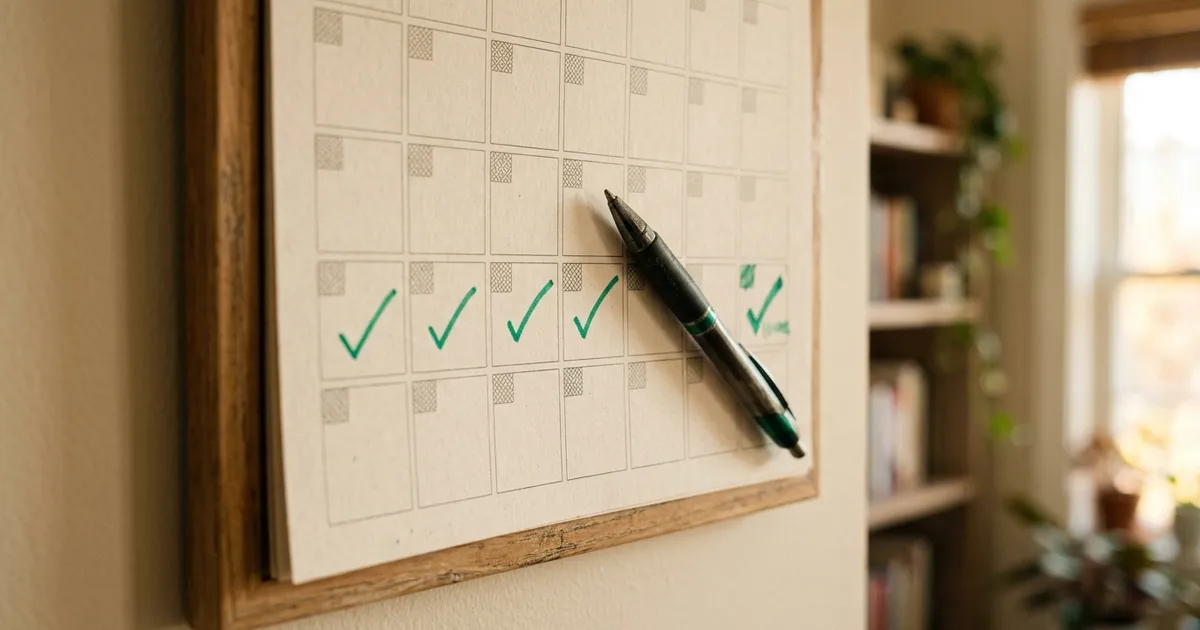
2. Use a tracker as scaffolding, not the building. For two to four weeks, pick any of the trackers above - or just a reminder and a wall calendar - to keep yourself honest while the loop wires in. Scaffold the routine with the free build-a-habit tool.
3. Anchor it to an existing cue. Stack the new habit onto something you already do - after morning coffee, on the commute, before bed. A reliable cue does what a reminder does, but permanently and for free.
4. Take the scaffolding down. When you reach for the habit before any reminder fires, and a missed day no longer threatens to end it, retire the tracker. The habit has become natural. That is success, not failure.
5. Keep a tracker only where it earns its place. For the genuinely unrewarding-but-important habits, keep tracking. For the ones that became their own reward, let go. For a fuller toolkit of the apps that build the rewarding kind, see our companion guide to the best apps to build good habits.
A habit tracker only covers one of the five areas that people actually want to improve. If the gap is somewhere else, our roundup of the 16 best self-improvement apps in 2026 covers learning, sleep, focus, fitness and money in one comparison table, with pricing checked in July 2026.
The Bottom Line
Habit trackers are good tools, and the six above are the best of 2026 for the jobs they do. Use one while you are forming a habit, or forever for the habits that will never be fun on their own. But do not mistake the tracker for the goal. The goal is a life full of habits so rewarding that you would keep them whether or not anyone counted. The fastest route there is to choose actions that leave you fulfilled rather than empty - starting with the smallest, most reliable swap of all: a few minutes of learning where the scrolling used to be.
Try it today. Put a five-minute lesson where a feed used to live, scaffold it with the build-a-habit tool if you like, and watch how quickly a habit that rewards you stops needing to be tracked.
Trackers are one category among many. For the wider picture, our roundup of the self-improvement apps that actually work covers learning, money, focus, sleep and mood, with verified 2026 pricing and the research behind each pick.
Frequently Asked Questions
Do habit trackers actually work?
Yes, with a caveat. Research and practice show trackers help most in the early formation phase by making progress visible and adding gentle accountability. They work less well long-term, because the streak can become the only reason you act. The strongest habits are intrinsically rewarding, so the smartest use of a tracker is as temporary scaffolding you remove once the action feels natural.
What is the best free habit tracker?
Loop Habit Tracker is the best fully free, open-source option on Android - clean, private, and ad-free. Habitica is free and cross-platform with deep gamification. Finch has a generous free tier and a gentle, encouraging style. For a no-cost setup that needs no app, a phone reminder plus a visible calendar works surprisingly well.
When should I stop using a habit tracker?
Stop when you start doing the habit before the reminder fires, or when the streak starts causing more anxiety than motivation. That is the sign the habit has become natural. Trackers are scaffolding; once the building stands, you can take the scaffolding down. A habit you genuinely enjoy - like a quick daily lesson - does not need to be tracked to survive.
Why do my habit-tracker streaks always break?
Usually because the habit itself is not rewarding, so the streak is your only motivation - and one missed day collapses it. Fix the action, not the tracker. Choose a habit that feels good to do, like replacing scrolling with a five-minute micro-learning session. When the action is its own reward, a broken streak no longer ends the habit.
Can a learning app really replace a habit tracker?
For the right habit, yes. If your goal is a daily good habit that replaces empty scrolling, a micro-learning app like NerdSip is both the action and the reward, so it sustains itself without a separate tracker. You may still use a tracker for habits that are not intrinsically fun, like flossing, but for learning the app does the job on its own.
Every NerdSip course clears a four-layer fact-checking pipeline before it reaches the app: grounded in live sources, scored nightly, gated on failure, and reviewable by a person at one tap. Articles on this blog are drafted with AI assistance, then researched, verified, and edited by our team.
Editorial responsibility: ai51 UG (haftungsbeschränkt). Responsible editor named in the imprint.
📚 Keep Learning
- 9 Best Apps to Build Good Habits in 2026 (Beyond Habit Trackers)
- How to Build Good Habits That Actually Stick (2026 Guide)
- How to Build a Daily Learning Habit That Actually Sticks (The 66-Day Method)
- 15 Things to Do Instead of Scrolling Your Phone (That Don't Suck)
- I Replaced TikTok with a Learning App for 30 Days: Here's What Happened
- How Long Does It Take to Build a Habit? (The Real Science, Not the 21-Day Myth)
- Best Self-Improvement Apps (No BS): 12 That Actually Work
Explore the NerdSip learning hubs
The blog is our editorial layer. When you want to move from reading into doing, these hubs organize the rest of NerdSip by format, including the app itself and the press that has written about it.
Build a Habit That Needs No Tracker
Swap 5 minutes of scrolling for a NerdSip lesson. Gamified, intrinsically rewarding, free to download.
4.7 stars from 380 reviews · 8,900+ learners