If you want the short answer: you build good habits by designing systems, not by summoning willpower. Pick one habit, shrink it to a two-minute version, attach it to something you already do every day, make it the easy default in your environment, and give yourself a small immediate reward. Then repeat it until it feels natural. That is the whole game. Motivation gets you started; systems are what keep you going once the novelty wears off.
This guide is the cornerstone of our How to Build Good Habits hub. It walks through every part of that system: why willpower fails, how the habit loop actually works, why identity beats goals, and the specific tactics, the 2-minute rule, habit stacking, and environment design, that make a habit stick. We will end with the one healthy habit that, in our experience, sticks more easily than almost any other, and why a good habit should eventually leave you fulfilled instead of empty.
Prefer to watch? Here are five habits that run on structure instead of willpower, in five minutes:
Why willpower fails (and what to use instead)
Most people try to build habits by gritting their teeth. They promise to read more, scroll less, exercise daily, and learn a new skill, all starting Monday. By Thursday, willpower has run out and the old patterns are back. This is not a character flaw. It is a design flaw.
Willpower is a fluctuating resource, not a constant. It is high in the morning and low when you are tired, stressed, hungry, or bored, which is precisely when temptation is strongest. If your habit depends on feeling motivated, it will only survive on your best days. Real life is mostly average days.
The fix is to stop relying on motivation and start relying on systems. A system removes the need to decide. When the cue is automatic, the action is easy, and the environment nudges you in the right direction, you do not have to feel inspired to follow through. You just do the thing, the way you brush your teeth without a motivational speech first.
| Motivation-based habits | System-based habits |
|---|---|
| Depend on feeling inspired | Run on autopilot regardless of mood |
| Collapse on tired or stressful days | Survive your worst days |
| Require constant decisions | Remove the decision entirely |
| Powered by a distant goal | Powered by a clear cue and reward |
| "I'll read more this year" | "After coffee, I read one page" |
| Fade after the New Year buzz | Strengthen with each repetition |
The rest of this guide is about building the right-hand column. Everything below is a tool for turning a fragile, motivation-dependent intention into a durable system.
The habit loop: cue, routine, reward
Every habit, good or bad, runs on the same three-part loop, popularized by Charles Duhigg in The Power of Habit and grounded in decades of behavioral research:
- Cue: the trigger that tells your brain to start the behavior. A time, a place, an emotion, or a preceding action.
- Routine: the behavior itself, the thing you actually do.
- Reward: the payoff that tells your brain this loop is worth remembering.
Doomscrolling is a textbook loop. The cue is boredom or a spare minute. The routine is opening the app and swiping. The reward is a quick hit of novelty. The loop runs thousands of times until it is carved into your brain. The reason it is so sticky is the reward is immediate and the cue is everywhere.
To build a good habit, you engineer the same loop on purpose. Choose a reliable cue, make the routine as easy as possible, and attach a reward your brain actually notices now, not in six months. To break a bad habit, you keep the cue and reward but swap the routine, which is exactly the approach we cover in how to break a bad habit.
The hidden fourth element: craving
Between the cue and the routine sits a craving, the anticipation of the reward. You do not crave the cigarette; you crave the relief. You do not crave scrolling; you crave the escape from boredom. This matters because the most durable good habits are the ones that produce a genuine craving of their own. A 5-minute lesson that teaches you something fascinating creates a real pull to come back, the same way a cliffhanger does. That is what turns a chore into a habit you actually want.
Identity-based habits: become the type of person who...
Here is the single biggest mindset shift in habit formation, drawn from James Clear's Atomic Habits: stop focusing on what you want to achieve and start focusing on who you want to become.
Outcome-based habits sound like "I want to lose 10 pounds" or "I want to read 30 books this year." Identity-based habits sound like "I'm a healthy person" or "I'm a reader." The difference is not just semantic. When a behavior becomes part of your identity, you maintain it because it is who you are, not because you are forcing yourself toward a number.
The mechanism is simple: every action you take is a vote for the type of person you want to become. Read one page and you have cast a vote for "I'm a reader." Do one lesson and you have cast a vote for "I'm someone who learns every day." No single vote transforms you, but the votes accumulate. After a few weeks, the evidence is undeniable, and the identity starts to feel true.
To use this, work backwards. Decide the identity first, then ask what that person would do today. A person who learns daily does not need to learn for an hour; they just need to learn something. The smallest possible action still counts as a vote. That is why the next tactic matters so much.
The 2-minute rule: make it impossible to fail
The most common reason new habits die is that people start too big. They commit to an hour at the gym, 30 minutes of reading, or a whole online course. On a good day that is fine. On a tired day it feels like a mountain, so they skip it, and skipping becomes the habit instead.
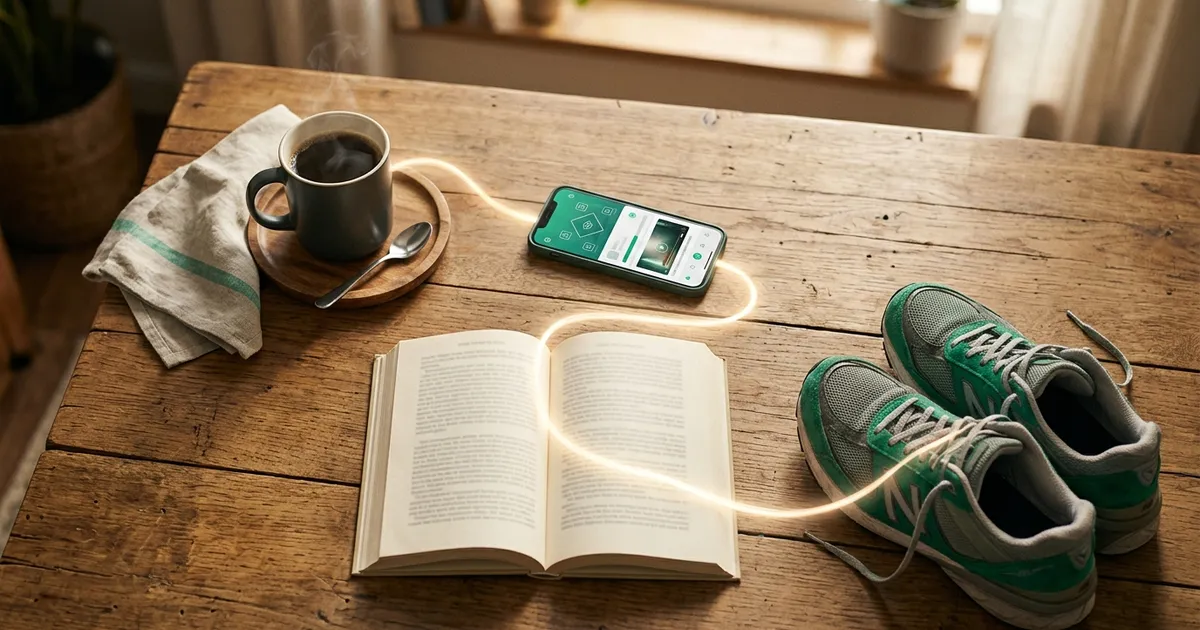
The 2-minute rule fixes this: scale any new habit down until it takes two minutes or less. "Read 30 minutes" becomes "read one page." "Study for an exam" becomes "open the notes." "Do a workout" becomes "put on my running shoes." "Learn something new" becomes "do one 5-minute lesson."
This sounds almost too small to matter, but the point is not the two minutes of output. The point is to master the act of showing up. A habit must be established before it can be improved. Once doing one lesson is automatic, doing three is trivial. But if you never establish the show-up reflex, no amount of ambition will save you. How long it takes a habit to feel automatic varies, but starting small dramatically shortens the runway.
A useful rule of thumb: if you are not sure whether to scale a habit down, scale it down. It is far better to do a tiny version every day than a heroic version twice a month.
Habit stacking: anchor the new to the old
You already perform dozens of automatic behaviors every day: making coffee, brushing your teeth, sitting down at your desk, commuting, closing your laptop. Each of these is a built-in cue you can borrow. That is the idea behind habit stacking, which uses this simple formula:
"After [current habit], I will [new habit]."
For example: "After I pour my morning coffee, I will do one micro-lesson." "After I sit down at my desk, I will write my top priority for the day." "After I get on the train, I will read one chapter." The existing habit acts as a reliable trigger, so you never have to rely on remembering or feeling motivated. The cue is already baked into your day.
This works because anchoring to an established routine borrows its automaticity. You do not have to build a new cue from scratch; you piggyback on one your brain already runs without thinking. Habit stacking is so effective that it earns its own deep dive, our complete habit stacking guide covers stack building, real examples, and how to troubleshoot a stack that breaks.
Environment design: make the right choice the default
You are not a fixed creature of pure discipline. You are heavily shaped by your surroundings. The single most underrated habit tactic is to redesign your environment so the good habit is obvious and easy, and the bad habit is invisible and hard.
Two principles do most of the work:
- Make good habits obvious and frictionless. Put the book on your pillow. Keep the water bottle on your desk. Move your learning app to your home screen where the social apps used to be. Lay out your gym clothes the night before. Every step you remove makes the habit more likely.
- Make bad habits invisible and inconvenient. Log out of social media after each use. Delete the apps from your phone and use them only in a browser. Move the snacks out of sight. Charge your phone in another room overnight. Every step you add makes the bad habit less likely.
This is the lever that quietly powers the others. A 2-minute habit you can see and reach beats a one-hour plan buried behind friction. When your environment does the nudging, you spend far less willpower, and willpower, as we covered, is the thing you cannot count on.
How to make a habit feel natural (so you stop needing a tracker)
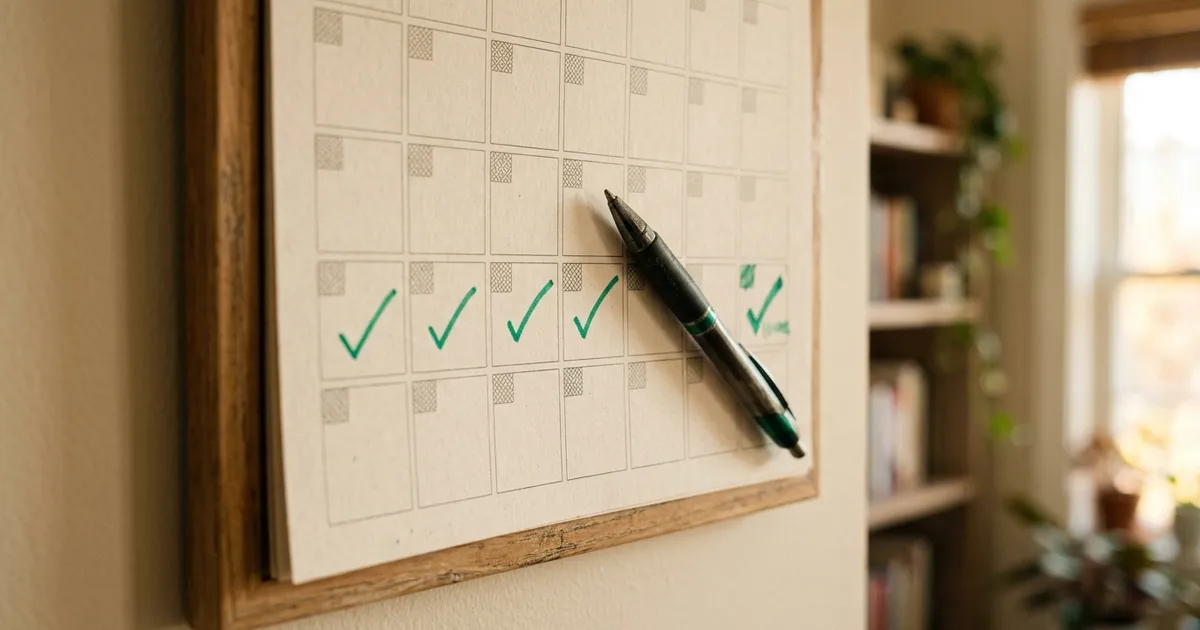
Trackers, streaks, and reminders are excellent training wheels. They make progress visible and add a small reward each time you check the box. But here is a quiet truth most habit content skips: the best habit is one that eventually feels natural enough that you no longer need a tracker at all.
You do not track brushing your teeth. You do not log putting on your seatbelt. Those behaviors crossed a threshold where the cue, action, and reward fused so tightly that doing them takes less effort than skipping them. That is the real finish line for a good habit, not a 365-day streak, but a behavior that runs on its own.
A few things accelerate that transition:
- Keep the cue consistent. Same trigger, same time, same place. Consistency is what lets a behavior calcify into automaticity.
- Make the reward intrinsic. External rewards (badges, streaks) get you started, but a habit becomes self-sustaining when the activity itself feels good. Learning something genuinely interesting is its own reward.
- Choose a habit that fills, not drains. This is the heart of building healthy habits. A genuinely good habit leaves you feeling fulfilled, sharper, calmer, more capable, rather than empty. Contrast that with doomscrolling, which leaves you hollow and vaguely guilty. The fulfilling habit is the one your brain will eventually pull you toward on its own.
This is also where habits and identity close the loop. Once a habit feels natural and leaves you fulfilled, it stops being something you do and becomes something you are.
The keystone habit: micro-learning as a healthy habit that builds itself
If you only build one habit from this guide, make it a keystone habit, a single behavior that triggers a cascade of other good ones. In our experience, swapping 5 to 10 minutes of social media for a short micro-learning session is one of the most reliable keystone habits you can adopt, and it is the easiest to make stick.
Here is why it works so well across every principle above. The cue already exists: the spare minute when you would normally reach for a feed. The 2-minute version is trivial: one short lesson. It stacks naturally onto coffee, the commute, or a lunch break. And crucially, it satisfies the same dopamine craving that scrolling does, novelty, progress, a small reward, except it leaves you fulfilled instead of empty. You walk away knowing something new rather than feeling drained by strangers' opinions.
This is exactly the gap micro-learning is built to fill, and it is why a tool like NerdSip works as a habit-formation engine rather than just a content library. Its 5-minute lessons fit the 2-minute-rule mindset, its quizzes and spaced repetition make the learning stick, and its MMORPG-style XP, loot drops, and streaks supply the immediate reward your brain needs to come back tomorrow. The gamification is not a gimmick; it is the engineered reward that turns a one-time intention into a daily loop. Over time the external rewards fade into the background and the habit runs on its own, the natural-feeling finish line we just described. We go deeper on this in the one keystone habit that makes self-optimization automatic and, for learners specifically, in how to build a daily learning habit that actually sticks.
If you are deliberately working on your mind, this micro-learning habit is also the backbone of the broader trend we cover in what brainmaxing is, the deliberate, healthy practice of training your brain instead of letting feeds train it for you.
A simple step framework you can start today
Pulling it all together, here is the framework. Each step maps to a principle above.
- Name the identity. "I'm the kind of person who learns something new every day." Decide who you are becoming before you decide what to do.
- Pick one habit and shrink it. One habit, scaled to two minutes. "Do one 5-minute lesson" or even "open the app."
- Stack it on an existing cue. "After my morning coffee, I will do one lesson." Borrow a trigger you already have.
- Design the environment. Learning app on the home screen; distracting apps buried or deleted.
- Add an immediate reward. Check the box, bank the XP, or simply notice you feel sharper. Reward now beats reward later.
- Repeat, then remove the scaffolding. Stay consistent for several weeks, then let the tracker go once it feels natural.
Want a structured starting point? Our free build-a-habit tool walks you through naming the identity, choosing a cue, and writing your first stack in a couple of minutes.
Common mistakes (and how to avoid them)
- Starting too big. The fastest way to kill a habit is to make day one impressive. Scale down until it feels almost laughably easy, then let it grow.
- Building five habits at once. Willpower does not multiply. Stack new habits one at a time; add the next only after the first feels automatic.
- Relying on motivation. If your plan requires you to "feel like it," it will fail on average days. Engineer cues and environment instead.
- Chasing the streak instead of the habit. A broken streak is not a failure; missing twice in a row is the real risk. Never miss twice, and the streak takes care of itself.
- Choosing a draining habit. A habit you secretly hate will not last. Pick one that leaves you fulfilled, which is what makes a habit a healthy one rather than a chore.
- Quitting too early. Automaticity takes weeks to months, not days. The dip around week two is normal; push through it and the loop closes.
When the advice does not apply
A few honest caveats. Habit stacking assumes you have stable daily routines to anchor to; if your schedule is genuinely chaotic, anchor to a fixed event like waking up or a meal instead of a flexible one. The 2-minute rule is for building consistency, not for habits that require a real minimum dose to matter, in those cases, use the 2-minute version only to start the session, then continue. And no system overrides burnout or a habit you fundamentally do not want. If you keep avoiding a habit even when it is easy, the problem is usually the goal, not your discipline.
If you would rather compare tools than theory, we keep a full 2026 comparison of self-improvement apps covering mind, body, habits, focus and money, with a table of current prices and an honest note on the ones we cut.
The bottom line
Good habits do not come from wanting them more. They come from designing a system where the good choice is the obvious one. Decide who you want to become, shrink the habit until it is easy, stack it onto something you already do, shape your environment to remove friction, and reward yourself now so you come back tomorrow. Then keep going until the tracker becomes optional and the habit becomes part of you.
The best place to start is a habit that fills you instead of draining you. Trade 5 to 10 minutes of scrolling for a short micro-learning session, and you get the same dopamine pull with a payoff that compounds. Explore the full How to Build Good Habits hub for the supporting tactics, or open the build-a-habit tool and design your first habit in the next two minutes.
When you get to picking the app that carries the habit, pick one and only one. Our guide to the self-improvement apps that actually work explains why a stack of nine downloaded on a Sunday is almost always deleted by the end of the month.
Frequently Asked Questions
How do I build good habits?
Build good habits by designing systems instead of relying on willpower. Pick one habit, shrink it to a 2-minute version, attach it to a clear cue you already encounter daily, and make the action easy by shaping your environment. Add a small reward so your brain wants to repeat it, and tie the habit to an identity you want ('I'm the kind of person who learns daily'). Repeat consistently and let it become automatic.
How long does it take to build a habit?
There is no universal 21-day rule. A widely cited University College London study found it took participants an average of about 66 days for a behavior to feel automatic, ranging from roughly 18 to 254 days depending on the habit and the person. Simple habits like drinking a glass of water form faster than complex ones. The practical takeaway is to expect weeks to a few months and to optimize for consistency, not speed.
Why does willpower fail when building habits?
Willpower is a limited, fluctuating resource. It is strong in the morning, weak when you are tired, stressed, or bored, which is exactly when temptation peaks. Relying on motivation means your habit only survives on your best days. Systems work because they remove the need to decide: a clear cue, an easy action, and a supportive environment make the good choice the default, so you do not have to feel motivated to follow through.
What is an identity-based habit?
An identity-based habit is one you build by deciding who you want to become, not just what you want to achieve. Instead of 'I want to read more,' you adopt 'I'm a reader,' then let small actions prove it. Each repetition is a vote for that identity. This works because lasting behavior change comes from the inside out: when a habit becomes part of how you see yourself, you maintain it because it fits who you are, not because you are forcing it.
What is the best habit to start with?
Start with one small keystone habit that triggers other good behaviors. A 5-minute daily learning session is a strong choice because it is quick, satisfying, and replaces a habit that drains you, like doomscrolling, with one that builds you up. Keystone habits create momentum: doing one thing well makes the next good choice feel natural, which is why one well-chosen habit often does more than a dozen ambitious resolutions.
Do I need a habit tracker to build good habits?
A tracker helps early on by making progress visible and adding a small reward each time you check the box. But the goal is a habit that eventually feels natural enough that you no longer need to track it. The strongest habits run on autopilot. Use a tracker as training wheels for the first few weeks, then let the behavior stand on its own once the cue, action, and reward have fused into a routine.
Every NerdSip course clears a four-layer fact-checking pipeline before it reaches the app: grounded in live sources, scored nightly, gated on failure, and reviewable by a person at one tap. Articles on this blog are drafted with AI assistance, then researched, verified, and edited by our team.
Editorial responsibility: ai51 UG (haftungsbeschränkt). Responsible editor named in the imprint.
📚 Keep Learning
- Habit Stacking: How to Build New Habits by Attaching Them to Old Ones
- How Long Does It Take to Build a Habit? (The Real Science, Not the 21-Day Myth)
- How to Break a Bad Habit (and Replace It With a Good One)
- 9 Best Apps to Build Good Habits in 2026 (Beyond Habit Trackers)
- How to Build a Daily Learning Habit That Actually Sticks (The 66-Day Method)
- The One Keystone Habit That Makes Self-Optimization Automatic
- Best Habit Trackers in 2026 - and Why the Best Habit Needs No Tracker
- Best Self-Improvement Apps (No BS): 12 That Actually Work
Explore the NerdSip learning hubs
The blog is our editorial layer. When you want to move from reading into doing, these hubs organize the rest of NerdSip by format, including the app itself and the press that has written about it.
Build a habit worth keeping
NerdSip turns 5 spare minutes into a healthy habit: thousands of gamified micro-courses, quizzes, and AI podcasts that leave you sharper, not emptier. Free to download on iOS and Android.
4.7 stars from 380 reviews · 8,900+ learners