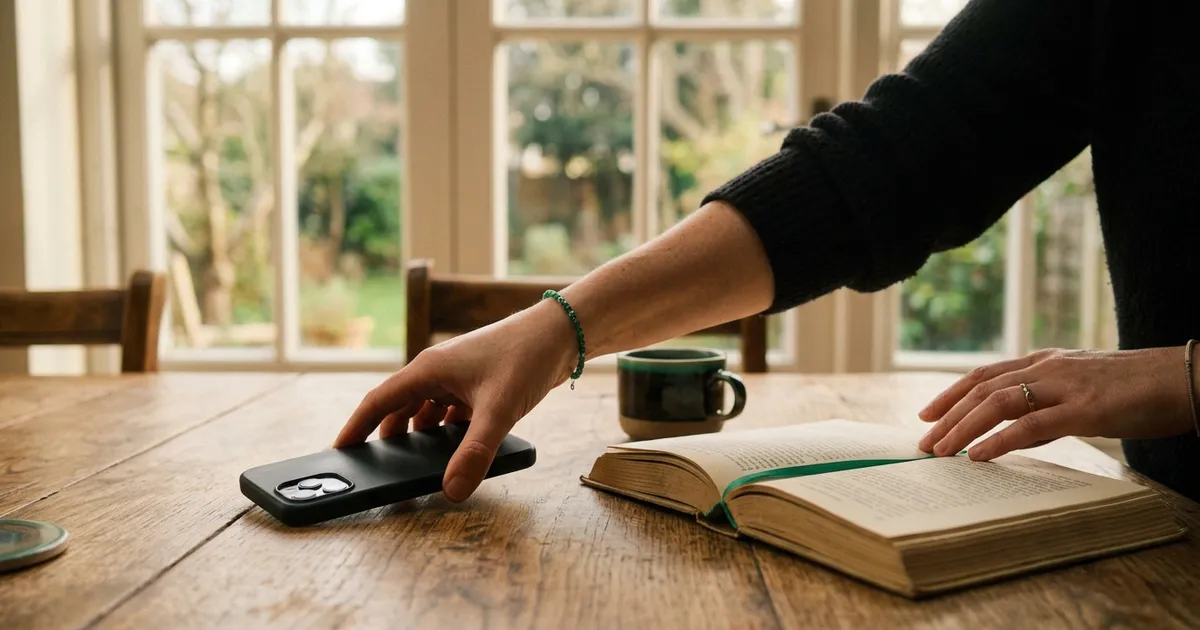
Here is the single most important thing to understand before you try to quit anything: you do not break a bad habit by erasing it. You break it by replacing it. The behavior you want gone is wired into a loop, and that loop does not disappear just because you decide it should. But you can hijack it. Keep the trigger, keep the reward, and swap out the routine in the middle for something better. That is the whole method, and it is why willpower-based attempts almost always fail while replacement almost always works.
This article walks you through exactly how to do it: how to find the cue and the craving driving your habit, how to add friction so the old behavior loses, how to substitute a routine that satisfies the same need in a healthier way, and how to make that new routine so easy it wins by default. We will use one flagship example throughout, the most common bad habit of our era, doomscrolling, and show how to replace it with a five-minute learning habit that leaves you fulfilled instead of empty.
The Habit Loop: Why "Just Stop" Never Works
Every habit, good or bad, runs on the same three-part loop:
- Cue — the trigger that starts the behavior. A time of day, a location, an emotional state (boredom, stress, loneliness), or a preceding action.
- Routine — the behavior itself. Picking up the phone, opening the app, scrolling.
- Reward — the payoff your brain gets. A hit of novelty, a moment of escape, a dopamine spike.
When you try to "just stop," you attack the routine directly while leaving the cue and the reward untouched. So the next time the cue fires, the craving for the reward is still there, fully loaded, and now it has nowhere to go. You sit there gritting your teeth, the craving builds, and eventually it overwhelms whatever willpower you had left. This is not weakness. It is the predictable result of fighting a loop with brute force. If you want the deeper neuroscience of why this craving is so strong with scrolling specifically, read the dopamine trap: why you can't stop scrolling.
The fix is to stop attacking the routine and start redirecting it. You leave the cue alone (you cannot really avoid boredom forever) and you leave the craving satisfied (your brain still gets a reward). You only change what happens in between.
Suppress vs. Replace: The Core Difference
The entire difference between failing and succeeding comes down to this table. Most people instinctively try the left column. The right column is what actually works.
| Suppress (the willpower trap) | Replace (what works) |
|---|---|
| Tries to delete the routine and resist the craving | Keeps the cue and reward, swaps the routine |
| Leaves a craving with nowhere to go | Channels the craving into a healthier payoff |
| Depends on limited, draining willpower | Depends on environment and a better default |
| Feels like deprivation and punishment | Feels like an upgrade, not a loss |
| High relapse rate, especially under stress | Sustainable because the need is still met |
| "I will stop scrolling." | "When I reach for my phone, I open a lesson instead." |
Read that bottom row twice. "I will stop scrolling" is a statement of suppression, and it is doomed. "When I reach for my phone, I open a lesson instead" is a replacement plan, and it has a real chance because the cue (reaching for the phone) now leads somewhere that still rewards you.
Step 1: Identify the Cue and the Craving
You cannot replace a routine until you know what is actually triggering it and what reward you are really chasing. For a few days, play detective. Each time you catch yourself in the bad habit, note two things: what happened right before (the cue) and what you were hoping to get (the craving).
With doomscrolling, the cues are almost always one of these: a moment of boredom, a stab of anxiety or stress, an awkward social gap, the transition between two tasks, or simply lying in bed. The craving underneath is rarely "information." It is usually a desire to escape an uncomfortable feeling or to get a hit of stimulation. Naming the real craving is the key move, because your replacement only has to satisfy that, not literally reproduce scrolling.
Step 2: Add Friction to the Bad Routine
Bad habits thrive on zero friction. Your phone is in your hand, the app is one tap away, autoplay does the rest. To weaken the routine, you deliberately insert small obstacles between the cue and the behavior. You are not relying on willpower, you are buying a few seconds of conscious choice.
- Delete the app from your home screen (and from your phone entirely if you can). Having to re-download or dig through folders is often enough to stop the autopilot.
- Log out so you have to type a password every time.
- Use a friction app like one sec that forces a breathing pause before the app opens.
- Physically separate yourself from the phone — leave it in another room while you work or sleep. Charge it outside the bedroom.
- Turn off notifications so the app stops manufacturing its own cues.
Friction does not have to be dramatic. Research and experience both show that even a tiny obstacle, a few extra seconds, breaks enough of the autopilot loop to give your better choice a chance to surface.
Step 3: Substitute a Better Routine (the Doomscrolling Swap)
This is the heart of the method, and where the doomscrolling example shines. The reason scrolling is so sticky is that it delivers a fast, reliable dopamine hit in response to boredom or stress. To replace it, you need a routine that hits a similar note, quick, stimulating, novel, but cashes out in fulfillment instead of emptiness.
A five-minute micro-learning habit is almost perfectly engineered for this swap. Think about what doomscrolling and a good micro-lesson have in common: both are bite-sized, both deliver a stream of new and interesting input, both work in the exact idle moments where you would normally reach for your phone, and both can be genuinely compelling. The difference is the aftertaste.
This is the fulfilled-vs-empty distinction that defines a healthy habit. After 30 minutes of doomscrolling you feel hollow, anxious, and you cannot recall a single thing you saw. After five minutes learning something genuinely interesting, you feel a small spark of fulfillment, you actually know something new, and that feeling compounds day after day. Same loop, same dopamine machinery, opposite result.
This is exactly what NerdSip is built around. It deliberately uses the same reward mechanics that make scrolling addictive, gamified lessons with XP, streaks, and loot drops, but points them at content that builds you up. Each lesson is about five minutes, ends with a quiz and a clear takeaway, and the next interesting topic is always one tap away, scratching the same "one more" itch. When the cue fires and your thumb starts moving, a learning app on your home screen gives that craving a healthier place to land. We break down the full mechanism in how to turn scroll addiction into learning and break the dopamine loop.
Your replacement does not have to be NerdSip specifically. The principle is what matters: pick a routine that satisfies the same craving you identified in Step 1. If your scroll is really about winding down, the replacement might be a few pages of a book. If it is about stimulation, a quick lesson or a language app fits better. Match the reward, and the swap holds.
Step 4: Make the Good Habit Obvious and Easy
The replacement only wins if it is easier to reach than the habit it is replacing. You added friction to the bad routine in Step 2. Now do the opposite for the good one: remove every barrier.
- Put the replacement app exactly where the bad app used to be — same spot on your home screen, so your thumb finds it on autopilot.
- Shrink the first step to something almost laughably small. "Do one lesson," not "study for an hour." Once you start, momentum usually carries you.
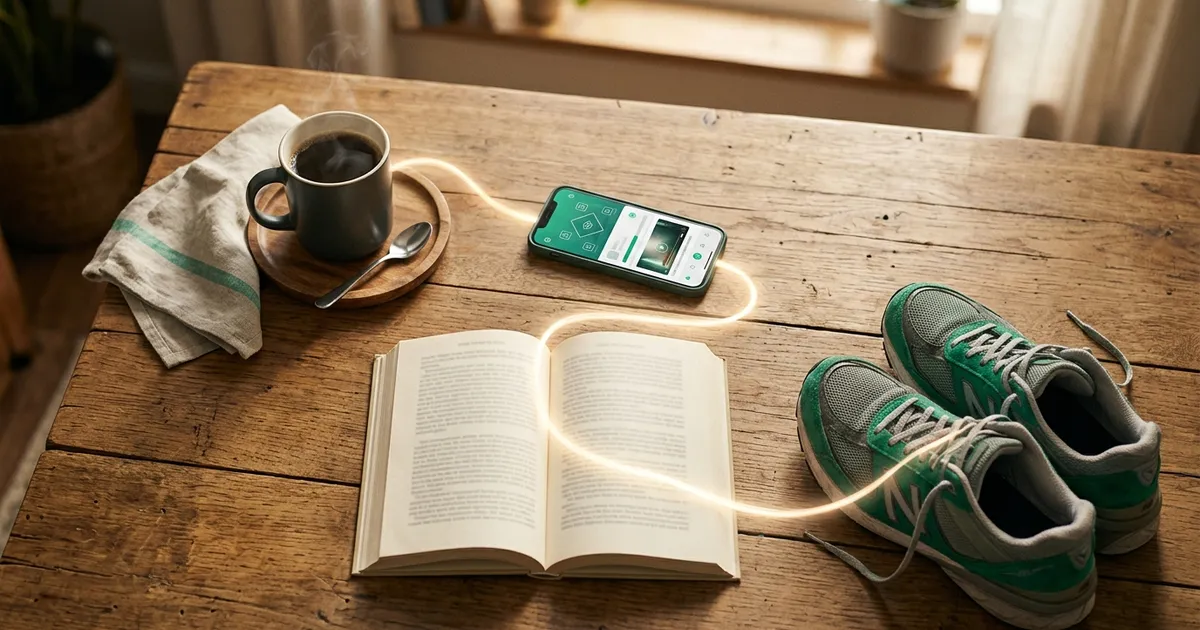
- Stack it onto an existing habit. "After I pour my morning coffee, I do one lesson." Borrowing a cue you already have is one of the most powerful accelerators there is, and we cover it fully in our habit stacking guide.
- Pre-decide the trigger. Write down the exact if-then: "When I feel the urge to open Instagram, I open NerdSip instead." A pre-made plan beats in-the-moment willpower every time.
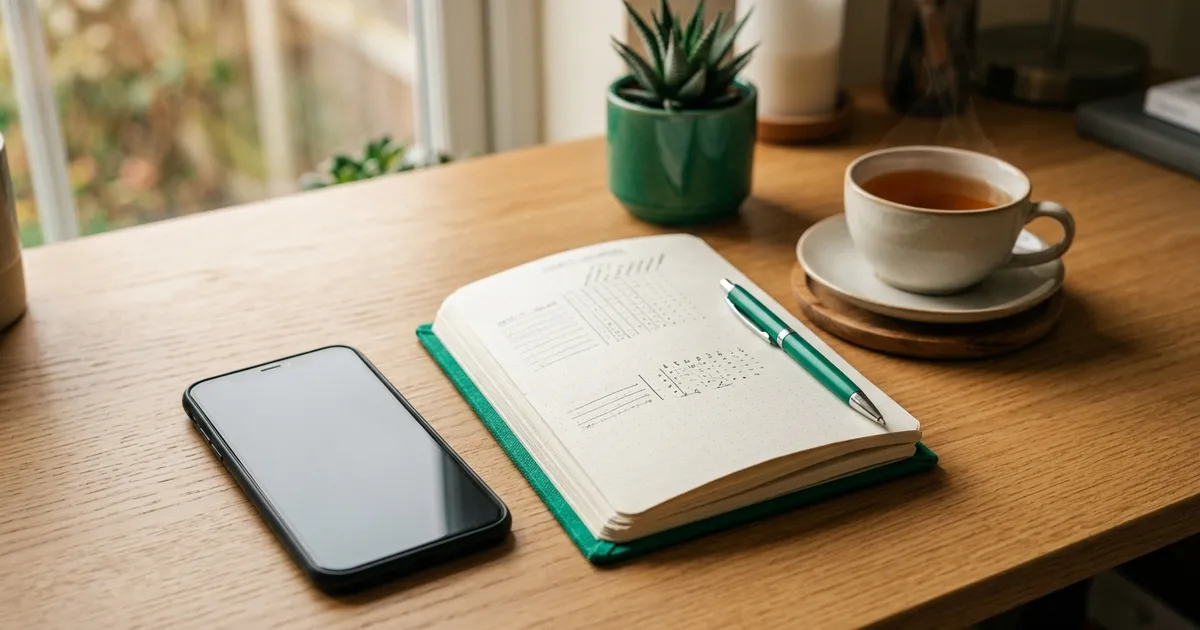
Want help structuring all of this into a concrete, trackable plan? Our free build-a-habit tool walks you through choosing a cue, a replacement routine, and a reward in a couple of minutes.
Design Your Environment, Not Just Your Willpower
People who successfully break bad habits are not more disciplined than you. They have usually just built an environment where the good choice is the path of least resistance. Willpower is a finite, drainable resource, your environment works 24 hours a day without tiring.
Environment design is simply Steps 2 and 4 applied to your physical and digital surroundings: make the bad habit a little harder and the good habit a little easier, structurally, so you barely have to decide. Charge the phone in the kitchen and put a book on the nightstand, and you have just changed your bedtime habit without spending a drop of willpower. The best healthy habit is the one so frictionless and natural you do not even need a tracker to maintain it, because the environment does the maintaining for you. This is a core idea in our complete guide to building good habits.
Plan for Relapse (Because It Will Happen)
You will slip. You will have a stressful night, undelete the app, and scroll for an hour. This is not a sign the method failed, it is a completely normal part of the process, and how you handle it determines everything.
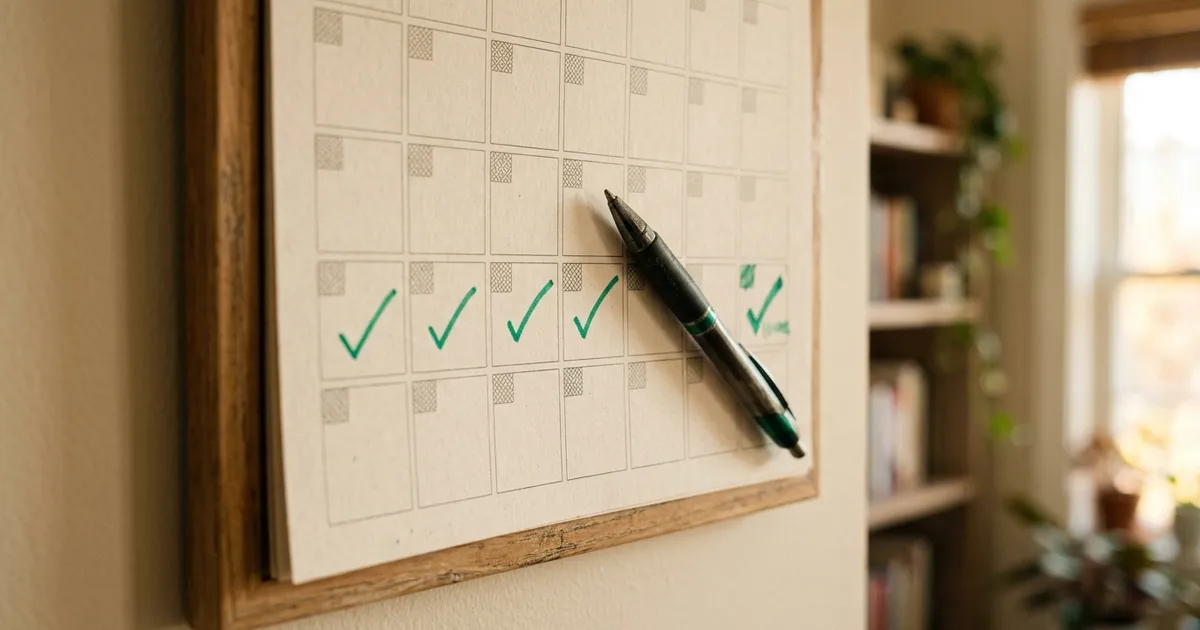
The research on habit formation is reassuring here: missing a single day does not derail the process. The danger is never the one bad day, it is the story "well, I already blew it" that turns one slip into a full relapse. Adopt one rule and it solves most of this: never miss twice in a row. One scroll-binge is human. Two days back in the old pattern is the start of rebuilding the very habit you are trying to break. Forgive the first, protect against the second.
Common Mistakes That Sabotage You
Most failed attempts to break a bad habit make one of these predictable errors. Avoid them and your odds jump dramatically.
Relying on willpower alone
The biggest one. Willpower is real but limited and it depletes under stress, which is exactly when cravings peak. If your entire plan is "try harder," you are betting against neuroscience. Build friction and replacement into your environment so you barely need willpower at all.
Going cold turkey on everything at once
New Year's resolutions fail partly because people try to overhaul ten habits simultaneously. Each change competes for the same limited self-control budget, and they all collapse together. Pick one habit. Replace it. Let it become automatic, which takes weeks, not days, more on the real timeline in how long it takes to build a habit, and only then move to the next.
Suppressing instead of replacing
If you remove the bad routine but offer your brain nothing in its place, the craving has nowhere to go and you relapse. Always pair removal with a substitute that satisfies the same need.
Picking a replacement that does not match the craving
If your scroll is about stress relief and you replace it with an intense workout, the mismatch may not satisfy the underlying need. Diagnose the real craving in Step 1 and match your replacement to it.
Expecting it to be instant
The 21-day rule sets a false deadline. Habits take weeks to months to feel automatic, with a wide range between people. Expect a curve, not a switch, and judge yourself on consistency, not speed.
Friction beats willpower, which is why one sec has better evidence behind it than most of this category. It sits alongside fourteen others in our roundup of the best self-improvement apps in 2026, grouped by the problem each one solves.
The Bottom Line
You cannot delete a bad habit, and trying to white-knuckle it away is why most attempts fail. What works is replacement: find the cue and the craving, add friction so the old routine loses, substitute a better routine that delivers a similar reward, and make that new routine the obvious, easy default in your environment. Expect to slip, and never miss twice in a row.
The flagship version of this, swapping the empty loop of doomscrolling for a five-minute learning habit that leaves you fulfilled, is one of the highest-leverage trades you can make, because it converts your single biggest time sink into daily progress. Keep the cue, keep the reward, change the routine. Start with one habit today, and explore the full How to Build Good Habits hub for the complete system. If you want a tool to help you track the new habit while it forms, see our roundup of the best habit trackers of 2026.
Friction is the most underrated ingredient in that recipe, and it is measurable. A PNAS field experiment found that one second of delay before a social app opened cut actual openings by 57 percent over six weeks. That app, and eleven others worth their space on your phone, are in our list of the self-improvement apps that actually work.
That 57 percent figure comes from a study on the scrolling habit specifically. If that is the habit you are here to break, how to stop doomscrolling covers it in full, including why the 21-day number you have heard everywhere has no study behind it.
Frequently Asked Questions
What is the most effective way to break a bad habit?
Replace it rather than suppress it. Every habit runs on a loop of cue, routine, and reward. You cannot easily erase the cue or kill the craving, but you can swap the routine in the middle for a better one that delivers a similar reward. Keep the trigger and the payoff, change what happens in between, and add friction to the old behavior so the new one wins.
Why is it so hard to break a bad habit?
Because the habit is wired to a craving, and willpower alone fights that craving without satisfying it. When you just remove a habit, the cue still fires and the unmet craving grows until you relapse. Bad habits also tend to deliver instant rewards, which the brain prioritizes over the delayed cost. Replacing the routine, rather than resisting the urge, is what makes it sustainable.
How long does it take to break a bad habit?
There is no fixed number. Research on habit formation found new behaviors took about 66 days on average to feel automatic, with a wide range from a few weeks to several months. Breaking a habit by replacing it follows a similar curve. Consistency matters far more than perfection, and missing a single day does not reset your progress.
Should I quit a bad habit cold turkey?
Usually not, and never quit several habits at once. Cold turkey removes the routine but leaves the cue and craving unaddressed, which is why relapse rates are high. Quitting many habits simultaneously overloads your limited willpower. Pick one habit, replace its routine with a better one, and add friction. That is far more durable than white-knuckling everything at once.
Every NerdSip course clears a four-layer fact-checking pipeline before it reaches the app: grounded in live sources, scored nightly, gated on failure, and reviewable by a person at one tap. Articles on this blog are drafted with AI assistance, then researched, verified, and edited by our team.
Editorial responsibility: ai51 UG (haftungsbeschränkt). Responsible editor named in the imprint.
📚 Keep Learning
- How to Build Good Habits That Actually Stick (2026 Guide)
- How Long Does It Take to Build a Habit? (The Real Science, Not the 21-Day Myth)
- Habit Stacking: How to Build New Habits by Attaching Them to Old Ones
- The Dopamine Trap: Why You Can't Stop Scrolling Even When You Hate It (Part 2 of 3)
- How to Turn Scroll Addiction Into Learning: Break the Dopamine Loop
- Best Habit Trackers in 2026 - and Why the Best Habit Needs No Tracker
- Best Self-Improvement Apps (No BS): 12 That Actually Work
- How to Stop Doomscrolling (What Works, and What the Research Says)
- 7 Best Apps to Stop Doomscrolling in 2026 (Why Blockers Alone Fail)
Explore the NerdSip learning hubs
The blog is our editorial layer. When you want to move from reading into doing, these hubs organize the rest of NerdSip by format, including the app itself and the press that has written about it.
Replace the Scroll With Something Better
NerdSip gives your brain the same dopamine hit as scrolling, except you walk away smarter. 5-minute lessons, gamified, free to download.
4.7 stars from 380 reviews · 8,900+ learners