Brainmaxing is everywhere right now, the mind's answer to the viral looksmaxing trend, and like any fast-spreading wellness label it arrives bundled with both real substance and obvious snake oil. So the fair question is the blunt one: is brainmaxing legit? The honest answer is that it depends entirely on which version you mean. Some of it is among the best-supported advice in all of cognitive science. Some of it is supplement marketing wearing a new hashtag.
Here is the filter that sorts the two, and it is worth memorizing: anything that genuinely improves your brain takes consistent effort and works through a known mechanism. Sleep consolidates memory. Exercise increases blood flow and supports brain health. Retrieval practice strengthens recall because the act of retrieving is the thing that builds the memory. When a product instead promises results without effort, a pill, a subliminal track, a game that makes you smarter in minutes a day, that is the tell. Effortless cognitive enhancement is the hallmark of hype.
This article separates the two honestly, with no invented statistics and source-aware wording: where the evidence is strong we say so, and where it is weak, mixed, or debated we say that too. It is the skeptic's companion to the rest of the Brainmaxing hub. If you want the trend explained first, start with what is brainmaxing; if you want the verdict on what to actually do, keep reading.
The Works vs Mixed vs Hype Table
The whole argument in one view. Detail and caveats follow below.
| Works (well supported) | Mixed (context-dependent or debated) | Hype (weak or unsupported) |
|---|---|---|
| Sleep | Most nootropic stacks | "Limitless pill" marketing |
| Aerobic exercise | Caffeine (real but modest, short-term) | Subliminal / sleep-learning hacks |
| Active recall / retrieval practice | Brain-training games (far transfer) | Proprietary "smart" blends with no independent evidence |
| Spaced repetition | Meditation (real, varied effects) | Anything promising results without effort |
| Reading and genuine learning | Omega-3 and some single nutrients | Gimmick wearables that "upgrade" cognition |
| Managing chronic stress |
What Actually Works
None of these are exciting. That is precisely why they get drowned out by louder claims, and precisely why they are the legit core of brainmaxing.
Sleep
If brainmaxing has a number-one rule, this is it. Sleep is when the brain consolidates memories, clears metabolic waste, and resets attention. The link between sleep and memory, learning, attention, and mood is one of the most robust findings in the field. The practical upshot is uncomfortable: no supplement, app, or drill can out-run chronic sleep deprivation. If you are short on sleep, fixing that will do more for your cognition than anything else on this page.
Aerobic exercise
Regular cardiovascular exercise is one of the most reliably brain-positive things you can do. The proposed mechanisms, improved blood flow, support for brain-derived growth factors, better sleep and mood, are plausible and widely studied. You do not need to be an athlete; consistent moderate movement is the point. Exercise is closer to a genuine "smart drug" than any pill marketed as one.
Active recall and spaced repetition
If you want to actually learn and retain things, these two are the strongest tools available, and the evidence is decades deep. Active recall (testing yourself instead of re-reading) works because the effortful act of retrieving a memory is what strengthens it. Spaced repetition (reviewing at increasing intervals) works by catching information just as you are about to forget it, which deepens retention efficiently. These are not tricks; they are how durable memory is built. They are also the practices that good learning tools are designed around.
Reading and genuine learning
Sustained reading builds vocabulary, background knowledge, and the very attention span that feeds erode. There is no shortcut here, and that is the point: the effort is the mechanism. Genuinely learning new things keeps your mind engaged in exactly the way passive scrolling does not. If you want a concrete plan for rebuilding the focus that real reading requires, see our 30-day attention-span protocol.
Managing chronic stress
Chronic stress is corrosive to attention, memory, and decision-making. Anything that genuinely lowers it, exercise, sleep, social connection, time off screens, pays cognitive dividends. This is the least flashy entry on the list and arguably one of the most important, because high stress quietly undermines every other practice here.
What's Mixed: Real, But Oversold
This is the honest middle, where there is some signal but the marketing inflates it well past the evidence.
Nootropics and supplements
Caffeine is the one clear winner: its short-term effects on alertness and focus are real and well documented. Beyond that, the picture gets murky fast. A handful of compounds show modest effects in specific populations or contexts, but the sprawling category of stacks and proprietary blends sold as cognitive enhancers generally lacks strong, independent evidence for making healthy people meaningfully smarter. The supplement industry is also lightly regulated, so what is on the label is not always what is in the bottle. The responsible stance: be skeptical of dramatic claims, prioritize sleep and exercise first, and talk to a doctor before taking anything, especially stacks.
Brain-training games and far transfer
Here is the crux of the whole brainmaxing debate. Brain-training games reliably make you better at the games. The contested question is far transfer: does getting better at a puzzle game improve your general intelligence or your performance at unrelated everyday tasks? The evidence for far transfer is weak and genuinely debated among researchers. What is consistent is near transfer, you improve at the specific skill you practice. That has a clean practical implication: if you are going to spend the effort, practice skills you actually want, reading, retrieval, real subject knowledge, rather than abstract games that mostly train themselves. For the apps that lean into evidence-based methods rather than gimmicks, see our roundup of the best brain-training apps that actually work.
Meditation
Meditation has real, studied effects, particularly on stress and attention regulation, but the effects are varied and depend heavily on practice, type, and what outcome you measure. It is a legitimate tool, just not the universal cognitive cure-all it is sometimes marketed as. File it under "helpful, with realistic expectations."
What's Hype
And here is the snake oil. None of these have solid evidence behind their strong claims, and the brainmaxing label is currently being used to sell all of them.
- "Limitless pill" marketing. The fantasy of a single pill that unlocks dramatically more of your brain is just that, a fantasy. The strong claims around these products are not supported by good evidence, and the framing itself rests on a myth about unused brain capacity.
- Subliminal and sleep-learning hacks. The idea that you can absorb skills passively from subliminal audio, or learn new material while you sleep, is not backed by reliable research. Sleep matters enormously for consolidating what you learned while awake, which is the opposite of passive sleep-learning.
- Proprietary "smart" blends. If a product hides its formula behind a proprietary blend and leans on testimonials instead of independent evidence, treat the claims as marketing until shown otherwise.
- Gimmick cognitive wearables. Devices that promise to "upgrade" your cognition with a headset or a current tend to outrun their evidence by a wide margin for healthy users.
The common thread is the effortless-results promise. Every item in this column offers a meaningful brain upgrade without the work, and that is exactly the pattern the opening filter flags.
Guidance for the Skeptical Reader
If you came in wary, good, that instinct is correct. Here is how to act on it without throwing out the legitimate core:
- Build the base before buying anything. Sleep, exercise, and stress management are free and the best-supported interventions. Sort those before you spend a cent on a supplement or app.
- Favor effort over shortcuts. The practices that work, recall, spaced review, reading, all require effort, because the effort is the mechanism. Be suspicious of anything that removes the effort and keeps the promise.
- Demand a mechanism. Ask how a thing is supposed to work. "It boosts focus" is marketing. "Caffeine blocks adenosine, which reduces the sense of fatigue" is a mechanism. If no plausible mechanism exists, lower your confidence.
- Watch for proprietary blends and testimonials. Hidden formulas and anecdotes are what products lean on when independent evidence is thin.
- Talk to a doctor before supplements. Especially stacks and anything with stimulant effects. "Natural" does not mean safe or inert.
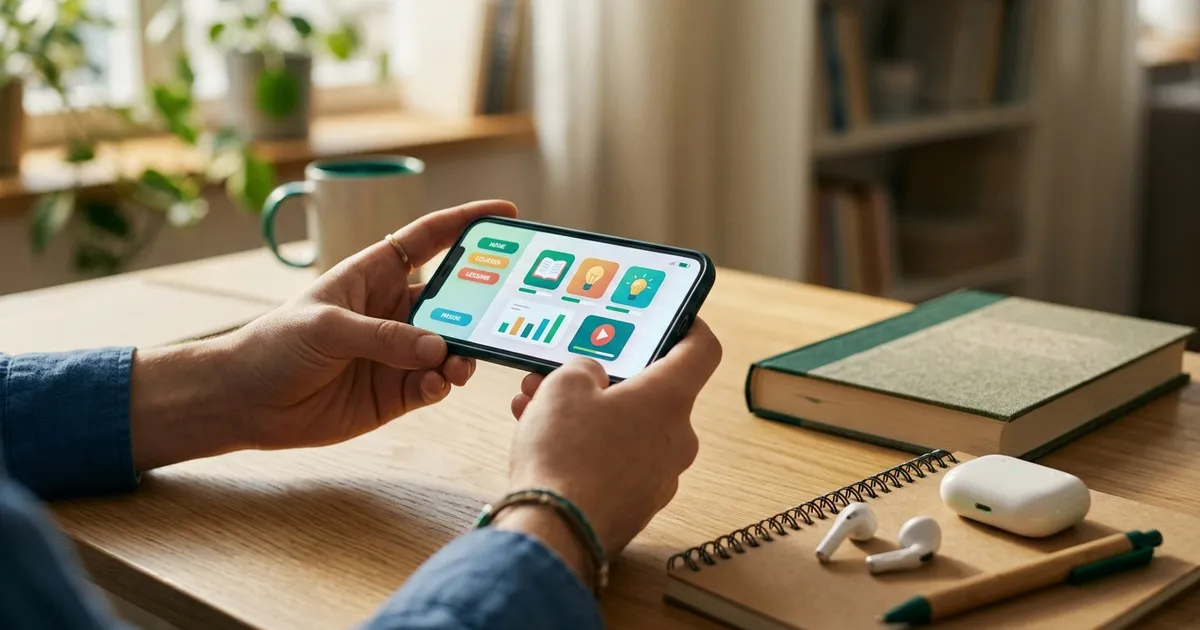
The good news in all this skepticism is that the legit toolkit is cheap, available, and effective. You do not need to buy anything to brainmax in the way that works. A daily habit of real learning built on active recall and spaced repetition is exactly the kind of effort-based practice this article endorses, which is the whole design philosophy behind NerdSip: 5-minute lessons structured around retrieval and spaced review, so the time you spend is time that actually sticks. No pills, no proprietary blend, just the boring stuff that works, made easy to do daily. If you want to wire it into a routine, the free build-a-habit tool helps you keep the streak.
The Inverse Problem: Brain Rot
It is worth naming the other side of this coin. If brainmaxing is the effort to deliberately train your mind, brain rot is the passive opposite, the slow erosion of attention and engagement from endless low-quality scrolling. The two are linked: a lot of the appetite for brainmaxing is really an attempt to undo brain rot. If that is your starting point, address the source first. Our guide to how to fix brain rot is the inverse playbook to this one, and pairing the two, stop the erosion, then train the gain, is more effective than either alone.
How to Spot Hype in Three Seconds
You will not always have a research database open when a product or a 30-second clip makes a brain claim. So here is a fast field test, four questions you can run in your head before you believe or buy anything labeled brainmaxing.
- Does it promise results without effort? This is the strongest single signal. Real cognitive gains come from doing something repeatedly and recovering well. A product that promises a smarter brain while you do nothing is selling a feeling, not an outcome.
- Can it name a mechanism, or only an outcome? Hype speaks in outcomes ("boosts brainpower," "unlocks focus"). Legit advice can usually point at a plausible how. If pressing for the mechanism produces only more adjectives, lower your confidence.
- Is the evidence independent, or just testimonials? Anecdotes and before-after stories are the cheapest form of persuasion and the easiest to cherry-pick. Independent evidence is the expensive kind, which is exactly why hype avoids it.
- Who profits if you believe it? Not disqualifying on its own, plenty of useful products are sold for money, but a strong claim attached to a thing someone is selling deserves more scrutiny than the same claim with nothing attached.
Run those four and most snake oil falls apart on the spot. Notice that the genuinely effective practices, sleep, exercise, recall, reading, pass all four easily: they demand effort, have clear mechanisms, rest on deep independent evidence, and nobody has to sell them to you. The boring stuff survives scrutiny. That is the whole tell.
A Realistic Starting Point
If this article has made you cautious, the natural next question is "so what do I actually do?" Keep it almost insultingly simple, because simplicity is what survives a busy week. Pick the two highest-leverage moves and protect them: a consistent sleep window and regular movement. Those alone outperform most of what gets sold under the brainmaxing banner, and they cost nothing.
Then, and only then, add one deliberate learning rep a day, a short session built on active recall, so your effort actually compounds into knowledge instead of evaporating. That single daily rep is the bridge between "I read about brainmaxing" and "I am actually doing the version that works." It is small enough to keep on a bad day and real enough to matter over a month. Everything else on the hype side is optional at best, and your skepticism is doing its job by keeping it optional.
The Honest Verdict
So, is brainmaxing legit? Yes, in the version that is unglamorous and effortful, and no, in the version sold to you in a bottle or a 60-second video promising a smarter brain by Friday. The viral packaging is new, but the substance underneath splits cleanly into the same two piles it always has: well-established, effort-based practices that genuinely help, and effortless-miracle products that do not. Choose the first pile. Ignore the second. That is the entire legit version of brainmaxing, and it is available to you for free starting today.
To see where these honest practices fit into a single daily structure, the daily brainmaxing routine assembles them into a realistic schedule, and looksmaxing vs brainmaxing puts the whole trend in cultural context.
Frequently Asked Questions
Is brainmaxing actually legit or just a trend?
Both, depending on what you mean by it. As a viral label, brainmaxing is new and some of what gets sold under it is hype. But the practices at its honest core, sleep, exercise, active recall, spaced repetition, reading, and managing stress, are long-established and well supported. The trend is the packaging. The legit part is choosing the effort-based practices and ignoring the effortless-miracle marketing.
Do nootropics and brain supplements work?
Mostly the marketing outruns the evidence. Caffeine has real, well-documented short-term effects on alertness, and a few compounds show modest results in specific contexts. But the broad category of stacks and proprietary blends sold as limitless pills generally lacks strong, independent evidence for making healthy people meaningfully smarter. Treat dramatic claims as marketing, prioritize sleep and exercise first, and talk to a doctor before taking anything.
Do brain-training games make you smarter?
They reliably make you better at the games. The harder question is far transfer, whether that improvement carries over to general intelligence or everyday tasks, and the evidence there is weak and debated. You tend to improve at the specific skill you practice. That is exactly why practicing real, useful skills like reading, retrieval, and genuine learning is a safer bet than abstract puzzles that mainly train themselves.
What is the single most legit thing I can do for my brain?
Sleep, by a wide margin. It is unglamorous and free, and nearly every cognitive function, memory consolidation, attention, learning, mood, depends on it. No supplement, app, or drill compensates for chronic sleep deprivation. Aerobic exercise is a close second. If you only change two things, fix your sleep and move your body regularly. Everything else builds on that base.
Are subliminal and sleep-learning hacks real?
No reliable evidence supports the strong versions. The idea that you can absorb skills passively from subliminal audio or learn new material while asleep is not backed by solid research. Sleep is genuinely important for consolidating things you learned while awake, but that is the opposite of passive sleep-learning. Skip these and spend the time on active practice, which is where the real gains are.
Every NerdSip course clears a four-layer fact-checking pipeline before it reaches the app: grounded in live sources, scored nightly, gated on failure, and reviewable by a person at one tap. Articles on this blog are drafted with AI assistance, then researched, verified, and edited by our team.
Editorial responsibility: ai51 UG (haftungsbeschränkt). Responsible editor named in the imprint.
📚 Keep Learning
- What Is Brainmaxing? The Viral Trend Explained (2026)
- Looksmaxing vs Brainmaxing: The Two Self-Improvement Trends Taking Over Social Media
- 8 Best Brainmaxing Apps in 2026 (Build a Smarter Daily Stack)
- 8 Best Brain Training Apps That Actually Work in 2026 (Science-Checked)
- You Have Brain Rot (And It's Worse Than You Think): How to Fix It
- The Daily Brainmaxing Routine: A Realistic 7-Step Protocol
Explore the NerdSip learning hubs
The blog is our editorial layer. When you want to move from reading into doing, these hubs organize the rest of NerdSip by format, including the app itself and the press that has written about it.
Brainmax the Legit Way
NerdSip is built on the practices that actually work: active recall, spaced repetition, and real learning in 5-minute lessons. No pills, no hype. Free to download.
4.7 stars from 380 reviews · 8,900+ learners