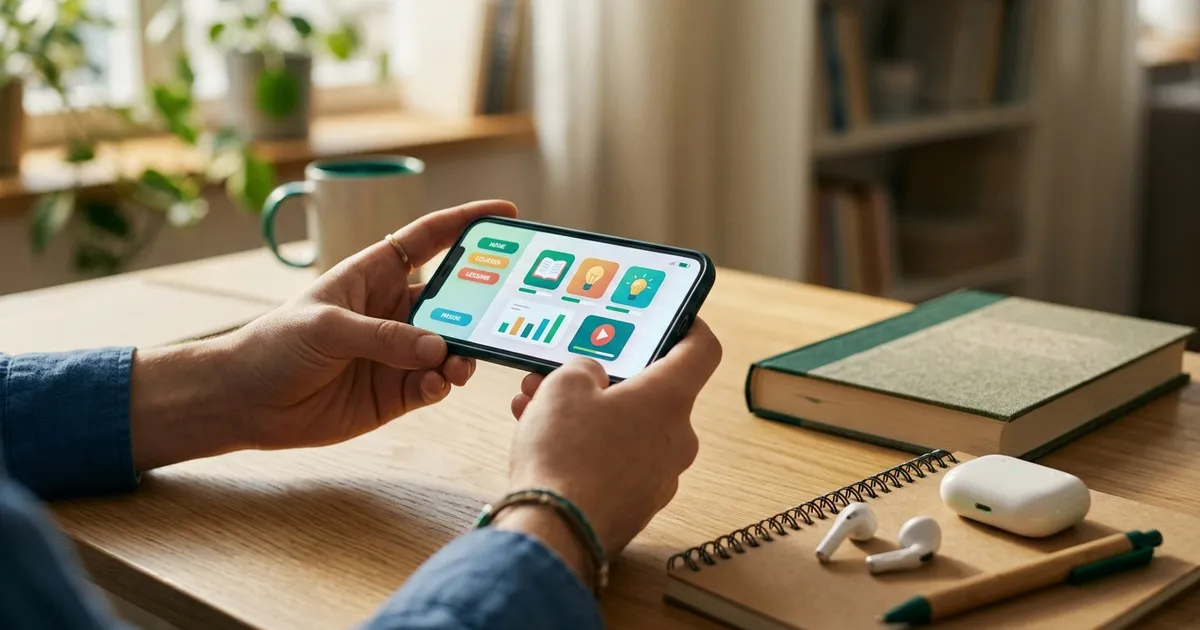
Brainmaxing is the practice of deliberately optimizing your mind, your memory, focus, knowledge, and mental sharpness, the same way the viral looksmaxing trend optimizes your appearance. If looksmaxing is about maxing out your face and physique, brainmaxing is about maxing out the organ that runs everything else. The honest version is built on boring, well-proven habits: active learning, attention training, memory techniques, reading, sleep, and exercise. The hype version sells "limitless pills" and overnight genius. This guide separates the two so you can actually use the trend instead of getting played by it.
The term has exploded across TikTok, Instagram Reels, and YouTube Shorts over the past year, usually under the tidy slogan: looksmaxing for your brain. That framing is why it caught fire, and it is also why a lot of the content around it is nonsense. Let's fix that.
Where the word "brainmaxing" comes from
"Brainmaxing" (sometimes spelled "brainmaxxing") is a direct descendant of "looksmaxing," a term that grew out of online appearance-optimization communities and went fully mainstream on TikTok. The "-maxing" suffix simply means maximizing a trait: looksmaxing maxes appearance, gymmaxing maxes the body, and brainmaxing maxes cognition. The grammar is internet-native, but the idea is as old as studying itself.
What made brainmaxing spread is timing. A generation that grew up measuring everything, steps, screen time, followers, calories, found a label for treating the mind as something you can train and track too. It also arrived as a counter-trend. After years of content about brain rot and doomscrolling frying our attention, brainmaxing offered the opposite promise: instead of letting algorithms farm your focus, you reclaim it and grow it on purpose.
The looksmaxing parallel (and why it matters)
To understand brainmaxing, you have to understand the trend it's mirroring. Looksmaxing is the social-media movement around optimizing your appearance, everything from skincare, grooming, posture, and fitness ("softmaxing") to far more extreme interventions in some corners of the internet. It blew up because appearance is visible, comparable, and emotionally charged, which is rocket fuel for short-form video.
Brainmaxing takes that exact template and points it inward. The pitch is simple and persuasive: you can renovate your face, but your mind is what writes your messages, runs your career, holds your relationships together, and decides what you find interesting in the first place. We dig into this head-to-head in looksmaxing vs brainmaxing, but the short version is that brainmaxing borrows looksmaxing's energy while flipping its weakness: looks can be filtered, edited, and undone by aging; cognition compounds.
What brainmaxing actually includes
Strip away the influencer packaging and real brainmaxing is a small set of high-leverage habits. None of them are exotic. All of them are backed by decades of research. Here is what belongs in a legitimate brainmaxing practice.
1. Active learning and micro-learning
The core of brainmaxing is deliberately learning new things, not passively consuming content. The distinction is everything. Watching a documentary you forget by morning is consumption. Learning a concept, testing yourself on it, and being able to explain it a week later is brainmaxing. Micro-learning, short, focused lessons of around five minutes, is the most sustainable on-ramp because it fits into the gaps in your day where scrolling used to live.
2. Focus and attention training
Attention is the foundation. You cannot learn, remember, or think deeply about anything you can't focus on. Years of fragmented feeds have left a lot of people unable to sit with a single idea for more than a few seconds. Rebuilding that capacity, with focus blocks, single-tasking, and the deliberate work of building a longer attention span, is arguably the highest-leverage move in the entire practice.
3. Memory techniques
Real brainmaxing uses methods that beat brute-force studying: active recall (retrieving information from memory rather than re-reading it) and spaced repetition (reviewing material at expanding intervals so it sticks). These two techniques are responsible for most of the difference between people who learn fast and people who forget everything. They are also exactly what good learning tools automate for you.
4. Reading
Sustained reading is brainmaxing's quiet superpower. It trains attention, vocabulary, working memory, and the ability to hold a complex argument in your head, all things that short-form video actively erodes. You don't need to read for an hour. Twenty minutes of a real book beats two hours of skimming captions.
5. Sleep and exercise
This is the part influencers skip because it doesn't sell supplements. Sleep is when your brain consolidates memory; exercise drives the brain chemistry behind learning and mood. No app, course, or nootropic stack will outrun chronic sleep deprivation. If you only fix one thing, fix your sleep, and you'll get more cognitive upside than any pill on the market.
Evidence-based brainmaxing vs the hype
Here's the uncomfortable part. Brainmaxing went viral, and wherever a self-improvement term goes viral, the grifters follow. There is a clean line between brainmaxing that works and brainmaxing that's just supplement marketing in a hoodie. This table draws it.
| Healthy, evidence-based brainmaxing | Hype / "limitless pill" brainmaxing |
|---|---|
| Active learning, recall, and spaced repetition | Passive "watch this and absorb genius" videos |
| Builds slowly and compounds over months | Promises overnight IQ jumps |
| Free or cheap tools and habits | Expensive nootropic stacks and "smart drug" subscriptions |
| Sleep, exercise, and reading as the foundation | Sells you a shortcut around the foundation |
| Honest about diminishing returns and effort | Implies effortless, unlimited results |
| Measurable: you can recall and apply what you learned | Vague vibes of feeling "sharper" with no proof |
The rule of thumb: if a piece of brainmaxing content is selling you a substance or a shortcut, be skeptical. If it's teaching you a habit or a method, it's probably the real thing. We pressure-test the trend in more depth in is brainmaxing legit, but the headline is that the fundamentals are legit and the magic-pill marketing is not.
The brain-training-game trap
One specific corner deserves a warning: the brain-training games that promise to boost your general intelligence by playing them for a few minutes a day. The research here is consistent and a little deflating. You mostly get better at the game itself, and that improvement rarely transfers to real-world thinking. That doesn't make every brain app useless, far from it, but it does mean the magic isn't in the puzzles. The magic is in actually learning durable knowledge and skills. A trivia-style tap game and a genuine micro-lesson that teaches you how compound interest or cognitive bias works are not the same activity, even if they look similar on a phone screen.
Nootropics, honestly
And the supplements? The honest answer is unglamorous. A few substances, caffeine being the obvious one, have modest, well-documented effects, mostly on alertness rather than raw intelligence. The exotic 'stacks' marketed as brainmaxing fuel range from mildly helpful to completely unproven, and stacking unknown compounds carries its own risks. The reason influencers push them isn't that they're the key to brainmaxing; it's that you can't earn an affiliate commission on 'go to bed earlier.' If a creator's brainmaxing routine is mostly a shopping list, that's your signal.
How to start brainmaxing (the simple path)
You don't need a 12-step morning routine or a shelf of supplements. You need one tiny habit you'll actually repeat. Here is the minimum-effective starting point.
Step 1: Swap five minutes of scrolling for one lesson. Find a moment you already waste, the first scroll of the morning, the line at the coffee shop, and replace it with a single five-minute micro-learning lesson. This is the smallest brainmaxing habit that still compounds.
Step 2: Add one focus block. Pick a 25-minute window to single-task on something that matters, using the Pomodoro technique. Attention is the muscle everything else relies on.
Step 3: Use real memory techniques. Test yourself instead of re-reading, and review on a spaced schedule. This single switch makes everything you learn actually stick.
Step 4: Protect sleep, move your body. Treat seven to nine hours of sleep and regular movement as inputs to your brain, not luxuries.
Step 5: Make it a streak. Keep the daily action small enough that you never skip it, and let consistency do the heavy lifting. A free habit-building tool helps you turn the first two weeks into a routine that runs itself.
If you want this laid out as an actual day-by-day plan, the daily brainmaxing routine walks through what a realistic, non-insane version looks like from morning to night.
The mistakes that kill most brainmaxing attempts
Most people who try brainmaxing quit, and they quit for predictable reasons. The first is starting too big. They watch a hyper-optimized morning routine, try to copy the whole thing on day one, and burn out by Thursday. A five-minute habit you keep beats a two-hour ritual you abandon. The second mistake is chasing novelty over depth, hopping between topics so fast that nothing consolidates. Learning sticks when you revisit it, so a little repetition is a feature, not boredom. The third is mistaking consumption for learning. Watching an explainer feels productive, but if you can't recall or use it afterward, your brain treated it like entertainment. Test yourself, and the difference becomes obvious.
The fourth and most common mistake is neglecting the unglamorous foundation. People will buy courses and supplements while running on six hours of sleep and no exercise, then wonder why they feel foggy. You cannot out-learn a tired brain. Fix the base first, and everything you stack on top works better.
What realistic results actually look like
Let's set honest expectations, because the hype here is brutal. You will not wake up a genius in 30 days. What you will notice, if you stay consistent, is subtler and more durable. Within a couple of weeks, reaching for a lesson instead of a feed starts to feel normal. Within a month or two, you'll catch yourself referencing things you've learned in conversation, connecting ideas across topics, and sitting with a hard idea for longer without your hand drifting to your phone. Over a year, the compounding becomes undeniable: you simply know more, focus better, and learn faster than you used to. That's the real promise of brainmaxing, not a number on an IQ test, but a steadily sharper, more curious version of you. It's quieter than the influencers claim, and far more real.
Where NerdSip fits
The hardest part of brainmaxing isn't knowing what to do, it's doing it every day when an infinite feed is one tap away. That's the exact problem NerdSip is built for. It's a gamified micro-learning app with thousands of AI-generated courses and roughly five-minute lessons across psychology, science, history, social skills, and more. Each lesson uses quizzes, active recall, and spaced repetition, the legitimate brainmaxing methods, and wraps them in MMORPG-style XP, loot drops, and streaks so the habit actually sticks.
The point isn't that NerdSip is magic. It isn't, and anyone who tells you a single app will rewire your brain overnight is selling the hype version of this trend. The point is that it borrows the same dopamine loop that scrolling uses and aims it at something that compounds, which is the whole game. You can compare it honestly against alternatives in the best brainmaxing apps of 2026.
Brainmaxing is a habit, not a hack
Here's the thing the viral clips won't tell you: brainmaxing is just self-discipline with better branding. The people who get real results aren't taking exotic supplements, they're showing up daily for small, deliberate practice. That's why the most important skill underneath all of this is habit formation. If you can make one small learning action automatic, the brainmaxing takes care of itself. Our guide to how to build good habits is the natural next read, because a brainmaxing routine that depends on willpower will always lose to a routine that runs on autopilot.
So treat the trend for what it is: a fun, viral package wrapped around some of the most reliable habits in psychology. Ignore the limitless pills. Keep the learning, the focus, the memory work, the reading, the sleep, and the movement. Start with five minutes today, and let the compounding do the rest. That's brainmaxing that actually works.
Before optimising anything, it helps to know what is actually in there. Our guide to the human brain lays out every region and separates the sourced claims from the ones that only sound scientific.
Frequently Asked Questions
What is brainmaxing?
Brainmaxing is the practice of deliberately optimizing your cognitive abilities, memory, focus, and knowledge, framed as the mental equivalent of looksmaxing. The evidence-based version combines active learning, attention training, memory techniques, reading, quality sleep, and exercise. It went viral on TikTok, Reels, and Shorts as 'looksmaxing for your brain.'
Is brainmaxing the same as looksmaxing?
They share a structure, not a substance. Looksmaxing optimizes appearance through grooming, fitness, and sometimes extreme measures. Brainmaxing optimizes the mind through learning, focus, and memory. Brainmaxing's payoff compounds over time and cannot be filtered or undone by a bad photo, which is why many people consider it the more durable form of self-improvement.
Does brainmaxing actually work?
The honest parts work because they are just well-established habits with new branding: spaced repetition, active recall, sustained reading, sleep, and exercise all have strong research support. The hype parts, like 'limitless' nootropic stacks promising instant genius, are mostly unproven or exaggerated. Brainmaxing works when you treat it as consistent training, not a shortcut.
How do I start brainmaxing?
Start with one tiny daily habit: a single five-minute micro-learning session, ideally swapped in for a few minutes of scrolling. Add focus training, a simple memory technique, daily reading, and protect your sleep and exercise. The key is consistency over intensity. A free habit tool or a gamified learning app makes the first two weeks far easier.
Is brainmaxing just a TikTok fad?
The word is a 2020s internet trend, but the practice is ancient. Memory athletes, students, and lifelong learners have 'brainmaxed' for centuries. The viral packaging is new; the underlying methods, deliberate learning and cognitive habits, are some of the most studied behaviors in psychology. Ignore the hype, keep the fundamentals.
Every NerdSip course clears a four-layer fact-checking pipeline before it reaches the app: grounded in live sources, scored nightly, gated on failure, and reviewable by a person at one tap. Articles on this blog are drafted with AI assistance, then researched, verified, and edited by our team.
Editorial responsibility: ai51 UG (haftungsbeschränkt). Responsible editor named in the imprint.
📚 Keep Learning
- Looksmaxing vs Brainmaxing: The Two Self-Improvement Trends Taking Over Social Media
- The Daily Brainmaxing Routine: A Realistic 7-Step Protocol
- 8 Best Brainmaxing Apps in 2026 (Build a Smarter Daily Stack)
- How to Build a Longer Attention Span: A 30-Day Brainmaxing Protocol
- Is Brainmaxing Legit? What Actually Works vs What's Hype
- How to Build Good Habits That Actually Stick (2026 Guide)
Explore the NerdSip learning hubs
The blog is our editorial layer. When you want to move from reading into doing, these hubs organize the rest of NerdSip by format, including the app itself and the press that has written about it.
Start Brainmaxing With NerdSip
Thousands of AI-generated courses. 5-minute lessons. Quizzes, spaced repetition, and XP so you actually keep going. Free to download on iOS and Android.
4.7 stars from 380 reviews · 8,900+ learners