Bite-sized is a claim about size, and size alone is easy to fake. Any app can crop a lesson to two minutes. The question worth asking is whether the smallest thing an app hands you finishes a thought, or whether it is a trailer for a longer thing you are supposed to buy. We ranked twelve apps on exactly that, then checked every price on 28 July 2026 against official pricing pages and live store listings.
The test that actually separates these apps
Open any of them and you will be told the lessons are short. Fine. Now ask a harder question: after one unit, do you know something?
There are two kinds of small here. The first is a complete small thing: a book summary that leaves you able to describe the argument, a two-minute lesson that lands one concept and closes it. The second is a slice. A language exercise that means nothing without the two hundred that follow it. A card in an infinite feed of cards. Both fit in five minutes. Only one pays you back for them.
That distinction drove the whole ranking. Three things decided position: does the unit stand alone, does it end in something that forces you to retrieve what you just read, and how much of your five minutes gets burned deciding what to open. If it takes ninety seconds of scrolling a catalogue to pick a lesson, a third of your session went on menu navigation.
How we tested
This is not a lab study, and we are not going to pretend it is. Here is exactly what we did, so you can weigh it yourself.
- Timing. We ran each app's smallest advertised unit end to end and timed it on a phone, reading at normal speed, no skimming. Where an app publishes an official figure, we used theirs and said so. Where none exists, Duolingo and Khan Academy being the obvious cases, we labelled our number as observational rather than official.
- Completeness. After one unit and nothing else, could we write three sentences explaining the idea to someone else? Apps whose unit only makes sense inside a sequence lost points here.
- Retrieval. Does the unit end in a question, a prompt, or anything that makes you produce an answer rather than recognise one? Reading feels like learning and mostly is not. This carried the most weight of any single criterion.
- Time-to-first-lesson. From cold open to the first word of actual content. Menus, onboarding quizzes and paywalls all count against.
- Pricing. Checked on 28 July 2026 against official pages and, where no official page exists, the US App Store in-app purchase list. Several apps in this category publish no price anywhere on the open web.
One caveat before the table. Where a single figure would mislead, we give a range and say why. Two apps, Deepstash and Nibble, we decline to price at all, because their own published sources contradict each other.
The 12 best bite-sized learning apps in 2026
| Rank | App | Best For | Lesson Length | Price | Platforms | Free Tier |
|---|---|---|---|---|---|---|
| 1 | NerdSip | When five minutes is the entire course, on any topic | ~1 min per lesson, ~5 min per course | EUR 7.99/mo or EUR 49.99/yr, 7-day trial | iOS, Android | Yes, 1 sample course a day, no account |
| 2 | Imprint | The shortest genuinely complete lesson | 2 min or less (official) | $15.99/mo, $99.99/yr (often $74.99) | iOS, Android | No, 7-day trial only |
| 3 | Blinkist | Nonfiction books in one sitting | 15 min per Blink (official) | EUR 15.99/mo, EUR 99.99/yr | iOS, Android, Web | Yes, one editor-picked Blink a day |
| 4 | Duolingo | A daily language habit that survives bad weeks | A few minutes per lesson | Super $12.99/mo, $83.99/yr | iOS, Android, Web | Yes, full course access with ads |
| 5 | Kinnu | Free structured pathways through general knowledge | ~5 min sessions | $0 for the General Knowledge app | iOS, Android | Yes, the whole product, no ads |
| 6 | Headway | Actionable takeaways rather than full arguments | 5 to 15 min per summary (official) | $12.99/mo, $89.99/yr | iOS, Android, Web | Yes, one summary a day |
| 7 | Chunks | Story-shaped micro-lessons, and a lifetime price | 5 to 10 min per chapter (official) | $9.99/mo, $49.99/yr, $59.99 lifetime | iOS 16+, Android 8+ | Yes, a selection of stories, permanent |
| 8 | Khan Academy | Free academic depth when the bite is not enough | 5 to 15 min video, minutes per exercise | $0, Khanmigo tutor $4/mo or $44/yr | iOS, Android, Web | Yes, the entire curriculum, forever |
| 9 | Brilliant | STEM, where the unit is a problem you solve | 5 to 15 min | EUR 25/mo, EUR 13.75/mo billed annually | iOS, Android, Web | Yes, one daily lesson plus course openers |
| 10 | Deepstash | Grazing on ideas without committing to a course | ~5 min a day, idea cards | No public price, store SKUs run $30 to $120/yr | iOS, Android, Web | Yes, 200,000+ ideas readable free |
| 11 | Nibble | Chat-style interactive lessons | 10 min per lesson (official) | $19.99/mo, annual roughly $50 to $90 | iOS, Android, Web | No, 7-day trial on yearly only |
| 12 | Shortform | The opposite trade: depth over brevity | 7 to 20 min per guide | $16.42/mo billed annually, $24/mo monthly | iOS, Android, Web | No, trial only |
1. NerdSip, best when five minutes is the whole course
Everything else on this list hands you a piece of something bigger. NerdSip hands you the whole thing. A course is three, five or ten lessons depending on the depth you pick, each about a minute of reading, each ending in a three-option multiple-choice question that explains why the right answer is right. Finish it and you get a summary infographic, one card carrying the entire course, which you can save to your camera roll or send to someone. There is no longer version being withheld, because there is no catalogue at all. You name a topic and the course gets written.
Every lesson carries generated artwork, which matters more than it sounds: abstract ideas need something concrete to hang on. Finishing pays out XP, feeds a streak with freeze tokens, and rolls a loot drop at 80 percent common, 15 percent rare, 5 percent legendary, which goes into a 3D character you equip and build. Weekly leagues run bronze through Diamond with real promotion and demotion. Podcast mode reads any course aloud in a real voice for the commute. 4.8 stars from 220+ reviews
The paid plan is EUR 7.99 a month or EUR 49.99 a year after a 7-day trial, covering 75 generations a month plus unlimited reading, infographics, voice courses and the Ask NerdSip question box. The free tier is one sample course a day with no account required, so you can see the format before deciding anything. Generation is the paid part.
2. Imprint, the shortest complete lesson in the category
Two minutes or less, officially, and Imprint gets away with it because the lessons are built visually. Concepts arrive as illustrated sequences rather than paragraphs, which compresses well and sticks better than a wall of text at the same length. If you want the single smallest unit that still closes an idea, this is it.
The catch is access. We could not confirm any permanent free content, only a seven-day trial before the paywall at $15.99 a month or $99.99 a year, with a $74.99 discounted annual SKU also live. There is no web app either, so it lives entirely on your phone. Imprint is also a fixed library: excellent inside its range, silent outside it.
3. Blinkist, the fifteen-minute book
Fifteen minutes per Blink, text or audio, and after it you can genuinely describe a book's argument. That is a complete unit by any reasonable definition, which is why it ranks high despite being the longest thing here that still counts as bite-sized. Blinkist has been doing this since before the category had a name and the editorial quality shows.
The constraint is structural. Everything must map to a published nonfiction book, so if the thing you are curious about was never written up as a business or psychology title, it does not exist here. Pricing is EUR 15.99 a month or EUR 99.99 a year for Premium as published on Blinkist's own page, with Pro above it. US figures vary too widely across live store SKUs for us to name one. The free tier gives you one editor-picked Blink a day, forever. Our full NerdSip versus Blinkist breakdown goes deeper on the trade.
4. Duolingo, the habit engine
Nobody has built a better daily loop. A Duolingo lesson takes a few minutes, ends in scored answers, and the streak machinery around it is the most effective retention design in consumer learning software. If your problem is showing up rather than choosing what to learn, this is the app that fixes it.
It ranks fourth on our specific test because a single Duolingo lesson is a slice, not a whole. Twelve exercises on the dative case mean nothing on their own; they only pay off across hundreds of sessions. That is the correct design for language acquisition and the wrong design for curiosity. Super is $12.99 a month or $83.99 a year on the US App Store, and the free tier is genuine and permanent if you accept ads. We do not publish a Max price, because Duolingo does not publish one either. More on the split in NerdSip versus Duolingo.
5. Kinnu, the one that is simply free
Kinnu's General Knowledge app has no subscription, no ads, and no obvious catch. Content is organised into pathways built from short units they call Orbs, sessions land around five minutes, and the whole thing is free. Among apps that are not nonprofits, that is close to unique.
Scope your expectations to the general-knowledge product; Kinnu's exam-prep apps are separate and paid, and their prices are not published. There is no consumer web version, so it is phone only. Ranked fifth because the unit is solid and the price is zero, which is a hard combination to argue with.
6. Headway, takeaways over arguments
Same book-summary shape as Blinkist, different personality. Headway summaries run five to fifteen minutes and lean towards what you should do rather than what the author argued. For self-improvement titles that is often the better trade. For anything analytical it flattens the reasoning.
Published pricing is $12.99 a month or $89.99 a year, though Headway itself notes the number moves by country and promo, and the store shows several annual variants. One free summary a day, described in Headway's own words as always available.
7. Chunks, micro-lessons with a narrative spine
Chunks wraps short lessons in story structure, five to ten minutes a chapter, which makes the units easier to remember than a bare explainer. It is a very small indie app, founded in 2025, and it shows in the best way: the format is opinionated and the pricing is unusually friendly. $9.99 a month, an annual SKU at $49.99 that is frequently discounted to $34.99, and a $59.99 lifetime unlock that almost nobody else in this category offers. A permanent selection of free stories sits behind no paywall at all, confirmed on the Chunks support page.
Mobile only, no web version. The library is fixed, so the story-first approach works beautifully on covered topics and not at all on anything else.
8. Khan Academy, free depth for when the bite is not enough
Not really a bite-sized app, and included deliberately. Videos run five to fifteen minutes and exercises take a few, so the units are short, but the intent is a full curriculum rather than a snack. What it gives you is the best possible escape hatch: when a five-minute course leaves you wanting the real thing, Khan Academy has the real thing, free, forever, no ads. Khanmigo, the optional AI tutor, is $4 a month or $44 a year, the cheapest paid tier in this roundup.
9. Brilliant, where the unit is a problem
Brilliant's lessons run five to fifteen minutes and end in something you have to solve, which is the strongest retrieval design here by a distance. You cannot passively consume Brilliant. That is the whole point, and for maths, physics, logic and computer science it is unmatched.
It drops to ninth on a bite-size ranking for two reasons. The advertised fifteen minutes becomes twenty-five when a problem defeats you, which is good learning and bad snacking. And it is the most expensive mainstream option at EUR 25 a month, or EUR 13.75 a month billed annually. We publish the euro figures because those are what the live page renders; US pricing sits somewhere near $150 to $165 a year across several live SKUs. The free tier is thin but real: one daily lesson plus the opening lessons of most courses. See NerdSip versus Brilliant if STEM is your main target.
10. Deepstash, grazing rather than learning
Over 200,000 idea cards, free to read, roughly five minutes a day if you use it as designed. Deepstash is the most feed-like thing here, which makes it the easiest to open and the hardest to finish. Cards are insights rather than lessons, so nothing closes and nothing tests you. We are not publishing a price: there is no public pricing page and the store listing carries six annual SKUs spanning roughly $30 to $120.
11. Nibble, the conversational lesson
Nibble runs interactive ten-minute lessons in a chat format, which is a genuinely different feel and works well for people who bounce off reading. It sits low here on price transparency rather than product quality: Nibble's own blog and its own FAQ give different numbers, and the store lists five annual SKUs. The confirmable figure is $19.99 a month, with annual plans landing somewhere between roughly $50 and $90 depending on the offer you are shown. No free tier, only a seven-day trial on the yearly plan.
12. Shortform, the honest opposite
Included as a control. Shortform guides run seven to twenty minutes and are deliberately denser than anything else here, with commentary, counterarguments and context around each book. It is the better product for people who want to think about a book rather than know about it. It is also not bite-sized, and does not claim to be. $16.42 a month billed annually, or $24 month to month. No free tier.
One absence worth explaining: CuriosityStream. Excellent, and it keeps turning up on lists like this, but its unit is a twenty to fifty minute documentary. Calling that microlearning would be dishonest.
The swipe deck: why you never spend the five minutes deciding
Here is the failure nobody measures. You open a learning app with five free minutes. You land on a home screen with categories, a continue-where-you-left-off row, a trending shelf and a search bar. Ninety seconds later you have read three course titles, opened one, decided it was not quite what you wanted, gone back, and now you have three and a half minutes and slightly less enthusiasm than when you started.
Every app in this roundup except one opens on a menu. NerdSip opens on a deck.
The mechanic is borrowed from dating apps and it transfers better than it has any right to. One course at a time, filling the screen. Swipe right to learn it. Swipe left to skip. Swipe up for more like this. There is no browsing state, because there is nothing to browse: what is in front of you is the whole choice. Skipping costs one gesture, so the pressure to evaluate carefully disappears, which is exactly what makes it fast.
Behind the deck is a recommendation engine that ranks what to show next based on what you have actually engaged with, not what you told an onboarding quiz you cared about six weeks ago. Left swipes are signal. Up swipes are signal. Finishing a course is the strongest signal there is. The deck sharpens as you use it.
The second half of the trick is that there is no fixed library to run out of. If nothing in the deck lands, you type the topic yourself and the course gets written. Not a fixed library with gaps, and no dead end where the app says it has nothing on the thing you actually wanted to know. That combination, a deck that decides for you plus a generator that covers anything the deck missed, is what makes the five minutes go entirely into learning. We wrote more about the mechanics in the five-minute learning loop.
Short lessons and the accuracy problem
The obvious objection to a course written in seconds is that speed and accuracy pull against each other. It is a fair objection, and the honest answer is that the checking has to be built into the system rather than promised in marketing copy. NerdSip runs four layers.
At generation, grounded in live sources. Courses are not written from memory. Every generation runs against live search results, so claims are anchored to what the record actually says rather than to whatever a model absorbed during training.
Every night, scored while you sleep. An automated pass rates every course in the library for topic quality, appeal and content integrity, and sweeps for truncated or broken lessons. It runs over everything, not a sample.
Before the deck, blocked if it fails. Passing that quality bar is what earns a course a place in the swipe deck. Anything that falls short stays out, and nobody ever sees it. The gate is the reason the deck is worth swiping through.
Any time, one tap then a person. Spot something wrong and a single tap flags the course. It is auto-marked for review and lands in a queue that real people work through.
What we will not tell you is that this solves hallucination. It does not, and no pipeline anywhere does. Automated checks catch the common failures, the broken lessons, the claims that contradict the live record, the courses that are simply thin. They will not catch every subtle error, which is precisely why the fourth layer is a human being rather than another model. You can read how each stage works on the features page.
Apply the same scepticism to the rest of the list. Book-summary apps inherit whatever the book got wrong. Feed-style apps rarely tell you where an idea came from. Every app here makes a claim about accuracy, whether it says so or not. The difference is whether the claim has machinery behind it.
What the prices actually look like
Two things to know before you commit to anything.
First, the book-summary apps run aggressive price personalization. Blinkist, Headway, Imprint, Nibble and Deepstash each carry five to ten live price points at once, and which one you see depends on your country, your onboarding answers, and whatever promotion is running. Any figure quoted in any roundup, this one included, will be wrong for some readers. Check your own screen.
Second, free means two very different things. Genuinely free forever: Khan Academy, Kinnu, Chunks, Blinkist, Headway, Deepstash, Duolingo and Brilliant, each with its own daily limit. Trial only, despite the marketing language: Shortform, Imprint and Nibble. CuriosityStream currently offers neither. NerdSip sits in between by design, with one sample course a day readable without an account so you can judge the format, and generation reserved for the paid plan. If free is the deciding factor, our free learning apps roundup covers it properly.
So which one
If the five minutes is all you have and you want it to end in something finished, NerdSip. The course is the unit, the deck removes the choosing, and there is no topic it cannot cover.
If you want the smallest possible complete lesson and you like visual explanation, Imprint. If you want to know a nonfiction book by the end of a train ride, Blinkist. If you are learning a language and the real problem is consistency, Duolingo, and it is not close. If you want good structured content for nothing, Kinnu.
And if you find yourself wanting the longer version after the short one, that is the system working. Bite-sized is not a replacement for depth. It is the thing that makes you want depth in the first place, which is a job almost nothing else does. Start with a few things worth learning in five minutes and see which one refuses to let you stop.
Frequently Asked Questions
What is the best bite-sized learning app in 2026?
NerdSip, if you want the small unit to be the whole thing. A NerdSip course is three, five or ten lessons of about a minute each, so a short course runs roughly five minutes from first card to finished quiz and summary infographic. Nothing is held back for a longer version, because there is no longer version. If your interest is narrower, Imprint is the best two-minute visual lesson, Blinkist is the best fifteen-minute book summary, and Duolingo is the best daily language habit.
What counts as a bite-sized lesson?
In practice, anything you can finish in one sitting without a bookmark. Imprint runs two minutes or less per lesson. Duolingo lessons take a few minutes. NerdSip lessons are about a minute of reading, with a whole course landing near five. Blinkist and Headway sit at the top of the range at roughly fifteen minutes. Once a unit passes about twenty minutes it stops behaving like a bite and starts behaving like homework.
Which bite-sized learning apps are free?
Khan Academy is free forever and funded as a nonprofit. Kinnu's General Knowledge app has no subscription at all. Chunks keeps a selection of stories permanently free. Duolingo, Brilliant, Blinkist, Headway and Deepstash all run real free tiers with daily limits or ads. NerdSip lets you browse one sample course a day with no account required, and course generation is a paid feature. Shortform, Imprint and Nibble are trial-only, and CuriosityStream currently offers neither a free tier nor a trial.
What is the best app to learn something in five minutes?
NerdSip is built around that exact number. Type any topic, or swipe through the deck until something catches you, and you get a course of about five one-minute lessons with a multiple-choice question at the end of each. The five minutes is the deliverable, not a preview. Blinkist and Headway need closer to fifteen, and Brilliant's problem sets can eat twenty if you get stuck.
How much do bite-sized learning apps cost?
As of July 2026, most sit between 8 and 25 a month in local currency. NerdSip is EUR 7.99 monthly or EUR 49.99 a year after a 7-day free trial. Chunks is $9.99 a month with a rare $59.99 lifetime option. Duolingo Super is $12.99 monthly or $83.99 a year. Headway is $12.99 monthly. Imprint is $15.99 monthly. Brilliant is the priciest mainstream option at EUR 25 a month. Khanmigo, Khan Academy's optional AI tutor, is the cheapest paid add-on anywhere at $4 a month.
Are bite-sized learning apps available on Android?
Most are. NerdSip is live on both the App Store and Google Play. Duolingo, Khan Academy, Brilliant, Blinkist, Headway, Deepstash, Nibble, Kinnu, Imprint and Chunks all ship Android apps. The real platform divide is the web: Imprint, Kinnu and Chunks are mobile-only, while everything else in this list has a browser version.
Do bite-sized learning apps work offline?
Partly. Blinkist, Headway and Deepstash Pro all support downloads for offline reading or listening. Duolingo caches lessons. Apps that generate content on demand, NerdSip included, need a connection to write a new course, though anything already generated behaves like normal content once it is on your screen. If your commute runs through a tunnel, download before you leave.
Is bite-sized learning actually effective, or is it just entertainment?
It works when the small unit is closed and tested. A lesson that ends in a question you have to answer forces retrieval, and retrieval is what moves material into durable memory. A lesson that ends in a swipe to the next card does not. That is why we weighted quizzes and summaries so heavily in the ranking. Bite-sized fails when it becomes a feed you scroll past rather than a thing you finish.
What is the best bite-sized app for adults who are not studying for anything?
NerdSip and Kinnu. Both assume you are curious rather than enrolled. Kinnu gives you structured pathways through general knowledge for free. NerdSip gives you a swipe deck of courses tuned to what you have engaged with, plus the ability to name a topic nobody has written a course about yet. Neither asks what grade you are in.
What are the best alternatives to Blinkist for short lessons?
Headway if you want the same book-summary format with a lighter, more actionable tone. Imprint if you want the ideas rendered visually in two-minute lessons. NerdSip if you would rather learn a topic than a book, since it writes a course on whatever you name rather than mapping everything to a published title. Shortform if you want the opposite trade and are happy to read fifteen to twenty minutes for far more depth.
Which bite-sized app has the shortest lessons?
Imprint, at two minutes or less per lesson, officially. NerdSip lessons are shorter still at roughly a minute of reading each, but they are designed to be taken in a run of three, five or ten, because the course rather than the lesson is the unit that finishes a thought.
Can a five-minute course be accurate?
Short does not mean sloppy, but it does mean fewer places to hide an error, which is why the checks matter. NerdSip runs four of them: generation against live search results rather than model memory, a nightly automated quality and integrity pass over the whole library, a gate that keeps anything failing the bar out of the swipe deck, and a one-tap flag that sends a course to a queue real people work through. No pipeline catches everything. That is exactly why the last stage is a person.
How many bite-sized lessons should I do a day?
Fewer than you think. Our own usage data points to a fatigue effect somewhere past fifteen lessons in a single sitting, where accuracy starts sliding. One short course a day, finished properly with the quiz, beats a forty-minute binge you half remember. The apps that push daily goals of twenty minutes or more are optimizing for session length, not for what you keep.
Which app is best if I never know what to learn next?
NerdSip, because it removes the choice. The deck hands you one course at a time and you swipe right to learn it, left to skip, up for more like it. The feed ranks what to show next based on what you have actually engaged with. Every other app in this roundup opens on a menu, and a menu is where the five minutes usually goes.
Is there a bite-sized learning app with a one-time purchase instead of a subscription?
Chunks offers a $59.99 lifetime unlock, which is genuinely rare in this category. Kinnu's General Knowledge app has no subscription at all and sells optional one-off certificates. Everything else here runs on monthly or annual billing.
Every NerdSip course clears a four-layer fact-checking pipeline before it reaches the app: grounded in live sources, scored nightly, gated on failure, and reviewable by a person at one tap. This article was researched and edited by humans.
📚 Keep Learning
- 50 Things You Can Learn in 5 Minutes Flat
- What Is Microlearning? The Complete Guide for 2026
- Best Microlearning Apps in 2026: 11 Compared (Prices, Platforms, Free Tiers)
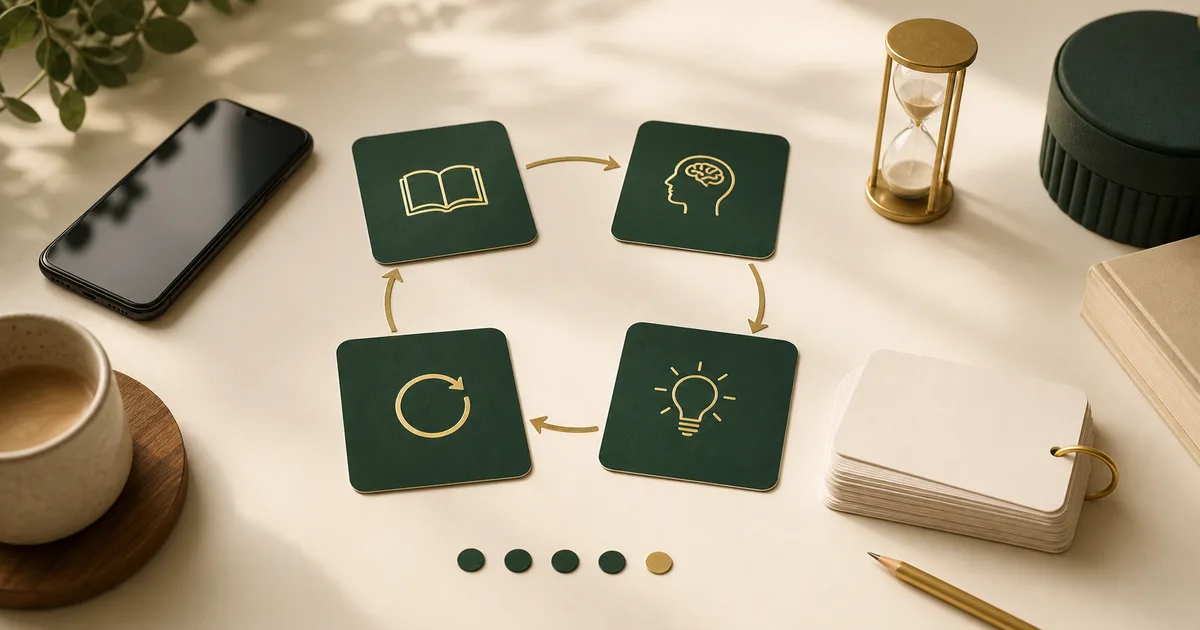
- The 5-Minute Learning Loop: Learn, Recall, Apply, Repeat
- Best Learning Apps for Busy People in 2026 (20+ Tested & Ranked)
- 10 Best Free Learning and Microlearning Apps in 2026 (Tested)
Explore the NerdSip learning hubs
The blog is our editorial layer. When you want to move from reading into doing, these hubs organize the rest of NerdSip by format, including the app itself and the press that has written about it.
Five minutes, one finished course
Swipe right on a topic, read five one-minute lessons, answer the quiz, keep the infographic. Download NerdSip and see how much fits in a coffee break.