Quick answer
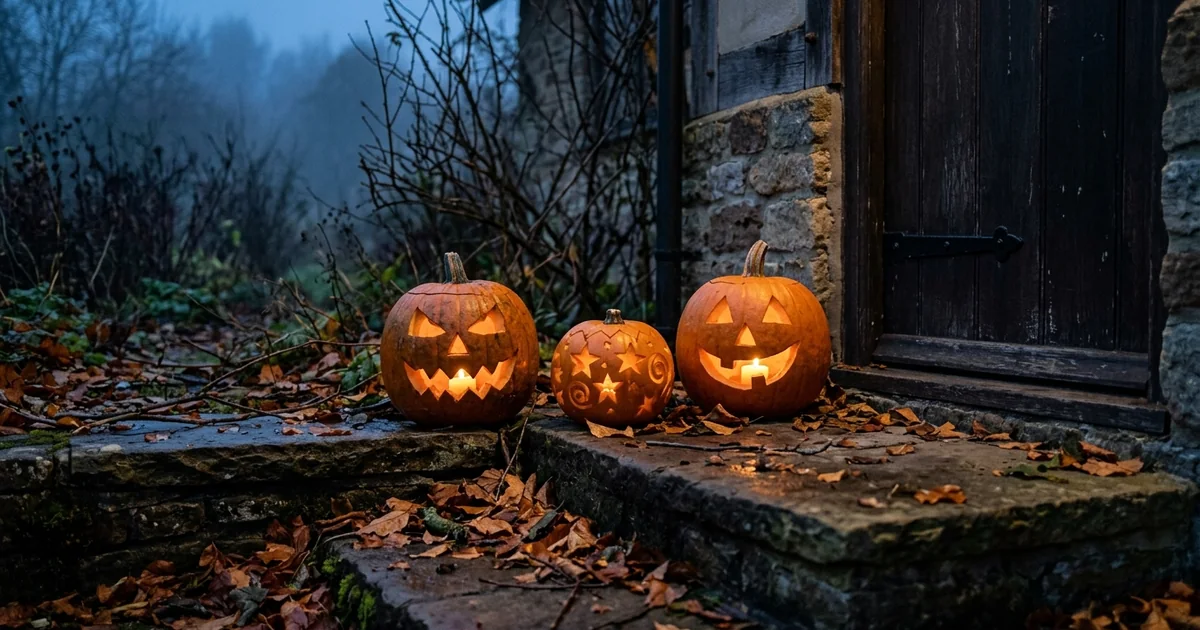
Halloween 2026 is on Saturday 31 October. The name is a contraction of All Hallows' Even, the evening before All Saints' Day on 1 November. It draws on Samhain, the Gaelic festival marking the end of the harvest, and on the medieval Christian customs of souling and guising, in which people went door to door for food in exchange for prayers or a performance. Irish and Scottish emigrants carried those customs to North America in the 19th century, where the turnip lantern became a pumpkin and the performance became trick or treat, first recorded in print in Alberta in 1927. Halloween returned to Europe in the late 20th century as an American import, which is why it feels old in Ireland and new in Germany.
The Halloween quiz: 20 questions, six rounds
Twenty questions drawn from a bank of sixty, across six rounds: where the night came from, pumpkins and lanterns, horror films, monsters and books, customs and superstitions, and Halloween around the world. Every answer comes with the reason behind it, and the result names the round you were weakest in. Nothing is stored, and there is no signup.
Prefer the questions in writing, with all fifty answers laid out to read or print? Those live in the Halloween trivia questions post. If you want a general knowledge round instead, the free pub quiz has 500 questions in ten rounds.
Everything on this page
Go deeper
When
Saturday 31 October 2026. The date never moves: it is fixed as the eve of All Saints' Day on 1 November. In 2027 it falls on a Sunday.
Where it came from
Samhain in the Gaelic world, All Hallows' Even in the Christian calendar, souling and guising in medieval Britain and Ireland, then Irish emigration to North America.
What it costs
Halloween is the second-largest commercial holiday in the United States after Christmas, with annual spending in the billions across sweets, costumes and decorations.
What most people get wrong
Nobody was burned at the stake in Salem, the first jack-o'-lanterns were turnips, and Frankenstein is the scientist, not the monster.
Where Halloween actually came from
The short version told every October runs like this: the Celts held a festival of the dead called Samhain, the Church painted over it with All Saints' Day, and the whole thing sailed to America with the Irish. Every part of that is half true, and the missing halves are the interesting ones.
Samhain is genuinely old and genuinely attested. It marked the end of the harvest and the start of the dark half of the year in the Gaelic calendar, and Irish literature describes it as a time when the boundary between worlds thinned. What the evidence does not support is the confident claim that it was a organised festival of the dead with druid ceremonies and mass sacrifice. Historians including Ronald Hutton have shown that much of that picture was assembled in the 18th and 19th centuries by antiquarians who wanted a pagan ancestry for a Christian holiday.
All Hallows' Even is the other parent. Pope Gregory IV extended the 1 November feast of All Saints to the whole Church in 835, and the evening before became its vigil. Out of that grew souling: the poor went door to door for soul cakes and prayed for the household's dead in return. In Scotland, guising demanded a performance for the treat, a song or a joke or a poem, which is the part North America dropped.
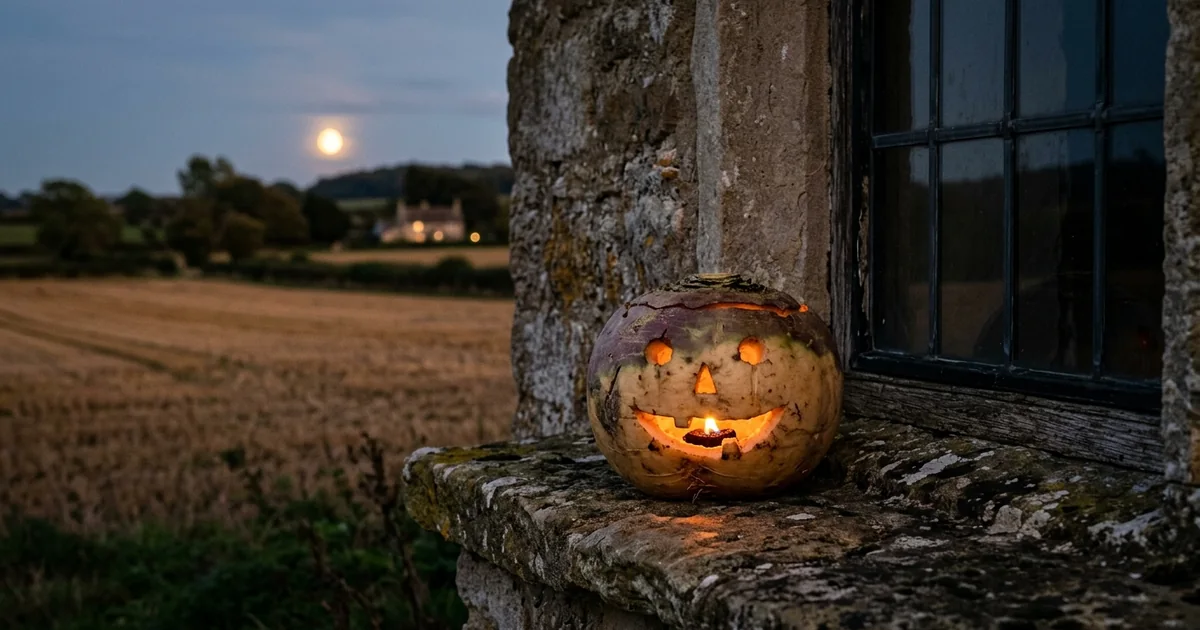
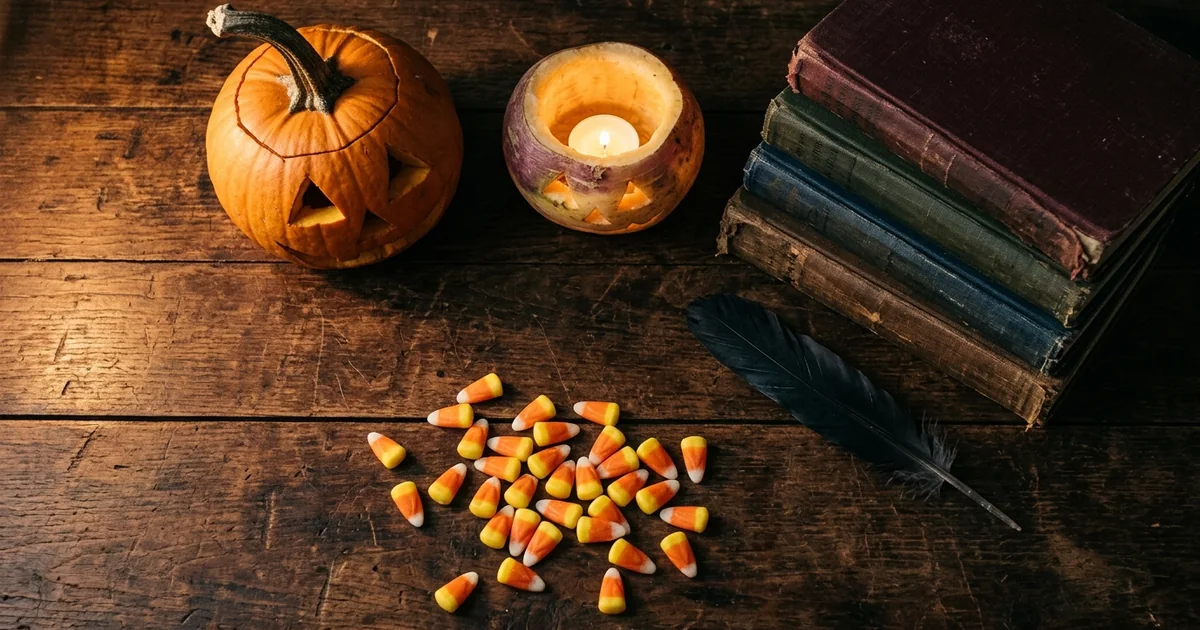
The lantern arrived separately, carved from a turnip and lit with an ember, tied to the Irish story of Stingy Jack who tricked the Devil and was refused by both heaven and hell. Pumpkins were an American substitution: bigger, softer, and everywhere in an American autumn.
The full account, with the sources and the parts that are genuinely uncertain, is in the history of Halloween.
Why we celebrate Halloween at all
A festival does not survive two thousand years because it is old. It survives because each era finds a use for it. Samhain marked a real agricultural threshold. The Church needed a vigil for its saints. Medieval households bought prayers with cake. Victorian parlour games turned the night into marriage divination, which is what bobbing for apples was actually for. Post-war American suburbs turned it into a children's holiday to stop the vandalism, and retailers turned that into the second-biggest commercial holiday in the country.
What holds all of that together is a licence to be frightened on purpose, in company, with the exit clearly marked. Researchers who study recreational fear find that people leave a haunted house calmer than they entered it, and that the enjoyment peaks at a moderate level of fright rather than at the maximum. Halloween is that mechanism with a date attached.
The longer answer, including what the night means in countries where it is genuinely new, is in why do we celebrate Halloween.
Halloween around the world
Ireland and Scotland
The oldest continuous version. Barmbrack with a ring baked in, colcannon with a coin, and guising, where a child had to perform before the door opened. The turnip lantern is still carved by people who remember doing it.
Mexico
Día de Muertos on 1 and 2 November is not a Mexican Halloween. Its purpose is the opposite: the marigold paths and the altars exist so the dead can find their way home. More in our facts about Mexico.
Germany
Widely celebrated only since the 1990s, and genuinely contested: 31 October is Reformation Day, a public holiday in nine federal states, and All Saints' Day the next morning is a silent holiday with dancing bans in five more.
Japan
Costume-first and adult-first, with no trick or treating. The Kawasaki Halloween Parade near Tokyo draws thousands of participants who have to apply months in advance to take part.
The Philippines
Pangangaluluwa sends singers house to house on behalf of souls in purgatory, in exchange for food or coins. It is the same shape as medieval English souling, on the other side of the world.
Britain
Halloween stayed small here for a long time, because Guy Fawkes Night on 5 November had already absorbed the autumn bonfire tradition. It has grown quickly since the 1980s, largely as an American reimport.
Halloween facts worth repeating
These are the ones that survive fact-checking, which is not true of most Halloween lists.
Nobody was burned at Salem
Nineteen people were hanged in 1692 and Giles Corey was pressed to death under stones. Burning was a continental European punishment, not a colonial American one.
Michael Myers is William Shatner
The mask in Halloween (1978) is a Captain Kirk mask with widened eye holes, painted white. The budget did not stretch to anything made to order.
The film was shot in spring
Halloween (1978) was filmed in southern California in spring. The crew bought paper leaves, scattered them for each shot, then swept them up to use again.
Frankenstein has no name
Frankenstein is Victor, the scientist. Mary Shelley began the novel at eighteen, and never gave the creature a name of its own.
Bobbing for apples was a marriage oracle
Most old Halloween games were divination about who you would marry and when, not about ghosts at all.
A pumpkin is a fruit
It grows from the flower and carries seeds. Botanically it is a pepo, in the same family as cucumbers and melons.
Forty-four more, each with a source, are in 50 Halloween facts.
The traditions, explained in one line each
The lantern
A turnip carved with a face and lit with an ember, carried to light a path and to keep the wrong company off it. The pumpkin is the American replacement.
The costume
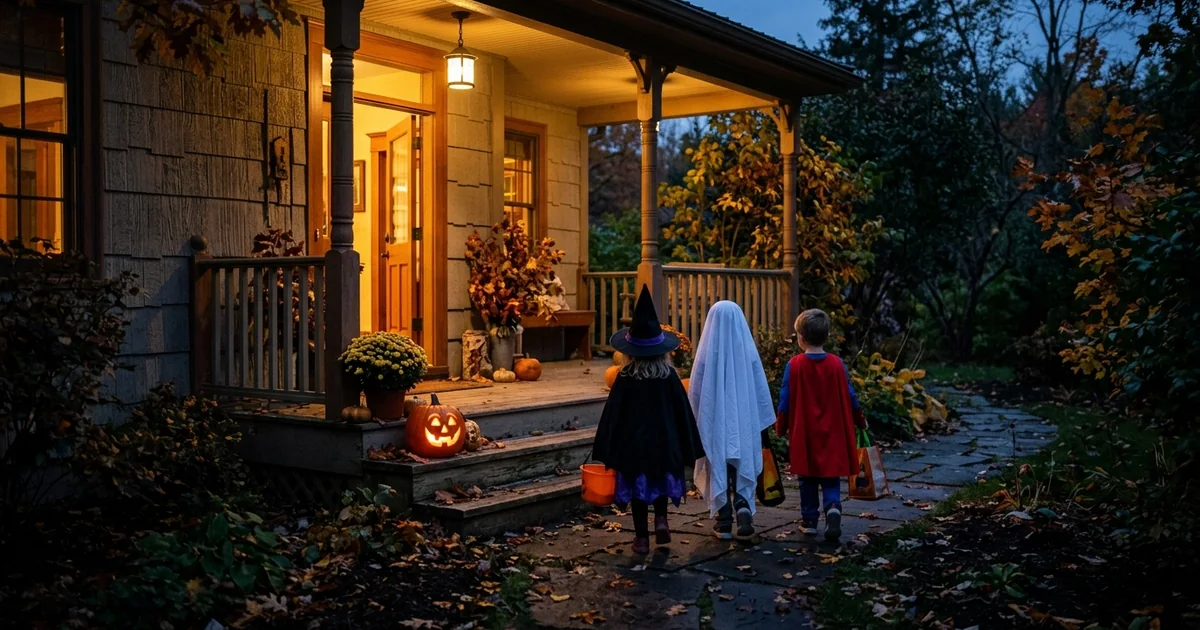
Disguise served two purposes that later merged: not being recognised by whatever was abroad that night, and being unrecognisable while demanding food at a neighbour's door.
Trick or treat
Souling asked for cake in exchange for prayer. Guising asked for a treat in exchange for a performance. America kept the transaction and replaced the payment with a threat.
Halloween's two traditional colours, orange for the harvest and black for the dark half of the year, are older than every decoration in the shop that sells them.
Frequently asked questions
When is Halloween 2026?
Halloween 2026 is on Saturday 31 October. The date is fixed, because Halloween is the eve of All Saints' Day on 1 November. In 2027 it falls on a Sunday, and in 2028 on a Tuesday.
Why do we celebrate Halloween?
Because each era found a use for the same night. It began as Samhain, the Gaelic marker for the end of the harvest, was absorbed into the Christian vigil of All Saints, and became a night of house visiting for cake and prayers. Victorian games turned it into marriage divination, post-war American suburbs turned it into a children's holiday, and retailers turned that into the second-largest commercial holiday in the United States. Underneath all of it is a licence to be frightened on purpose, in company, with the exit clearly marked.
What is the history of Halloween?
Halloween has two parents. Samhain, the Gaelic festival marking the end of the harvest and the start of the dark half of the year, and All Hallows' Even, the vigil before the Christian feast of All Saints, which Pope Gregory IV extended to the whole Church in 835. Medieval souling and Scottish guising added the door-to-door custom, and the lantern came from the Irish story of Stingy Jack, carved from a turnip. Irish and Scottish emigrants took all of it to North America in the 19th century, where the turnip became a pumpkin and guising became trick or treat.
Is Halloween a pagan holiday?
Partly, and less directly than most articles claim. Samhain is a genuine pre-Christian festival, but the confident picture of it as an organised festival of the dead with druid ceremonies was largely assembled by 18th and 19th century antiquarians rather than drawn from contemporary evidence. The customs that make up a modern Halloween, souling, guising, lantern carving and trick or treating, are documented in Christian Europe and in 19th century North America, not in pre-Christian sources.
What are the first jack-o'-lanterns made of?
Turnips, and sometimes beets or mangelwurzels, hollowed out and lit with a burning ember. German-speaking regions carved the same thing and called them Rübengeister. The pumpkin took over only after the custom reached North America, where pumpkins were larger, softer and abundant.
Where did trick or treating come from?
From two older customs. Souling, in which people went door to door for soul cakes and prayed for the household's dead in return, and Scottish guising, in which children in disguise had to perform a song, a joke or a poem before receiving anything. The phrase trick or treat first appears in print in Blackie, Alberta, in 1927.
Why do we carve pumpkins at Halloween?
The custom is Irish and the vegetable is American. In the Irish story, Stingy Jack tricked the Devil, was refused entry to both heaven and hell, and was left to wander with an ember inside a hollowed turnip. Emigrants brought the custom to North America and found pumpkins easier to carve and far easier to find.
Do I need an account to play the Halloween quiz on this page?
No. The quiz is free, needs no signup, and stores nothing beyond a list in your own browser of which questions you have already seen, so a second game is a different game. The NerdSip app adds XP, streaks, progress tracking and thousands of other courses.
Read next
The history of Halloween
From Samhain to trick or treat, including the parts the popular version leaves out.
ExplainerWhy do we celebrate Halloween?
Five answers, one for each era that found a use for the same night.
Facts50 Halloween facts
Sourced, checked, and free of the four errors every other list repeats.
Quiz100 Halloween trivia questions
The written round, with answers, ready to read out at a party.
EventsOktoberfest 2026
EventsNobel Prize week 2026
EventsChristmas 2026
Learn something new in 5 minutes a day
NerdSip turns any topic into a short course with quizzes, XP, and streaks. Free to start, no doomscrolling required.
4.7 stars from 510 reviews · 10,000+ learners