Quick answer: There is no official ranking, but Albert Einstein and Marie Curie are the Nobel laureates most people can name, followed by Martin Luther King Jr., Nelson Mandela and Malala Yousafzai. The famous Nobel names are famous for the right reasons and often the wrong citations. Einstein's prize was for the photoelectric effect. Curie won in two separate sciences. Fleming's discovery was an accident he nearly threw away. Here is what each of them actually won for.
Since 1901, 633 Nobel Prizes have gone to 1,026 laureates: 990 people and 28 organisations. These are the laureates most people can name, and the work the committee actually cited.
Marie Curie: the only double in two sciences
Curie won the 1903 physics prize, shared with her husband Pierre and with Henri Becquerel, for research into radioactivity, a term she coined. She won again in 1911, alone, in chemistry, for discovering polonium and radium and isolating radium in metallic form.
She remains the only person to have won in two different scientific fields. She was also nearly left off the 1903 prize entirely: the original nomination named only Becquerel and Pierre Curie, and Pierre insisted her name be added.
Her notebooks are still radioactive and are stored in lead-lined boxes. She died in 1934 of aplastic anaemia, almost certainly from a lifetime of exposure.
Albert Einstein: not for relativity
Einstein received the 1921 physics prize, delayed and awarded in 1922, "for his services to Theoretical Physics, and especially for his discovery of the law of the photoelectric effect." That last clause is deliberate. Relativity was considered too speculative and too contested to cite, even after the 1919 eclipse expedition confirmed the bending of starlight.
The photoelectric effect was not a consolation prize. It established that light behaves as discrete quanta, which is one of the foundations of quantum mechanics. Einstein spent much of the rest of his life uncomfortable with where that idea led.
Under his divorce settlement, the prize money went to his first wife, Mileva Marić.
Alexander Fleming: the contaminated dish
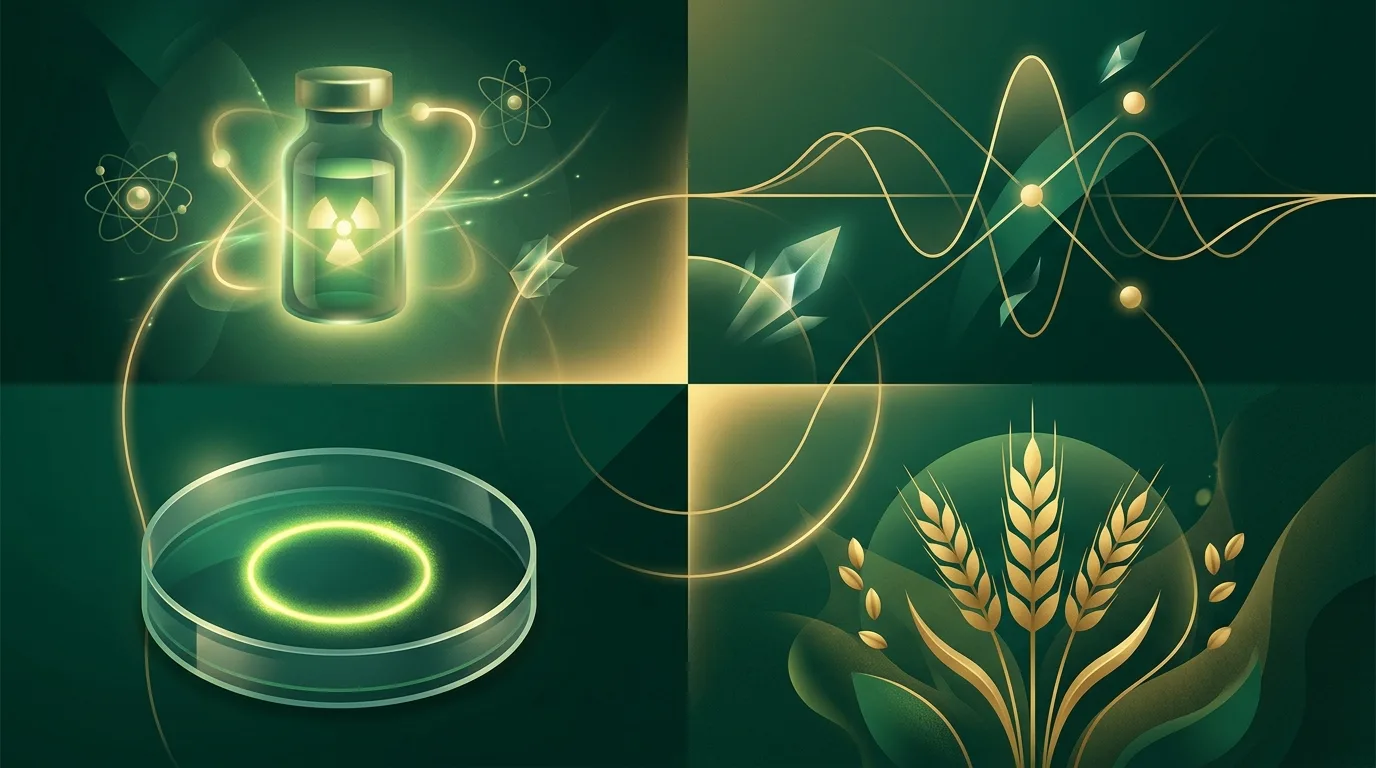
Fleming shared the 1945 medicine prize with Howard Florey and Ernst Chain for the discovery of penicillin and its curative effect. The origin story is true: in 1928 he returned from holiday to find a culture plate contaminated with mould, and a clear ring where bacteria had died around it.
What the story usually leaves out is that Fleming could not stabilise or mass-produce the compound, and largely moved on. Florey and Chain did the work in Oxford a decade later that turned an observation into a drug. The prize was correctly shared, and popular memory has never quite honoured that.
Martin Luther King Jr.: the youngest at the time
King received the 1964 Peace Prize at 35, then the youngest laureate in the prize's history, for leading nonviolent resistance to racial segregation in the United States. He donated the entire prize amount, over 50,000 dollars, to the civil rights movement.
Nelson Mandela and F. W. de Klerk
The 1993 Peace Prize was awarded jointly for ending apartheid and laying the foundations for a democratic South Africa. The pairing was contested at the time and remains so, which is the point: the committee awards a process, not just a person.
Malala Yousafzai: 17 years old
Malala shared the 2014 Peace Prize with Kailash Satyarthi, an Indian campaigner against child labour, for their struggle against the suppression of children and for the right of all children to education. She was 17, and remains the youngest Nobel laureate in any category.
She had been shot in the head on a school bus in Pakistan in 2012 for campaigning publicly for girls' education, and had begun writing an anonymous blog for the BBC's Urdu service at 11.
Richard Feynman: quantum electrodynamics
Feynman shared the 1965 physics prize with Julian Schwinger and Shin'ichirō Tomonaga for work in quantum electrodynamics, the theory describing how light and matter interact. Three physicists had solved the same problem in different mathematical languages, and the committee split it three ways, the maximum permitted.
Feynman was famously ambivalent about honours, and remains better known to the public for his teaching, his bongos, and his role in the Challenger investigation than for the citation.
Norman Borlaug: the billion-life claim
Borlaug won the 1970 Peace Prize, not a science prize, for developing high-yield, disease-resistant wheat varieties that transformed agriculture in Mexico, India and Pakistan. The Green Revolution he led is widely credited with averting famine for around a billion people.
The critique, which he engaged with directly, is that intensive agriculture brought fertiliser dependence, water depletion and the loss of crop diversity. Few Nobel citations have aged into a more interesting argument.
The double winners
| Laureate | First prize | Second prize |
|---|---|---|
| Marie Curie | Physics 1903, radioactivity | Chemistry 1911, polonium and radium |
| Linus Pauling | Chemistry 1954, the chemical bond | Peace 1962, against nuclear testing |
| John Bardeen | Physics 1956, the transistor | Physics 1972, superconductivity |
| Frederick Sanger | Chemistry 1958, protein structure | Chemistry 1980, DNA sequencing |
| K. Barry Sharpless | Chemistry 2001, catalysts that make mirror-image molecules | Chemistry 2022, click chemistry |
Pauling is the only person to have won two entirely unshared prizes. Bardeen's two prizes underpin, respectively, every computer and every MRI machine on Earth.
Beyond individuals
The Peace Prize can go to organisations, which is why the International Committee of the Red Cross has three (1917, 1944, 1963) and the UN High Commissioner for Refugees two. In 1965, UNICEF's prize was accepted by Henry Labouisse, who happened to be married to Marie Curie's daughter Ève, bringing the Curie family's association with the prize to five.
The ones who said no
Jean-Paul Sartre turned down the 1964 literature prize on principle. Le Duc Tho declined the 1973 Peace Prize because the Vietnam War had not ended. Boris Pasternak accepted the 1958 literature prize and was forced by Soviet authorities to renounce it; his son collected the medal in 1989.
Learn the laureates in five minutes
Two free courses on our Nobel Prize week 2026 page cover six of these laureates in short lessons with quizzes: 3 Famous Nobel Laureates Who Made History takes Curie, Einstein and King, and 3 Nobel Laureates Who Changed the World takes Curie, Fleming and Borlaug.
For the people who never received one, read Nobel Prize snubs and controversies. For the rules that decide all of it, read how the Nobel Prize works.
Frequently Asked Questions
Who has won the most Nobel Prizes?
Five individuals have won two: Marie Curie (physics 1903, chemistry 1911), Linus Pauling (chemistry 1954, peace 1962), John Bardeen (physics 1956 and 1972), Frederick Sanger (chemistry 1958 and 1980) and K. Barry Sharpless (chemistry 2001 and 2022). Among organisations, the International Committee of the Red Cross has won the Peace Prize three times.
Did Einstein win the Nobel Prize for the theory of relativity?
No. He received the 1921 physics prize, awarded in 1922, for his discovery of the law of the photoelectric effect. The committee considered relativity too contested at the time, and the citation deliberately avoids it.
Who is the youngest person to win a Nobel Prize?
Malala Yousafzai, who was 17 when she shared the 2014 Peace Prize with Kailash Satyarthi. The youngest science laureate is Lawrence Bragg, who was 25 when he shared the 1915 physics prize with his father.
How many Nobel Prizes did the Curie family win?
Five. Marie won twice, Pierre shared the 1903 physics prize, their daughter Irène Joliot-Curie shared the 1935 chemistry prize with her husband Frédéric Joliot, and Marie's other son-in-law Henry Labouisse accepted the 1965 Peace Prize on behalf of UNICEF.
Which Nobel laureate is credited with saving the most lives?
Norman Borlaug, who won the 1970 Peace Prize for developing high-yield, disease-resistant wheat. His work in the Green Revolution is commonly credited with preventing famine for around a billion people, though the ecological costs of intensive agriculture are part of the debate.
Who refused a Nobel Prize?
Jean-Paul Sartre declined the 1964 literature prize, saying a writer should not be turned into an institution. Le Duc Tho declined the 1973 Peace Prize, awarded jointly with Henry Kissinger, because the war in Vietnam had not ended.
Who is the most famous Nobel laureate?
There is no official ranking, but Albert Einstein (physics, 1921) and Marie Curie (physics 1903, chemistry 1911) are the Nobel laureates most people can name. After them come Martin Luther King Jr. (peace, 1964), Nelson Mandela (peace, 1993) and Malala Yousafzai (peace, 2014), the youngest laureate ever at 17.
Every NerdSip course clears a four-layer fact-checking pipeline before it reaches the app: grounded in live sources, scored nightly, gated on failure, and reviewable by a person at one tap. Articles on this blog are drafted with AI assistance, then researched, verified, and edited by our team.
Editorial responsibility: ai51 UG (haftungsbeschränkt). Responsible editor named in the imprint.
📚 Keep Learning
- The History of the Nobel Prize: The Obituary That Started It
- How the Nobel Prize Works: Nomination, the Rule of Three, and the 50-Year Seal
- Nobel Prize Snubs and Controversies: Gandhi, Franklin, Meitner and More
- 40 Nobel Prize Trivia Questions (With Answers)
- How Many Nobel Prizes Are There? Nobel Prize Statistics 1901 to 2025
Explore the NerdSip learning hubs
The blog is our editorial layer. When you want to move from reading into doing, these hubs organize the rest of NerdSip by format, including the app itself and the press that has written about it.
Ready to Level Up?
Turn your screen time into knowledge. Download NerdSip and start learning in just 5 minutes a day.
4.7 stars from 510 reviews · 10,000+ learners