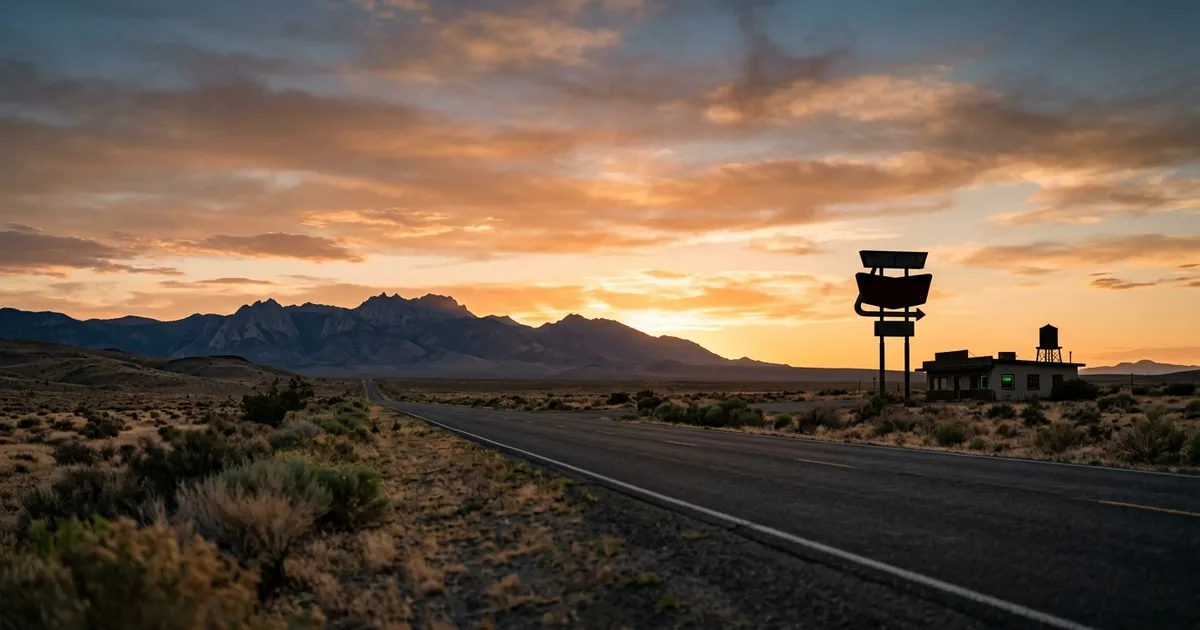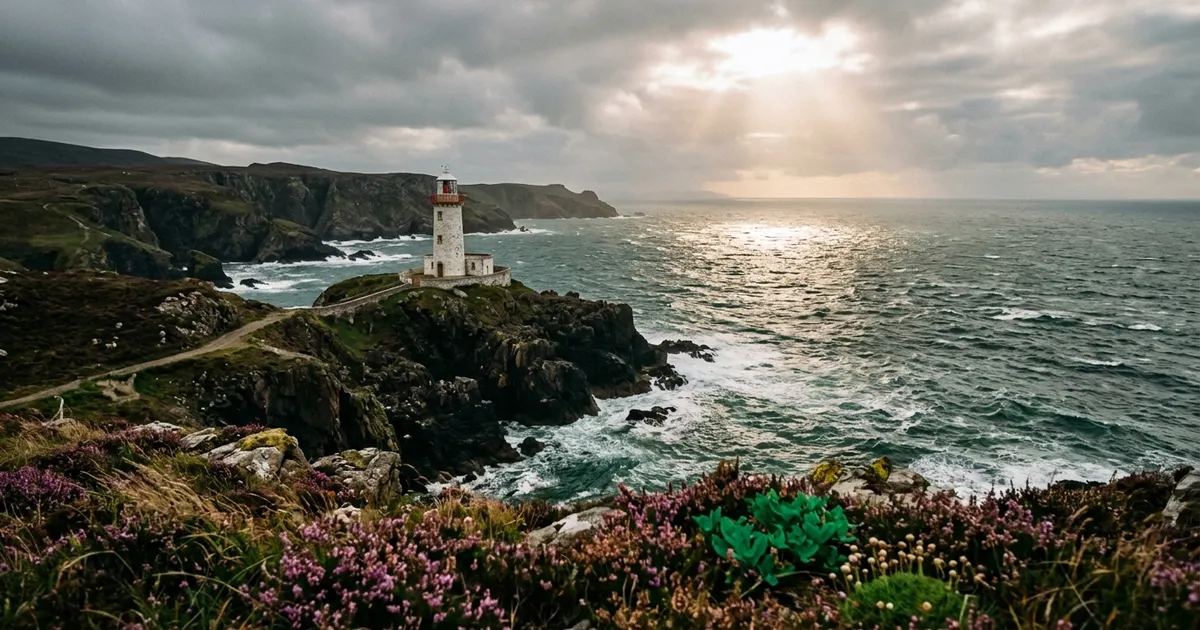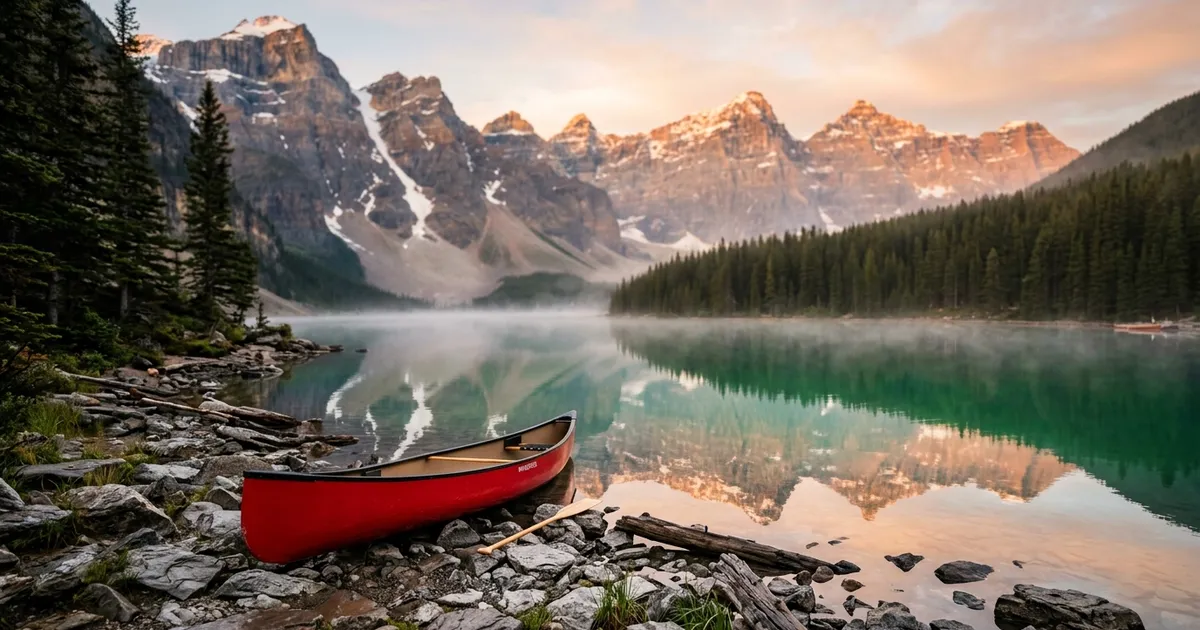
Canada gets described as the polite, quiet neighbour, which does a poor job of preparing anyone for the maple syrup heist, the cocktail containing a human toe, or the fact that a single province holds more fresh water than most continents. Fifty checked facts follow, grouped by subject. The rest of the collection is in the fun facts library.
Geography: Mostly Water, Barely Populated
- Canada has more lakes than the rest of the world combined. Estimates run above two million, roughly 60 percent of the planet's lakes. Most have no name.
- It has the longest coastline of any country, about 202,000 kilometres, largely thanks to the Arctic archipelago and its tens of thousands of islands.
- Canada is the second-largest country on Earth but ranks around 38th by population. Around 90 percent of Canadians live within 160 kilometres of the American border.
- The Canada and United States border is the longest between any two countries, at 8,891 kilometres, and for most of its length it is unguarded.
- The Bay of Fundy has the highest tides in the world. The water can rise and fall by 16 metres, roughly the height of a four-storey building, twice a day.
- Canada spans six time zones, and one of them is offset by half an hour. Newfoundland runs 30 minutes ahead of Atlantic time, which has caused decades of broadcasting confusion.
- Alert, Nunavut is the northernmost permanently inhabited place on Earth, about 800 kilometres from the North Pole.
- Wood Buffalo National Park is larger than Switzerland. It also holds the world's largest beaver dam, roughly 850 metres long and visible from space.
- Canada holds around 9 percent of the world's forests and roughly 20 percent of its fresh water.
- In Churchill, Manitoba, people leave their cars unlocked. It is a polar bear town, and an unlocked car is somewhere to hide if you meet one on the street.
History and Politics
- Canada did not have its own flag until 1965. The maple leaf design was adopted after a bitter parliamentary debate that ran for months and is still known as the Great Flag Debate.
- Canada could not change its own constitution until 1982. Until then, amendments had to pass through the British Parliament.
- Canada declared war on Japan before the United States did. Both moved on 7 December 1941, but Canada's declaration came first, by a matter of hours.
- Canada has two official national sports. Lacrosse in summer, ice hockey in winter, formally set out in a 1994 act of Parliament.
- The name comes from an Iroquoian word for village. French explorers heard "kanata", misunderstood the scale, and applied it to a landmass.
- Nunavut is younger than the internet. The territory was created in 1999, carved out of the Northwest Territories.
- New Brunswick is Canada's only officially bilingual province, despite the country having two official languages nationally.
- Insulin was discovered in Toronto, and its discoverers sold the patent to the university for one dollar. Frederick Banting said insulin belonged to the world, not to him.
- Canada once built a machine to detect gay civil servants. The so-called Fruit Machine was used in the 1960s during a purge from the public service. The government formally apologised in 2017.
- The United States has invaded Canada twice, in 1775 and again during the War of 1812. Both attempts failed.
Food and Drink
- Canada produces roughly 75 percent of the world's maple syrup, and most of that comes from Quebec alone.
- There is a strategic maple syrup reserve, run by a Quebec producers' federation to stabilise prices, exactly as oil reserves work.
- It was robbed. Between 2011 and 2012 thieves siphoned around 3,000 tonnes of syrup out of the reserve, worth about 18 million Canadian dollars. It remains one of the largest thefts in Canadian history.
- Hawaiian pizza is Canadian. Sam Panopoulos invented it in Chatham, Ontario in 1962, using tinned pineapple, and named it after the brand on the tin.
- Poutine is younger than the space race. It appeared in rural Quebec in the late 1950s and was treated as a regional curiosity for decades before going national.
- Canadians eat more macaroni and cheese per head than any other nationality. Kraft Dinner is sold in such volume there that it functions as an unofficial national dish.
- Ginger ale as we know it is Canadian. Pharmacist John McLaughlin developed the pale dry version in Toronto in 1904.
- The Bloody Caesar was invented in Calgary in 1969, uses clam juice, and is drunk almost nowhere else on Earth.
- Canola is named after Canada. The name is a contraction of "Canadian oil, low acid", coined for a rapeseed variety bred in Manitoba.
- Canada is the world's largest exporter of lentils, most of them grown in Saskatchewan, which surprises people who assume the answer is India.
Inventions and Culture
- Basketball was invented by a Canadian. James Naismith nailed a peach basket to a gym wall in 1891, while working in Massachusetts.
- Winnie-the-Pooh is named after Winnipeg. A Canadian soldier brought a bear cub called Winnie to London Zoo, where A. A. Milne's son met her.
- Superman was co-created by a Canadian. Artist Joe Shuster was born in Toronto, and the early Metropolis skyline borrowed from it.
- The pacemaker was Canadian. So were the electric wheelchair, the walkie-talkie, the goalie mask and the IMAX format.
- Canada has the most educated population in the OECD by share of adults holding a tertiary qualification.
- The loonie and the toonie are official nicknames. The one-dollar coin carries a loon; the two-dollar coin got its name by rhyme, and the mint eventually gave in and used it.
- Canada has more doughnut shops per person than any other country, a statistic that owes almost everything to a single chain founded by a hockey player.
- O Canada was written in French first. The 1880 original had no English version; the words most Canadians sing today date from 1908 and are not a translation.
- The Canadian Rockies hold the world's largest dark sky preserve. Jasper National Park limits artificial light across an area bigger than many countries.
- Canada owns roughly a fifth of the world's fresh water and still imports bottled water, which is the kind of thing Canadians enjoy pointing out about themselves.
Genuinely Strange
- Santa Claus has a Canadian postal code. H0H 0H0 is real, it works, and Canada Post volunteers answer the letters in more than 30 languages, including Braille.
- There is a cocktail in Dawson City containing a mummified human toe. The Sourtoe Cocktail requires the toe to touch your lips. Thousands have done it, and the bar has gone through several toes.
- A Canadian town is legally required to be a bear's residence. Churchill's polar bear holding facility is essentially a jail for repeat-offender bears, who are released once the ice returns.
- Canada has a national symbol that is a rodent. The beaver became an official emblem in 1975, over objections that a country should not be represented by something that gnaws.
- Newfoundland was its own country until 1949. It was a self-governing dominion and joined Canada by a referendum that passed with 52 percent.
- The Trans-Canada Highway is one of the longest national roads in the world, running about 7,800 kilometres from St John's to Victoria.
- Canada has an official apology day. More precisely, an Apology Act in Ontario means saying sorry cannot be used as an admission of legal liability, which was passed because Canadians would not stop apologising.
- Manitoba has a lake nobody can pronounce the same way twice. Pekwachnamaykoskwaskwaypinwanik Lake holds the record for the longest place name in Canada at 31 letters.
- Quebec City is the only walled city north of Mexico. Its fortifications are a UNESCO World Heritage site.
- Canada is the only G7 country whose head of state lives abroad, a quirk of remaining a constitutional monarchy under the British Crown.
Next door has its own set: fun facts about America, and further south, fun facts about Mexico. For one checked fact a day rather than fifty in a sitting, use the fun fact of the day.
Frequently Asked Questions
What is Canada's most surprising fact?
Canada contains more lakes than every other country on Earth combined. Estimates put the number above two million, which is roughly 60 percent of all the lakes on the planet. Most of them have never been named.
What is Canada famous for that people get wrong?
Hawaiian pizza. It was invented in Chatham, Ontario in 1962 by Sam Panopoulos, a Greek immigrant to Canada, and has nothing to do with Hawaii except the tinned pineapple he used.
What is a fun fact about Canada for kids?
Santa Claus has a real Canadian postal code, H0H 0H0, and letters sent to it get answered. Canada Post volunteers reply in more than 30 languages, including Braille.
Why does Canada have so much coastline?
About 202,000 kilometres of it, the longest of any country, because the Arctic archipelago adds tens of thousands of islands. Measuring coastline is famously slippery, since a finer measuring stick always produces a longer answer, but Canada leads by every method used.
Is Canada really bigger than the United States?
Yes, by total area. Canada is the second-largest country in the world after Russia, ahead of the United States and China. It is also one of the emptiest: it ranks around 38th by population, with most Canadians living within 160 kilometres of the American border.
Every NerdSip course clears a four-layer fact-checking pipeline before it reaches the app: grounded in live sources, scored nightly, gated on failure, and reviewable by a person at one tap. Articles on this blog are drafted with AI assistance, then researched, verified, and edited by our team.
Editorial responsibility: ai51 UG (haftungsbeschränkt). Responsible editor named in the imprint.
📚 Keep Learning
- 50 Fun Facts About America (Including Ones Americans Get Wrong)
- 50 Fun Facts About the UK, From Unicorns to a 38-Minute War
- 50 Fun Facts About Mexico You Were Never Taught
- 42 Facts That Will Blow Your Mind (2026)
- 100 Interesting Facts, Sorted by What Kind of Conversation You Want to Start
- How to Improve Your General Knowledge: A Daily System That Works
Explore the NerdSip learning hubs
The blog is our editorial layer. When you want to move from reading into doing, these hubs organize the rest of NerdSip by format, including the app itself and the press that has written about it.
Learn the Story Behind the Fact
NerdSip turns geography, history and everything else into five-minute lessons, fact-checked before they reach you. Free to start.
Courses on this topic
4.7 stars from 380 reviews · 10,000+ learners