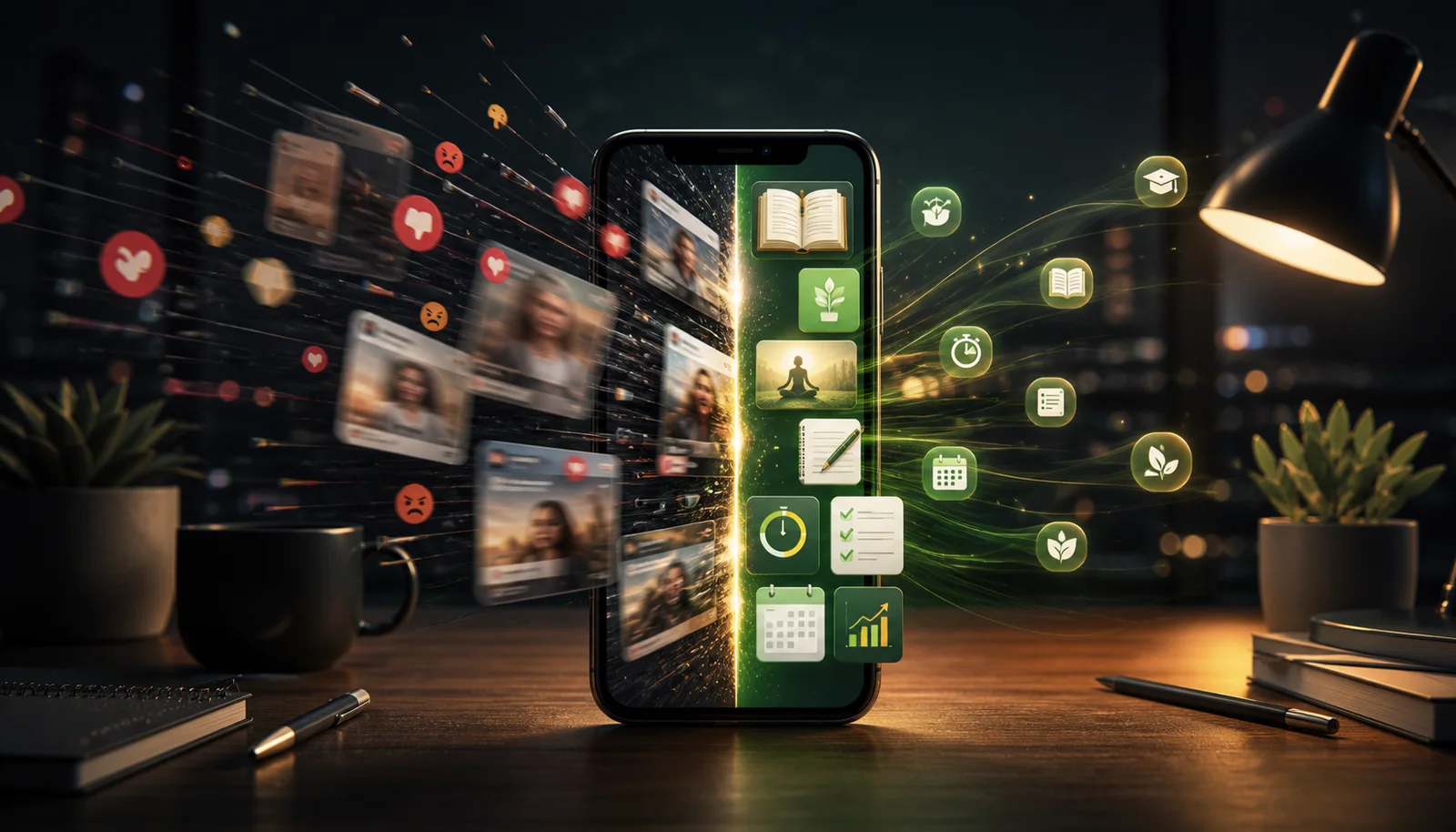
You know the feeling. You pick up your phone to check one thing, and 40 minutes later you're watching a stranger pressure-wash a driveway. Your thumb has a mind of its own. You didn't decide to spend that time on TikTok or Instagram. It just happened.
Here's what nobody tells you about quitting social media: willpower alone doesn't work. You can delete the apps, sure. But your brain still wants something to do during those dead moments. Waiting in line. Lying in bed. Sitting on the couch after dinner. If you don't replace the habit with something else, you'll reinstall everything within a week.
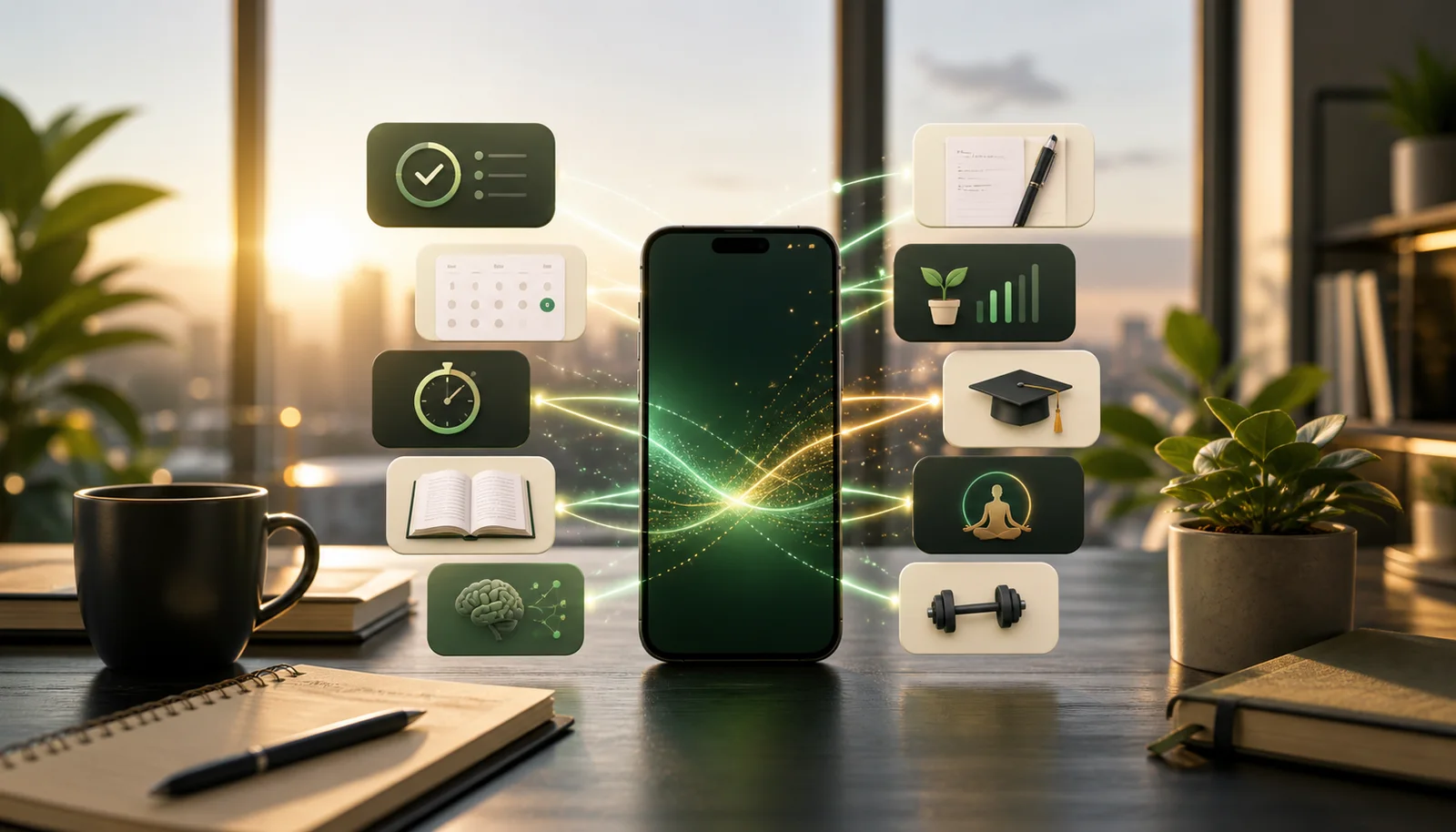
The apps below aren't about productivity guilt or digital detox lectures. They fill the same "I'm bored, hand me my phone" gap with things that don't leave you feeling hollow afterward. We spent 30+ days running each one through real idle moments — commutes, bedtimes, restless evenings — and ranked them by which ones actually stuck. Prices and availability were re-checked on 9 September 2026, which is also when Pocket left this list for good. This update adds Khan Academy and Elevate, the two apps that kept coming up when we compared notes with other lists, and a quick-picks section so you do not have to read all twelve.
If you want to understand the psychology behind why scrolling is so hard to stop, we broke that down in How to Turn Scroll Addiction Into a Learning Habit. Short version: your brain is chasing dopamine, and these apps give it a healthier source.
Quick picks by goal
- Best overall: NerdSip, 5-minute gamified lessons that fit the same gaps as a scroll
- Best free pick: Libby, your library card unlocks ebooks and audiobooks at no cost
- Best for learning something real: Khan Academy, 840+ free courses from a nonprofit
- Best for brain training: Elevate, 40+ one-minute games for memory, math and writing
- Best for focus: Forest, the timer that rewards you for not touching the phone
- Best curated read: Chunks, story-driven chapters you can read or listen to
- Best for news without an algorithm: Feedly, then Instapaper for the long reads
- Best for winding down: Headspace, Kindle or Libby
The whole argument in four and a half minutes: why deleting the app leaves a gap that refills within days, the four things a replacement has to deliver, and the three apps that clear all four.
At a Glance
| App | Best for | Free tier | Verdict |
|---|---|---|---|
| NerdSip | The boredom-scroll itch | Yes, generous | Best all-rounder |
| Libby | Free reading | Yes (library card) | Best free pick |
| Duolingo | Languages | Yes, with ads | Best streak builder |
| Khan Academy | Learning something real | Yes, everything | Best free learning |
| Forest | Putting the phone down | Android only | Best focus tool |
| Chunks | Story-driven microlearning | Yes | Best curated learning |
| Elevate | Brain training games | Yes, limited | Best brain trainer |
| Instapaper | Reading later | Yes | Best read-it-later |
| Feedly | News without algorithms | Yes (100 sources) | Best feed control |
| Headspace | Winding down | Limited | Best for wind-down |
| Strava | Active-people social | Yes (core) | Best healthy social |
| Kindle | Deep reading on phone | App free, paid books | Best for readers |
How we picked these 12
Every app had to pass five checks. No engagement-optimised infinite feed (Strava squeaks through because its feed is only your friends' workouts). A complete session in under ten minutes, so it fits the same gaps a scroll does. A free tier or a one-time price you can actually live with. A sense of progress you can see: a streak, a level, a finished chapter. And active maintenance in September 2026, which is the rule that removed Pocket. Prices below are what the US App Store and Google Play showed on 9 September 2026.
1. NerdSip — Replace Scrolling With 5-Minute Lessons
What it does: NerdSip is a micro-learning app with thousands of courses covering everything from behavioral psychology to Cold War history to negotiation tactics. You can also generate new courses every day. Each lesson takes about 5 minutes and includes a core concept, a visual infographic, a quiz, and a takeaway you can actually use.
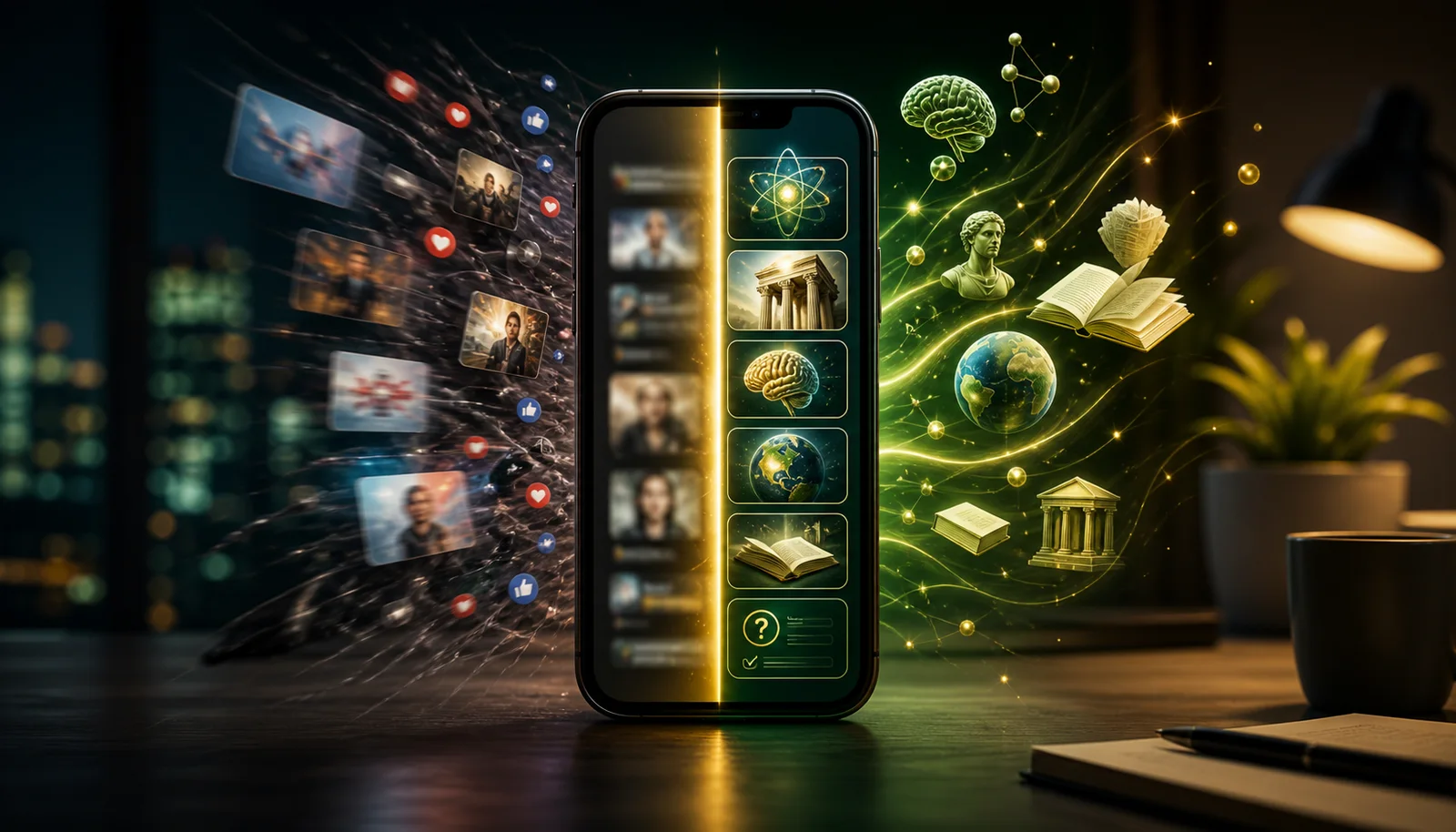
Why it works as a social media replacement: This is the closest thing to a productive version of TikTok. The sessions are short enough to fit into the same idle moments you'd normally spend scrolling. But the real hook is the gamification. NerdSip runs on an MMORPG-style progression system with XP, loot drops (Common, Rare, and Legendary), leaderboards, and streaks. It sounds like a gimmick until you realize you've completed eight lessons without checking the time. The dopamine comes from leveling up and earning loot instead of from outrage bait and comparison traps.
What separates NerdSip from other learning apps is that it's designed around retention, not consumption. The quizzes force active recall. The visuals give your brain something concrete to anchor to. You don't just feel like you learned something. You actually did.
Trust: Courses are grounded in real-time search as they generate, rescored every night, blocked from the deck if they fall short, and open to a one-tap report that lands with a person.
Pricing: Free tier available. Plus and Pro tiers unlock more daily lessons and course generation. Available on iOS and Android.
If you're curious about what you could learn, check out 27 Ridiculously Useful Things to Learn When You're Bored or our list of 50 random interesting topics anyone can learn.
NerdSip keeps the friends, leaderboards and streaks, and swaps the feed for 5-minute lessons. Free to start, no credit card.
2. Libby — Free Books From Your Local Library
What it does: Libby connects to your local library card and gives you free access to ebooks and audiobooks. Thousands of titles, zero cost. You borrow them digitally, read them in the app, and return them when you're done.
Why it works as a social media replacement: Most people forget they have a library card. Libby makes it useful again. The reading experience is clean, the audiobook player is solid, and the fact that it's completely free removes the "is this subscription worth it" anxiety. When you're tempted to open X (formerly Twitter), open Libby instead. Even ten minutes of reading before bed is a massive upgrade over ten minutes of doom feeds.
The hold system can be annoying for popular titles. You might wait a few weeks for a bestseller. But your library's back catalog is enormous, and discovering something unexpected is half the fun.
Pricing: Free. You just need a library card.
3. Duolingo — Language Learning That Feels Like a Game
What it does: You probably already know Duolingo. It teaches languages through short, gamified lessons with streaks, hearts, leagues, and that green owl that guilts you into practicing.
Why it works as a social media replacement: Duolingo cracked the code on making learning feel like a mobile game years before anyone else. The sessions are 3 to 5 minutes. The streak mechanic is borderline addictive (in a good way). And the league system gives you just enough social competition to stay engaged without the toxicity of actual social media. If you've ever wanted to learn Spanish, Japanese, or any of the 40+ languages they offer, this is the easiest on-ramp that exists.
It won't make you fluent on its own. But it will make you conversational enough to surprise yourself, and every minute on Duolingo is a minute not spent on Reddit.
Pricing: Free with ads. Super Duolingo is $12.99/month, or $59.99/year, for no ads, unlimited hearts, and extra features.
4. Khan Academy — The Whole Curriculum, Free, in Ten-Minute Pieces
What it does: Khan Academy is a nonprofit with more than 840 free courses: math from counting to calculus, physics, chemistry, biology, economics, history, computing, even test prep. Each lesson is a short video followed by practice questions that adapt to how you are doing. The app works in 55+ languages on iOS and Android.
Why it works as a social media replacement: The YouTube rabbit hole and a Khan Academy lesson use the same muscle: "explain this thing to me in ten minutes." The difference is that Khan has a map. You finish a video, answer four questions, and the app shows you what you have mastered and what comes next. Idle time turns into visible progress on something you half-wanted to understand for years, whether that is compound interest, how vaccines work or why the Roman Republic fell.
It is built for students, so the tone is patient rather than slick, and there is no owl nagging you about a streak. If you need gamification to come back, pair it with NerdSip or Duolingo. If you want depth without a subscription, nothing else on this list comes close.
Pricing: Free. All of it. Khan Academy is a 501(c)(3) nonprofit funded by donations; the optional Khanmigo AI tutor is the only paid add-on.
5. Forest — Grow Trees by Not Touching Your Phone
What it does: You set a timer. A virtual tree starts growing. If you leave the app before the timer ends, the tree dies. Over time, you grow a forest that represents your focused hours.
Why it works as a social media replacement: Forest attacks the problem from the opposite direction. Instead of giving you something to do on your phone, it rewards you for putting your phone down. The visual of a growing forest is surprisingly motivating. Nobody wants to kill their tree. The app also partners with a real tree-planting organization, so your virtual focus translates into actual trees planted on the planet.
It pairs well with any other app on this list. Use Forest to stay focused during work, then reward yourself with a NerdSip lesson or a chapter on Libby during your break.
Pricing: $3.99 one-time purchase on iOS. Free on Android with optional in-app purchases.
6. Chunks - Story-Driven Microlearning for Idle Moments
What it does: Chunks is a story-driven microlearning app built around short, editorially curated chapters across history, philosophy, literature, science, art, music, nature, and health. You can read or listen, which makes it easy to use during the same small breaks that usually become social media time.
Why it works as a social media replacement: Chunks gives your brain novelty without the chaos of an algorithmic feed. Instead of jumping between random clips, you move through one polished story in bite-sized sections. That makes it especially good for people who want their phone to feel curious and calm rather than frantic.
The limitation is that Chunks is curated rather than open-ended. You choose from the library instead of generating any topic on demand. That tradeoff is also its strength: the experience feels more like reading a well-edited mini essay than browsing another content feed.
Pricing: Free tier available. Premium unlocks the full story library. Available on iOS and Android.
7. Elevate — Brain Games That Feel Like a Workout, Not a Slot Machine
What it does: Elevate is a brain-training app with 40+ short games covering reading, writing, speaking, memory and mental math, plus a daily puzzle. You get a personalised daily session of three to five games, each about a minute long, and a performance score for every skill that shows how you are improving.
Why it works as a social media replacement: It delivers the same quick reward as a feed, one minute at a time, but every round ends. Nothing auto-plays next. A session feels like a finished set at the gym rather than an open tab. The games are also useful in real life: the writing games train you to cut filler words, the math games make you faster at splitting a restaurant bill. Apple named it App of the Year, and it holds a 4.8-star rating from more than half a million reviews, which is rare in this category.
One honest caveat: brain-training apps mostly make you better at brain-training games, and the evidence that this transfers to everyday intelligence is thin. Treat Elevate as a better default for the two-minute wait, not as a route to a higher IQ.
Pricing: Free with a limited daily session. Elevate Pro is $9.99/month or $39.99/year on the App Store.
8. Instapaper — Save the Good Stuff, Read It Later
A note before we start: this slot used to belong to Pocket. Mozilla shut Pocket down on July 8, 2025, and the saved articles were deleted for good in November 2025. Instapaper is the closest thing to what Pocket did, and the core of it is still free.
What it does: Instapaper lets you save articles, essays, and web pages to read later. It strips out the ads and clutter and gives you a clean, text-first reading view. Think of it as a personal magazine built from things you actually chose.
Why it works as a social media replacement: Half the reason people scroll social media is to find interesting things to read. Instapaper separates the finding from the consuming. When you stumble across a great piece during the day, save it. When you're bored later, open Instapaper instead of Instagram. You get the same feeling of discovery without an algorithm feeding you rage bait between the good stuff.
If you want more power (newsletters, PDFs, highlights that sync into your notes), Readwise Reader is the stronger paid option at $9.99/month billed annually. For most people, Instapaper is enough.
Pricing: Saving and reading are free. Premium is $5.99/month or $59.99/year and adds full-text search, text-to-speech, and sending articles to a Kindle.
9. Feedly — Curate Your Own News Feed (Without the Algorithm)
What it does: Feedly is an RSS reader. You pick the sources you want to follow — blogs, news sites, YouTube channels, newsletters — and Feedly organizes them into a single feed. No algorithm decides what you see. You decide.
Why it works as a social media replacement: Social media feeds are designed to maximize engagement, which means they prioritize outrage, controversy, and whatever keeps you scrolling longest. Feedly gives you a feed you built yourself. You see exactly what you subscribed to, nothing more. It's the internet experience we lost somewhere around 2015, and getting it back feels like a relief.
If you follow specific topics (tech news, cooking blogs, science publications), Feedly is far more efficient than relying on X or Reddit to surface those articles between memes and arguments.
Pricing: Free for up to 100 sources and 3 feeds. Pro is $6/month for more sources and AI features.
10. Headspace — Meditation for People Who Think Meditation Isn't for Them
What it does: Headspace offers guided meditation sessions, sleep sounds, focus music, and short mindfulness exercises. Sessions start at just 3 minutes.
Why it works as a social media replacement: The "I'm bored" impulse that drives you to open social media is often just restlessness. Headspace gives you something to do with that restless energy that actually calms it down instead of amplifying it. A 5-minute guided meditation before bed is worlds better for your sleep than 20 minutes of blue-light doomscrolling. And the focus music playlists are genuinely useful for getting work done without reaching for your phone.
Calm is the main alternative here, and it's equally good. Pick whichever voice and design style you prefer. The point is that either one is a better use of your time than X at midnight.
Pricing: Limited free content. Premium is $12.99/month or $69.99/year.
11. Strava — Social Media, but for Moving Your Body
What it does: Strava tracks runs, bike rides, hikes, walks, swims, and dozens of other activities. It has a social feed where friends can see your workouts, give kudos, and comment. Segments let you compete for the fastest time on local routes.
Why it works as a social media replacement: Strava scratches the social itch that makes platforms like Instagram sticky, but it only rewards you for doing something with your body. The feed is exclusively about activities. No politics, no ads (on the free tier at least), no influencer content. Just people you know going for runs and bike rides. The segment leaderboards add a competitive layer that feels healthy instead of toxic.
You don't have to be an athlete to use it. Tracking a daily walk and watching your consistency build over weeks is satisfying in a way that likes on a selfie never will be.
Pricing: Free for core tracking and social features. The Strava subscription is $11.99/month or $79.99/year for advanced analytics, training plans, and Beacon safety sharing.
12. Kindle — Turn Dead Time Into Reading Time
What it does: Amazon's reading app. Access your Kindle library, buy new books, or read for free with a Kindle Unlimited subscription. It syncs your progress across devices.
Why it works as a social media replacement: The Kindle app turns your phone into a book. That's it. That's the pitch. But the simplicity is the point. When you're waiting for an appointment or sitting on the train, pulling out a book instead of pulling up TikTok is one of the simplest upgrades you can make to your daily life. The app remembers where you left off, the reading experience is comfortable even on a phone screen, and the Whispersync feature lets you switch between reading and listening to the same book.
Pair it with Libby for free library books or Kindle Unlimited ($11.99/month) for a massive rotating catalog.
Pricing: App is free. Books are purchased individually or through Kindle Unlimited at $11.99/month.
Which App Replaces Which Platform
Most people don't have a "social media problem." They have an Instagram problem, or a TikTok problem, or a Reddit problem, and each one pulls on a different craving. Here's the short version of the swap:
| If you keep opening | What you're really after | Open this instead |
|---|---|---|
| TikTok or YouTube Shorts | Quick novelty, a new thing every 30 seconds | NerdSip |
| Instagram (Explore tab) | Discovery, "show me something interesting" | Chunks or Instapaper |
| Instagram (feed and stories) | Keeping up with people | Strava |
| Reddit or X | Reading and arguing about the news | Feedly, then Instapaper |
| YouTube rabbit holes | "Explain this to me" | Khan Academy |
| Word games and quiz apps at 2 a.m. | A quick win you can measure | Elevate |
| Snapchat | Mostly the reflex of opening the phone | Forest, plus Duolingo or Elevate for the streak |
| Any of them at midnight | Winding down | Headspace, Kindle, or Libby |
If you want the platform-by-platform version with more options, we wrote a separate guide to the best apps to replace TikTok, Instagram, and Snapchat.
How to Actually Make the Switch
If you've been searching for how to stop wasting time on social media, here's the part most advice skips: downloading twelve apps won't change your habits on its own. Here's what actually will.
Step 1: Pick two. Just two from this list. One for "I'm bored and want to be entertained" moments (NerdSip, Chunks, Duolingo, Khan Academy, Elevate, Kindle, Libby). One for "I need to wind down" moments (Headspace, Forest). Don't overcomplicate this.
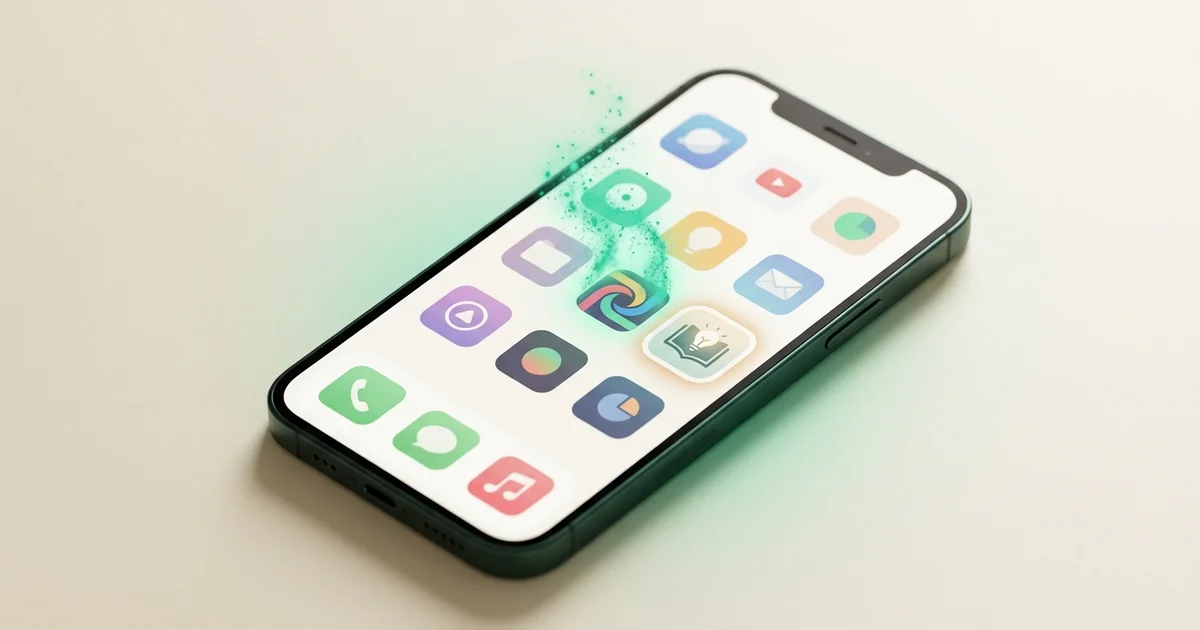
Step 2: Move them to your home screen. Put them exactly where Instagram and TikTok used to be. Your thumb has muscle memory. Use it.
Step 3: Delete or hide the social apps. You don't have to delete them permanently. Move them to a folder on your last home screen page. Add friction. The goal isn't to never use social media again. The goal is to make it slightly harder to open and to have something better waiting when you reach for your phone on autopilot.
Step 4: Give it two weeks. The first few days will feel weird. You'll reach for Instagram and find NerdSip or Chunks instead. You'll tap Instapaper when you meant to tap Reddit. That's the point. After about two weeks, the new muscle memory starts to form, and the old apps lose their pull. For more on the NerdSip side of that swap, see this NerdSip mobile review.
The Bigger Picture
Social media isn't evil. It connects people, surfaces ideas, and occasionally makes you laugh until your stomach hurts. But the way most of us use it — as a default response to boredom and restlessness — is making us anxious, distracted, and a little emptier than we were before we picked up our phones.
If you want a more app-specific breakdown, we also put together a guide to the best apps to replace TikTok, Instagram, and Snapchat, plus a separate list of the best apps for productive screen time.
The apps on this list won't fix everything. But they change the equation. Instead of trading your attention for someone else's engagement metrics, you trade it for a new language, a finished book, a calmer mind, or knowledge you didn't have yesterday. That's a trade worth making.
Start with one app. Open it the next time you feel the pull. See what happens.
One more thing worth deciding: what the reclaimed time is actually for. Ten minutes a day pointed at something deliberate compounds surprisingly fast, which is the whole argument in our guide to improving your general knowledge.
If you want the wider shortlist, with prices checked and the hype removed, see the self-improvement apps that actually work.
If it is the compulsive scroll rather than social media in general that you are trying to break, we cover how to stop doomscrolling with the research behind each step, and the apps built specifically for it.
Frequently Asked Questions
What are the best apps to replace social media?
The best social media replacements include NerdSip (gamified micro-learning with thousands of courses and daily course generation), Khan Academy (840+ free courses from a nonprofit), Chunks (story-driven microlearning for history, philosophy, science, and culture), Libby (free library books and audiobooks), Duolingo (language learning), Elevate (one-minute brain games), Forest (focus timer), and Instapaper (save and read articles, now that Pocket has shut down). The best choice depends on what you want to do with the time you reclaim.
How do I stop wasting time on social media?
The fix that actually sticks is replacement, not willpower. Deleting the apps leaves a gap, and your brain refills it within a week. Instead, give the same idle moments a better default: move a learning app like NerdSip or Chunks to the exact home-screen spot where TikTok or Instagram used to sit, then push the social apps into a folder on your last page to add friction. When you reach for your phone on autopilot, you land on a 5-minute lesson or a story chapter instead of an endless feed. Give it two weeks and the new muscle memory takes over.
What should I do instead of scrolling on my phone?
Replace the scroll habit with something that uses the same short bursts of time. Try a 5-minute NerdSip lesson, read a Chunks story chapter, open a saved article in Instapaper, do a Duolingo session, or start a focus timer with Forest. The trick is picking something just as easy to start as opening Instagram.
What apps can replace TikTok?
For the short-form dopamine hit TikTok provides, NerdSip is the closest productive replacement. Each lesson takes about 5 minutes, includes visuals and quizzes, and has MMORPG-style gamification (XP, loot drops, leaderboards) that scratches the same itch. Chunks also works well if you prefer short, polished story chapters over quizzes, and Duolingo is strong for quick language sessions.
Are there healthy apps I should have on my phone?
Yes. Libby gives you free access to your local library's ebooks and audiobooks. Chunks turns idle time into curated microlearning stories. Headspace or Calm offer guided meditation. Strava turns exercise into a social activity. NerdSip turns idle time into gamified learning. Forest helps you stay focused. All of these are better for your brain than another hour on social media.
What is the best app to replace Instagram?
It depends on which part of Instagram you actually use. If you want an Instagram for smart people, a feed that teaches instead of sells, start with NerdSip. If it is the Explore tab and the feeling of finding something new, NerdSip or Chunks fill that gap with short lessons and story chapters. If it is inspiration and aesthetics, Pinterest is the cleaner product. If it is keeping up with friends, Strava gives you a feed that only shows what people did with their bodies. Our separate guide to replacing TikTok, Instagram, and Snapchat breaks this down app by app.
Are there free apps to replace social media?
Yes, and most of this list is free at the level you need. Libby is completely free with a library card. NerdSip has a generous free tier. Instapaper, Feedly, Strava, and the Kindle app are free for their core features. Duolingo is free with ads. Forest is free on Android and a one-time purchase on iOS. You can build a full replacement stack without paying for a single subscription.
Is Pocket still available?
No. Mozilla shut Pocket down on July 8, 2025, and deleted the remaining saved articles in November 2025. If Pocket was your save-for-later app, Instapaper is the closest free replacement. Readwise Reader is the stronger paid option if you also want newsletters, PDFs, and highlights in one place.
How long does it take to replace the social media habit?
Longer than the "21 days" you have read about, which has no study behind it. In the best-known habit study (Lally and colleagues, 2010), people took a median of 66 days to make a new daily behaviour automatic, with a range from 18 to 254 days. In practice the reflex weakens within two to three weeks if the replacement app sits where the social app used to be, and it stops feeling like effort somewhere around the two-month mark. Plan for two months, not three weeks, and keep the social apps in a folder on the last screen for that whole period.
Every NerdSip course clears a four-layer fact-checking pipeline before it reaches the app: grounded in live sources, scored nightly, gated on failure, and reviewable by a person at one tap. Articles on this blog are drafted with AI assistance, then researched, verified, and edited by our team.
Editorial responsibility: ai51 UG (haftungsbeschränkt). Responsible editor named in the imprint.
📚 Keep Learning
- 9 Best Productive Apps Instead of Social Media in 2026
- 11 Best Productive Apps in 2026: Tools That Actually Make Your Phone Useful
- 7 Best General Knowledge Apps in 2026: Learn Something Useful Every Day
- 10 Best Apps to Replace TikTok, Instagram, and Snapchat in 2026
- 10 Best Apps for Productive Screen Time in 2026 (Make Your Phone Worth It)
- 8 Best Apps That Make You Smarter in 2026 (Tested for 30 Days)
- Best Self-Improvement Apps (No BS): 12 That Actually Work
- How to Stop Doomscrolling: 11 Steps That Actually Work
- 7 Best Apps to Stop Doomscrolling in 2026 (Why Blockers Alone Fail)
Explore the NerdSip learning hubs
The blog is our editorial layer. When you want to move from reading into doing, these hubs organize the rest of NerdSip by format, including the app itself and the press that has written about it.
Try NerdSip Free
Thousands of courses. 5-minute lessons. Generate new courses every day. Gamified so you actually come back. Free to download.
Courses on this topic
4.7 stars from 380 reviews · 10,000+ learners