British trivia is unusually rich because the country kept detailed records for a very long time and then never got round to repealing anything. Fifty checked facts follow, grouped by subject, including the two wars everybody misremembers and the reason Scotland's national animal does not exist. More facts on everything else are in the fun facts library.
The Country Itself
- The UK is four countries in one state. England, Scotland, Wales and Northern Ireland. Great Britain is the island carrying the first three, which is why the two names are not interchangeable.
- Nowhere in the UK is more than about 113 kilometres from the sea. The furthest inland point is in Derbyshire, and it is still only a couple of hours' drive from a coast.
- The UK has around 6,000 islands, the vast majority of them uninhabited. Scotland alone accounts for roughly 790.
- The world's shortest scheduled flight is Scottish. Westray to Papa Westray in Orkney covers 2.7 kilometres and takes about 90 seconds with a decent tailwind.
- The City of London is barely more than one square mile, and around 8,000 people live in it. It has its own police force and its own mayor, separate from the rest of London.
- The longest place name in Europe is Welsh. Llanfairpwllgwyngyllgogerychwyrndrobwllllantysiliogogogoch runs to 58 letters, and part of it was invented in the 1860s to attract railway tourists. It worked.
- The smallest house in Britain is 1.8 metres wide. The Quay House in Conwy was lived in until 1900, when its final tenant, a fisherman of over six feet, was declared unable to stand up in it.
- Great Britain is the ninth largest island on Earth and the largest in Europe.
- There are more chickens than people in the UK, by a wide margin, and the same is true of sheep in Wales.
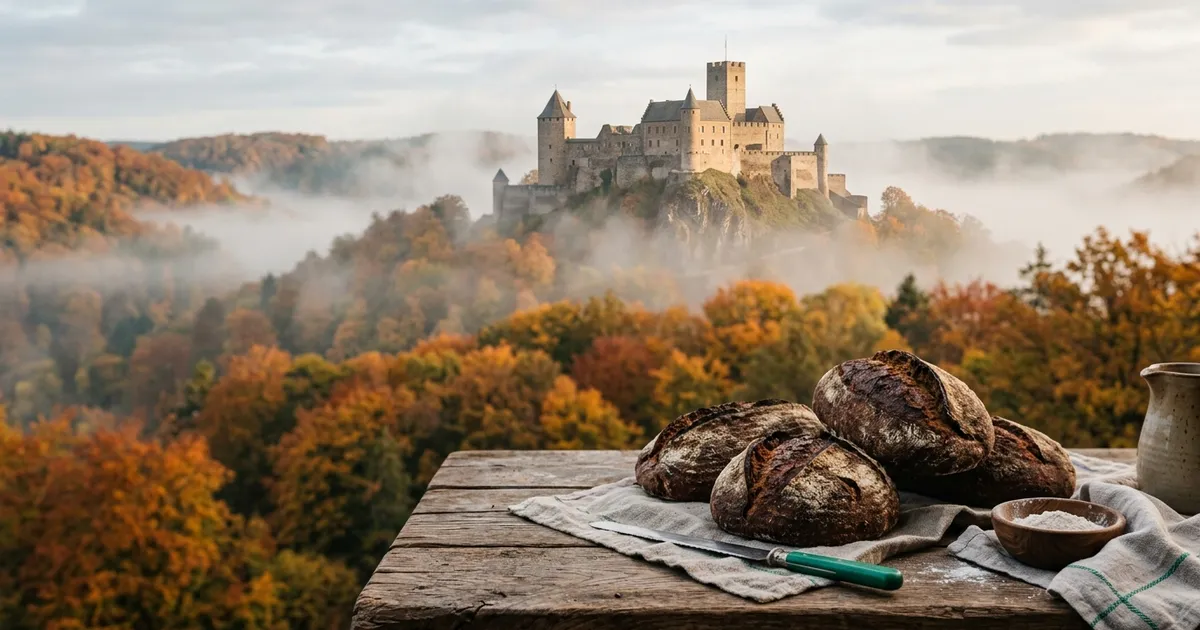
- Britain has roughly 1,500 castles, and Wales has the highest density of castles per square mile of any country in the world.
History That Sounds Invented
- Oxford is older than the Aztec Empire. Teaching at Oxford is recorded from 1096. Tenochtitlan was founded in 1325.
- The Isles of Scilly were at war with the Netherlands for 335 years. Declared in 1651, forgotten, and formally ended in 1986 when a historian pointed it out. No shots were fired at any point.
- The shortest war in history lasted about 38 minutes. The Anglo-Zanzibar War of 1896 was over before most of those involved knew it had started.
- The last successful invasion of England was in 1066. The last attempted landing was at Fishguard in Wales in 1797, and it collapsed within days.
- The UK has no written constitution. It runs on statutes, court judgments and convention, which means large parts of how the country works are simply things everyone has agreed not to break.
- There was a tax on windows. From 1696 to 1851 houses were taxed by the number of windows, which is why so many Georgian buildings have bricked-up openings.
- Britain issued the world's first postage stamp, the Penny Black, in 1840. As a result the UK is still the only country whose stamps do not name the country.
- The world's first underground railway opened in London in 1863, and it ran on steam, in tunnels, which was as unpleasant as it sounds.
- Queen Elizabeth II reigned for over 70 years, the longest of any British monarch and the second longest of any sovereign in recorded history.
- Britain abolished the slave trade in 1807 and slavery itself in 1833, and spent the following decades paying compensation to slave owners. The final instalment of that debt was cleared in 2015.
Food and Drink
- Chicken tikka masala was probably invented in Britain. The most repeated origin story places it in Glasgow, and a former foreign secretary once called it a true British national dish.
- The sandwich is named after a person. The 4th Earl of Sandwich asked for meat between bread so he could keep working, or gambling, depending on which account you believe.
- Britons drink around 100 million cups of tea a day, roughly 36 billion a year.
- Tea is not British. It arrived from China in the 1600s and only became a mass habit once Britain started growing it in India in the 19th century.
- Fish and chips survived rationing. It was one of the very few foods never rationed in the Second World War, because the government judged that removing it would damage morale.
- The UK has more curry houses than any other country in Europe, and curry is comfortably among its most eaten meals.
- Marmite is a by-product. It is made from spent brewer's yeast, which means the national spread exists because of the national drink.
- Cheese rolling is real and people are seriously injured every year. Competitors chase a nine-pound wheel of Double Gloucester down a hill so steep that most of them fall the entire way.
- The Poet Laureate is paid partly in sherry. The traditional payment includes a butt of sack, around 600 bottles' worth.
- Britain invented the modern soft drink bottle closure and the electric kettle, and it uses the second of those roughly 100 million times a day.
Invention and Language
- The World Wide Web was invented by a Briton. Tim Berners-Lee wrote the proposal at CERN in 1989 and gave the technology away royalty free.
- The first computer programmer was Ada Lovelace. She wrote an algorithm for a machine that was never built, in 1843, and understood that it could handle more than numbers.
- Shakespeare is the first recorded user of roughly 1,700 English words, including eyeball, lonely, bedroom and swagger.
- English has more words than almost any other language, largely because it never rejects a loanword. Roughly 60 percent of its vocabulary comes from Latin or French.
- The London Underground map is not geographic. Harry Beck drew it in 1931 like a circuit diagram, and every metro map since has copied the idea.
- The Industrial Revolution started in Britain, largely because it had coal, canals, and a patent system that let inventors profit.
- The first passenger railway opened in 1825, between Stockton and Darlington.
- Britain gave the world the modern police force, founded in 1829, which is why officers are still nicknamed after Robert Peel.
- The Oxford English Dictionary took 70 years to finish, and one of its most prolific volunteer contributors submitted thousands of entries from inside a criminal asylum.
- Britain drives on the left, along with about a third of the world's population, most of it a direct legacy of the empire.
Laws and Royal Oddities
- Scotland's national animal is the unicorn. It has been since the 12th century, and it appears chained on the royal arms because a free unicorn was thought to be uncontrollable.
- The monarch owns all unmarked mute swans in open water. Whales and sturgeons in British waters are also technically royal property, a rule dating to 1324.
- Handling a salmon in suspicious circumstances is a criminal offence, under the Salmon Act 1986. It is aimed at poaching and it really is worded that way.
- Being drunk in a pub is illegal. The Licensing Act 1872 says so. Enforcement is, understandably, rare.
- MPs may not wear armour in Parliament, under a statute from 1313 that has never been repealed.
- It is not illegal to die in the Houses of Parliament. This is Britain's most famous fake law. It was once voted the country's most absurd statute despite never having existed.
- The Tower of London keeps six ravens by order. Legend says the kingdom falls if they leave, so there is a paid Ravenmaster and a reserve bird.
- The Queen did not need a passport or a driving licence, because both were issued in her own name. Charles III needs neither for the same reason.
- Scottish postboxes are different because of a lawsuit. A legal challenge over the cypher EIIR, on the grounds that Scotland never had a Queen Elizabeth I, led to Scottish boxes carrying the Crown of Scotland instead.
- The UK has an official Astronomer Royal, a post created in 1675 and still filled today, with duties that are now almost entirely ceremonial.
Across the Channel, fun facts about Germany covers a country with even stranger laws. If you got here to prepare for quiz night, the practical version is how to get better at pub quizzes. For one checked fact a day, use the fun fact of the day.
Frequently Asked Questions
What is the most surprising fact about the UK?
Oxford University is older than the Aztec Empire. Teaching is recorded at Oxford from 1096. Tenochtitlan, the Aztec capital, was founded in 1325, more than two centuries later.
Is Big Ben the tower or the bell?
The bell. The tower was called the Clock Tower until 2012, when it was renamed the Elizabeth Tower for the Diamond Jubilee. Almost nobody uses either name correctly, including in Britain.
What is Scotland's national animal?
The unicorn, and it has been since the 12th century. It appears on the royal coat of arms, chained, because a free unicorn was considered dangerous. Scotland is the only country in the world with a mythical national animal.
What is the difference between the UK, Great Britain and England?
The United Kingdom is a country made of four: England, Scotland, Wales and Northern Ireland. Great Britain is the island holding the first three. England is one of them. Using them interchangeably is the fastest way to annoy roughly 15 million people.
What is the weirdest law still on the books in the UK?
The Salmon Act 1986 makes it an offence to handle a salmon in suspicious circumstances. It sounds invented and is not. The Licensing Act 1872 also makes it illegal to be drunk in a pub, which is enforced roughly never.
Every NerdSip course clears a four-layer fact-checking pipeline before it reaches the app: grounded in live sources, scored nightly, gated on failure, and reviewable by a person at one tap. Articles on this blog are drafted with AI assistance, then researched, verified, and edited by our team.
Editorial responsibility: ai51 UG (haftungsbeschränkt). Responsible editor named in the imprint.
📚 Keep Learning
- 50 Fun Facts About Germany That Surprise Germans Too
- 50 Fun Facts About America (Including Ones Americans Get Wrong)
- 50 Fun Facts About Canada That Sound Made Up
- 42 Facts That Will Blow Your Mind (2026)
- 100 Interesting Facts, Sorted by What Kind of Conversation You Want to Start
- How to Get Better at Pub Quizzes (Without Reading More Trivia)
Explore the NerdSip learning hubs
The blog is our editorial layer. When you want to move from reading into doing, these hubs organize the rest of NerdSip by format, including the app itself and the press that has written about it.
Learn the Story Behind the Fact
NerdSip turns British history, language and everything else into five-minute lessons, fact-checked before they reach you. Free to start.
Courses on this topic
4.7 stars from 380 reviews · 10,000+ learners