Quick answer: Fifty Halloween facts, checked rather than copied. The first jack-o'-lanterns were turnips. The Michael Myers mask is William Shatner's face painted white. Nobody was burned at the stake in Salem. Frankenstein is the scientist, not the monster. And the razor-blade-in-the-apple panic that reshaped a generation of trick or treating has no confirmed case behind it.
Most Halloween fact lists copy each other, which is how the same four errors have survived for decades. This one is built the other way around: every entry had to survive a check, and where the popular version is wrong, the correction is the fact.
Where the night came from
- Halloween means the evening before All Saints' Day. The word is a contraction of All Hallows' Even. Hallows means saints, even is an old word for evening, and the contraction is Scottish.
- Samhain gave November its Irish name. In modern Irish, Samhain is simply the word for the month. An Irish calendar today says Samhain where an English one says November.
- The date was fixed in 835. Pope Gregory IV had 1 November adopted as All Saints' Day across the Frankish empire. In the medieval calendar a feast begins the evening before, which put the vigil on 31 October and kept it there.
- Much of the "Celtic festival of the dead" is a Victorian reconstruction. The historian Ronald Hutton traced the confident druid-and-sacrifice version to 18th and 19th century antiquarians rather than to contemporary evidence.
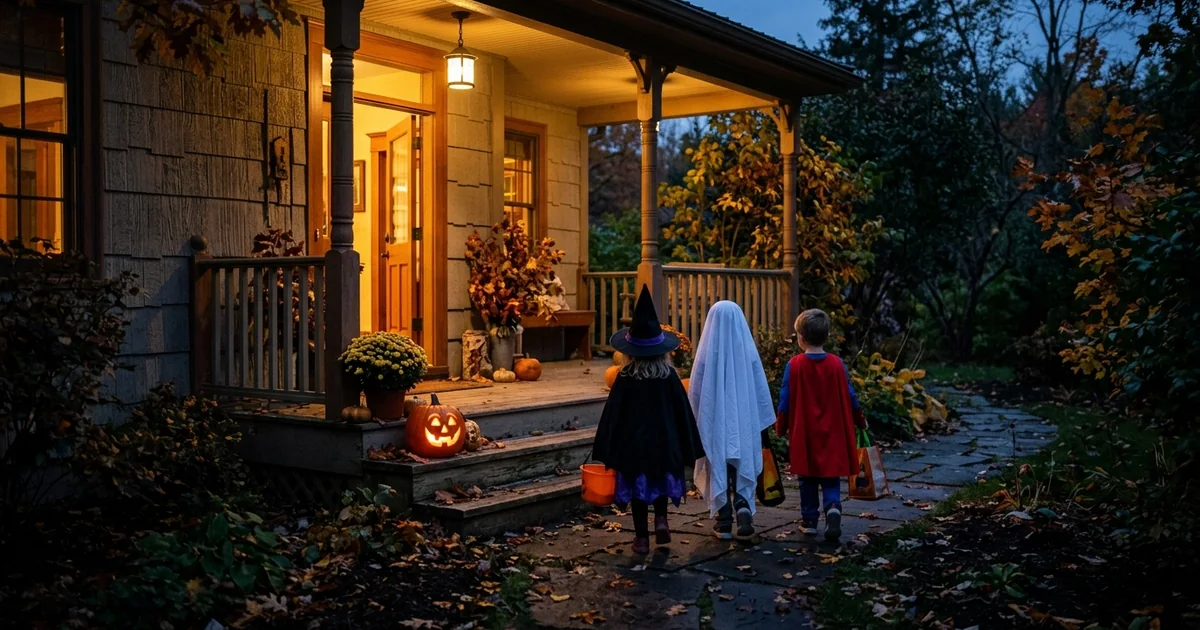
- Trick or treating descends from selling prayers. In the medieval custom of souling, the poor went door to door for soul cakes and prayed for the household's dead in return.
- The Scottish version made you work for it. In guising, a costumed child had to perform a song, poem or joke before receiving anything. America kept the exchange and dropped the performance.
- "Trick or treat" first appears in print in 1927. The earliest known use is from Blackie, Alberta, which makes the phrase Canadian in print before it is American.
- Robert Burns wrote a Halloween poem in 1785. His own footnotes to it are one of the best surviving records of Scottish Halloween divination games.
- Halloween is an American reimport in most of Europe. The custom left Ireland in the 19th century and came back in the late 20th as a packaged product.
- Britain resisted it for a long time because of Guy Fawkes. Bonfire Night on 5 November had already absorbed the autumn fire tradition, which is why British Halloween only grew from the 1980s.
Pumpkins and lanterns
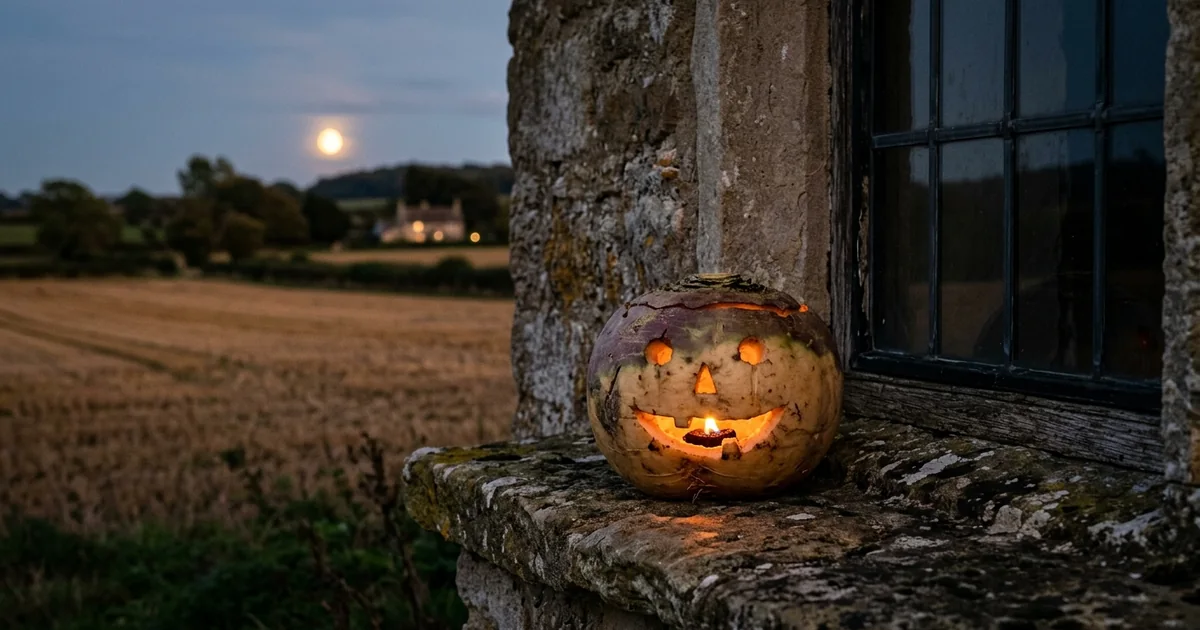
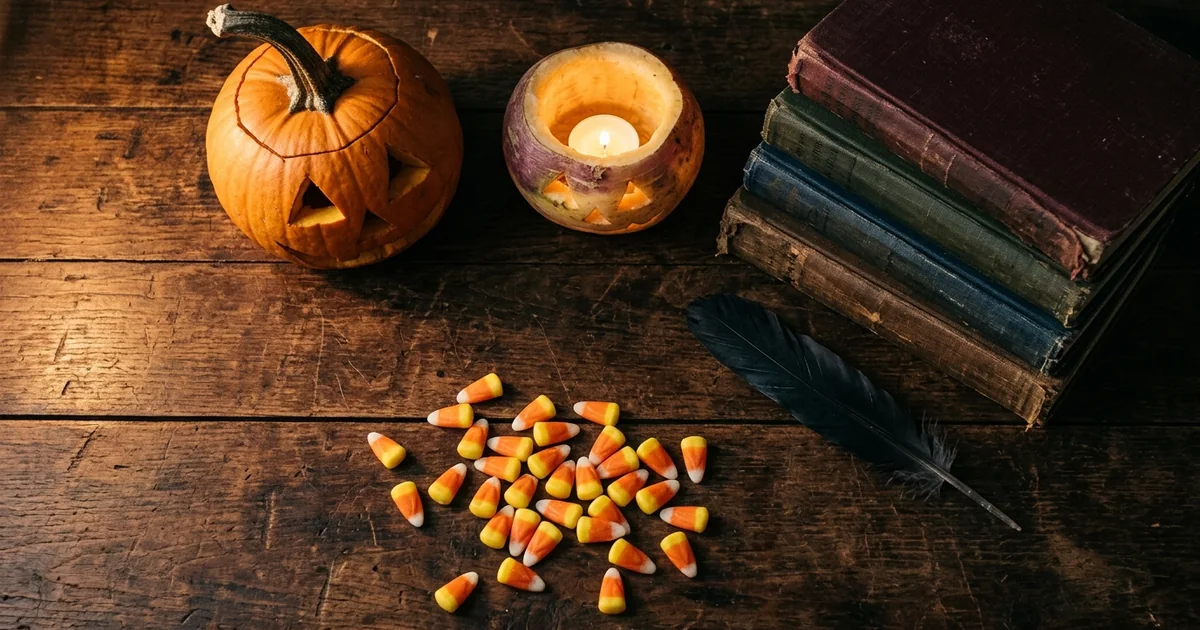
- The first jack-o'-lanterns were turnips. Sometimes beets or mangelwurzels, hollowed out and lit with a burning ember.
- "Jack-o'-lantern" originally meant a night watchman. Before that it meant the will-o'-the-wisp, the flickering marsh light that leads travellers off the path.
- Stingy Jack was refused by both heaven and hell. In the Irish story he tricked the Devil, lost his place in both, and was sent off with a coal in a hollowed turnip to light his wandering.
- Germany carved the same lanterns and called them Rübengeister. Turnip spirits. Switzerland still holds Räbeliechtli lantern processions every November.
- A pumpkin is a fruit. It grows from the flower and carries seeds. Botanically it is a pepo, in the same family as cucumbers and melons.
- China grows the most pumpkins in the world. The United States is far behind, and a large share of the American crop is grown for carving rather than eating.
- Illinois grows more pumpkins than any other US state. Most of it is processing pumpkin, destined for tins of pie filling rather than doorsteps.
- The heaviest pumpkin on record weighed 2,749 pounds. That is about 1,247 kilograms, grown by Travis Gienger in 2023, and heavier than a small car.
Sweets, spending and the business of Halloween
- Halloween is the second-largest commercial holiday in the United States. Only Christmas is bigger, and annual Halloween spending runs into the billions.
- Candy corn was originally called chicken feed. Made from the 1880s and sold year round, its three hand-poured colour bands were a genuine novelty at the time.
- Pumpkin spice contains no pumpkin. It is the blend you put on a pumpkin: cinnamon, nutmeg, ginger, cloves and sometimes allspice.
- Halloween postcards were once as common as Christmas cards. The boom before the First World War produced thousands of designs, and collectors still trade the survivors.
- The UNICEF collection box began in 1950. A custom that feels traditional is younger than television.
- Pre-wrapped sweets exist partly because of Halloween. A custom that hands out hundreds of small items per household rewarded single-portion packaging, and the poisoning panic later made it feel obligatory.
- Pet costumes are now a measurable share of Halloween spending. American retail surveys track dog and cat costumes as their own category.
- The largest Halloween parade is in New York. The Village Halloween Parade in Manhattan draws tens of thousands of costumed participants.
Horror films and books
- The Michael Myers mask is William Shatner. The crew bought a Captain Kirk mask, widened the eye holes and painted it white, because the budget did not stretch to anything custom.
- Halloween (1978) was filmed in spring. The crew bought paper leaves, scattered them for each shot, then swept them up to use again.
- John Carpenter wrote the theme himself. In 5/4 time, after an early cut without music tested badly.
- Frankenstein is the scientist. Victor Frankenstein. The creature is never given a name in the novel at all.
- Mary Shelley began Frankenstein at eighteen. She was nineteen when she finished, and the book was published anonymously in 1818.
- Freddy Krueger's sweater is red and green on purpose. Wes Craven chose the pairing after reading that it is the hardest colour combination for the human eye to process together.
- Dracula had a predecessor. Sheridan Le Fanu's vampire novella Carmilla was published 25 years before Stoker's novel and clearly shaped it.
- The Blair Witch Project listed its actors as missing. The 1999 marketing campaign convinced a great many people that the footage was real.
Superstitions, and the myths worth correcting
- Nobody was burned at the stake in Salem. Nineteen people were hanged in 1692. Burning witches was a continental European practice, not a colonial American one.
- Giles Corey was pressed to death under stones. He refused to enter a plea, and the reported last words of an eighty-one-year-old man under that weight were a request for more of it.
- There is no confirmed case of a child killed by a stranger's poisoned sweets. The sociologist Joel Best has traced these reports for decades. The panic was real, the threat was not.
- Bobbing for apples was a marriage oracle. Most traditional Halloween games predicted who you would marry and when, not whether ghosts were present.
- Apple peel was thrown over the shoulder to read a letter. The shape it landed in was taken as the initial of a future spouse.
- The werewolf's full moon is mostly a film invention. Older folklore uses a belt, a salve or a curse, with no moon involved.
- Orange and black are agricultural, not decorative. Orange for the harvest, black for the dark half of the year. They predate every shop that sells them.
- Samhainophobia is the fear of Halloween. Not to be confused with nyctophobia, fear of the dark, or phasmophobia, fear of ghosts.
Halloween around the world
- Día de Muertos is not Mexican Halloween. On 1 and 2 November the altars, food and marigold paths exist to welcome the dead home, not to frighten anything away. There are more in our facts about Mexico.
- The marigold is the Day of the Dead flower. Cempasúchil, chosen for its colour and scent. Europe's All Saints flower is the chrysanthemum, which is why the two get confused.
- Ireland bakes a ring into the Halloween cake. Whoever finds the ring in their slice of barmbrack is said to marry within the year. Colcannon hid a coin.
- Germany only adopted Halloween in the 1990s. Spread by retailers, imported films and American forces stationed in the country, which makes it younger there than the commercial internet.
- In Germany the date is already taken. The 31st of October is Reformation Day, a public holiday in nine federal states, and 1 November is All Saints', a silent holiday with dancing bans in five more.
- Japan's biggest Halloween parade is in Kawasaki. Participants apply months in advance and are selected, which is a very different custom from knocking on doors.
- The Philippines has its own souling. In Pangangaluluwa, singers go house to house on behalf of souls in purgatory in exchange for food or coins, which is medieval English souling on the other side of the world.
- Scotland still calls it guising. The word, and in places the requirement to perform for your treat, never went away.
Where these came from
The origin and folklore entries follow Ronald Hutton's The Stations of the Sun (Oxford University Press, 1996) and Nicholas Rogers' Halloween: From Pagan Ritual to Party Night (Oxford University Press, 2002), which are the two standard scholarly accounts. The poisoning-panic entry follows Joel Best's long-running research on Halloween sadism legends. Spending figures come from annual US retail surveys, and the pumpkin record from Guinness World Records.
If you want the long version of where all this began, read the history of Halloween, or why we celebrate Halloween for the shorter question of why it survived. To use these at a party, the 100 Halloween trivia questions are already in quiz form, and the Halloween 2026 page has a free interactive round. Next on the calendar: the Christmas facts that hold up, from the red Santa to the X in Xmas.
Frequently Asked Questions
What are some interesting facts about Halloween?
The first jack-o'-lanterns were carved from turnips rather than pumpkins, and German-speaking regions carved the same thing and called them Rübengeister. The Michael Myers mask in Halloween (1978) is a Captain Kirk mask with widened eye holes, painted white. Nobody was burned at the stake in Salem: nineteen people were hanged and Giles Corey was pressed to death. And pumpkin spice contains no pumpkin, because it is the blend you put on one.
What is the scariest fact about Halloween?
Arguably that the scariest thing most people believe about it is not true. The fear of poisoned sweets and razor blades in apples reshaped how an entire generation was allowed to trick or treat, and the sociologist Joel Best has traced decades of these reports without finding a single confirmed case of a child killed by contaminated sweets from a stranger.
Why is Halloween on 31 October?
Because it is the eve of All Saints' Day, which Pope Gregory IV had adopted for 1 November across the Frankish empire in 835. In the medieval calendar a feast begins on the evening before, so the vigil fell on 31 October and has never moved.
What was Halloween originally called?
All Hallows' Even, the evening before All Saints' Day. Hallows means saints and even is an old word for evening. The contraction to Hallowe'en is Scottish. The older seasonal festival underneath it is Samhain, which is still the ordinary Irish word for the month of November.
Is candy corn really that old?
Yes. It has been made since the 1880s and was originally called chicken feed. Its three colour bands were poured by hand, which made it genuinely remarkable at a time when most sweets were a single colour, and it was sold year round rather than as a Halloween product.
How much do people spend on Halloween?
Halloween is the second-largest commercial holiday in the United States after Christmas, with annual spending running into the billions of dollars across sweets, costumes and decorations. Pet costumes are now tracked as their own category in American retail surveys.
Every NerdSip course clears a four-layer fact-checking pipeline before it reaches the app: grounded in live sources, scored nightly, gated on failure, and reviewable by a person at one tap. Articles on this blog are drafted with AI assistance, then researched, verified, and edited by our team.
Editorial responsibility: ai51 UG (haftungsbeschränkt). Responsible editor named in the imprint.
📚 Keep Learning
- The History of Halloween: From Samhain to Trick or Treat
- Why Do We Celebrate Halloween? Six Answers, One Per Era
- 100 Halloween Trivia Questions (With Answers)
- 50 Fun Facts About Mexico You Were Never Taught
- 42 Facts That Will Blow Your Mind (2026)
- 100 Interesting Facts, Sorted by What Kind of Conversation You Want to Start
Explore the NerdSip learning hubs
The blog is our editorial layer. When you want to move from reading into doing, these hubs organize the rest of NerdSip by format, including the app itself and the press that has written about it.
Ready to Level Up?
Turn your screen time into knowledge. Download NerdSip and start learning in just 5 minutes a day.
4.7 stars from 510 reviews · 10,000+ learners