Quick answer: Wear eclipse glasses certified to ISO 12312-2 during every phase except totality. Take them off only when the Sun's disc is fully covered, and put them back on the moment the first sliver returns. Never look through any lens, camera or telescope while wearing them. If you have no certified filter, use pinhole projection.
The Sun is not stronger during an eclipse. What changes is that people stare at it, and the eye gives no warning while the damage is happening.
Why eclipse eye damage is different
The retina has no pain receptors. Focused sunlight can cook a small area of it, a condition called solar retinopathy, and the person feels nothing at the time. Symptoms usually show up several hours later as a blurred or missing patch in the centre of vision, or as straight lines that look bent.
On a normal day this rarely happens because glancing at the Sun is instantly unpleasant and the blink reflex takes over. During a partial eclipse, the sky dims enough that the discomfort drops, so people look longer. That is the whole mechanism. It is a behaviour problem, not a solar physics problem.
The only filter standard worth remembering
ISO 12312-2. That number should be printed on any eclipse glasses or handheld solar viewer you use. Compliant filters cut visible light by a factor of about 100,000 and block nearly all infrared and ultraviolet.
Practical checks before the day:
- Look at a bright indoor light through them. You should see almost nothing. If you can make out furniture, they are not solar filters.
- Hold them up to a lamp and inspect for scratches, pinholes or separation at the edges. Damaged filters go in the bin.
- Buy from a supplier that names the manufacturer. Counterfeit glasses printed with the ISO number exist, and the number alone is not proof.
- Old glasses from a previous eclipse are fine if they are undamaged. The advice to discard them after three years has been withdrawn for filters made to the current standard.
What does not work: sunglasses of any darkness, polarised lenses, smoked glass, exposed photographic film, CDs, mylar food packaging, and welding glass below shade 14. Shade 14 welding glass is genuinely safe and genuinely hard to find.
The one moment the glasses come off
During a total solar eclipse, once the Moon fully covers the Sun's disc, direct viewing is safe and is the only way to see the corona properly. Cameras and eyes both need the filter off for those seconds.
Two hard rules around that window:
- Totality has to be complete. If any part of the bright surface is visible, the filters stay on. A 99 percent eclipse is not 1 percent as dangerous, it is still dangerous.
- Know your local duration before it starts. In Iceland on 12 August 2026 totality runs about a minute in the Reykjavik area. Parts of northern Spain get closer to a minute and a half, and Bilbao only about 36 seconds. Set a timer and put the glasses back on with 10 seconds to spare.
During annular and partial eclipses there is no safe naked-eye moment at any point. The ring of fire is still the raw photosphere.
The mistake that actually blinds people: optics
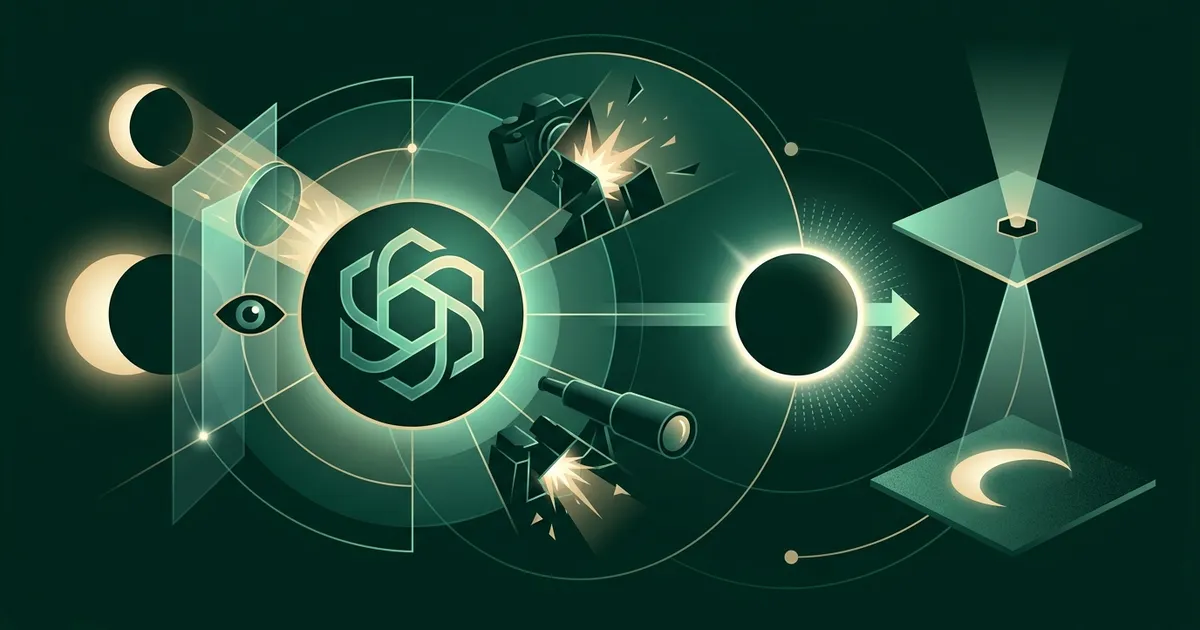
Eclipse glasses are designed to sit between your eye and unfocused sunlight. Put a lens in front of them and the arrangement fails. Binoculars, camera lenses, spotting scopes and telescopes concentrate solar energy enough to melt a filter within seconds, and the retina behind it takes what comes through.
The rule is simple. Solar filters belong on the front of the instrument, never between the instrument and your eye. A proper front-mounted solar filter for binoculars or a telescope is inexpensive and widely sold. Improvised filters taped over an eyepiece are the single most dangerous setup in amateur astronomy.
Free, safe and surprisingly good: projection
Pinhole projection is how school groups have watched eclipses for a century, and it works better than its reputation.
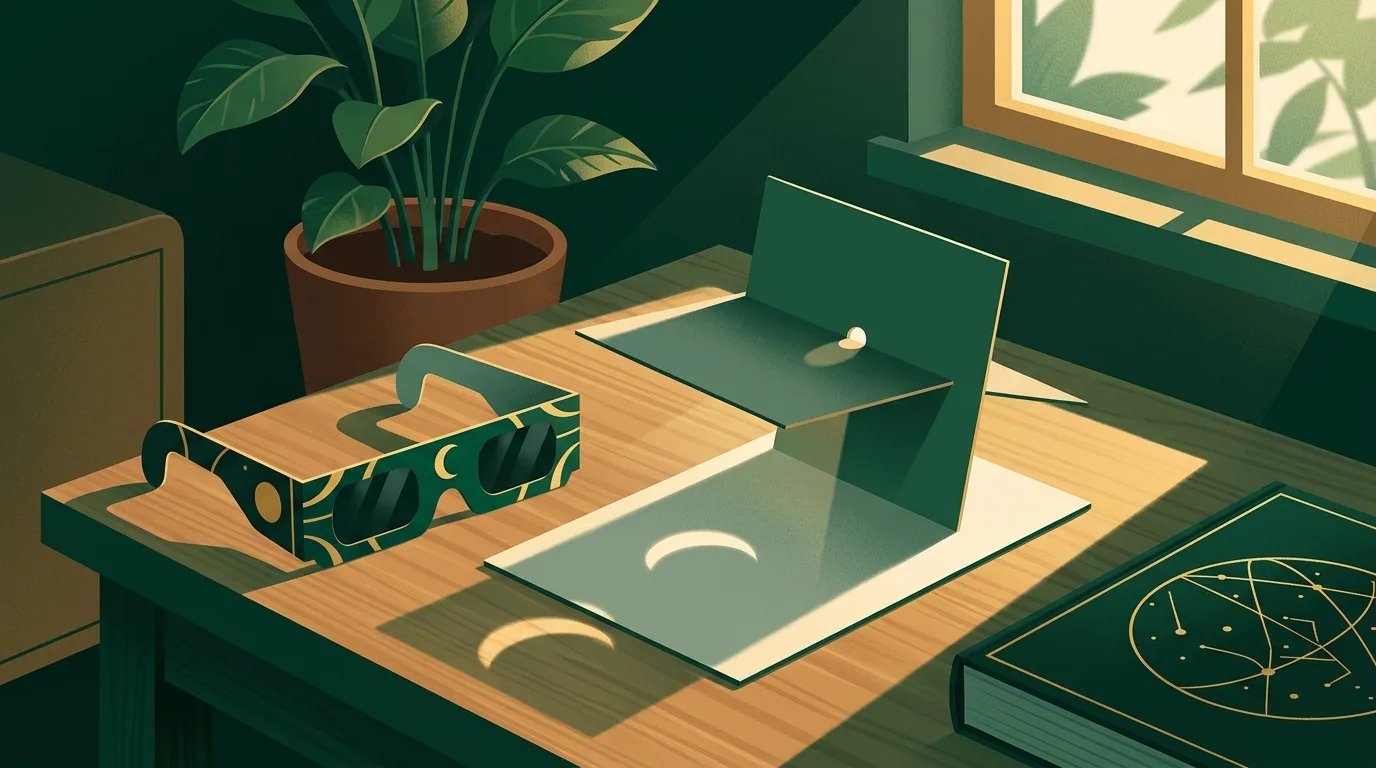
- Card and pin. Punch a small hole in card, stand with your back to the Sun, and project the image onto a second card. The crescent appears clearly.
- Kitchen colander. Dozens of crescents at once, which photographs well.
- Tree shade. Gaps between leaves act as natural pinholes. During a deep partial eclipse, the ground under a tree fills with crescent suns. This is the effect most people remember years later.
- Binocular projection. Mount binoculars on a tripod, point them at the Sun without looking through them, and let one eyepiece cast an image onto white card held behind it. Never put your eye near the eyepiece.
Photography without wrecking your gear or your eyes
Phone sensors survive brief solar exposure better than eyes do, but the images are poor without a filter, and pointing an unfiltered lens at the Sun for minutes can damage the sensor. Use a certified solar filter over the lens for the partial phases, compose using the screen, and remove it only if totality arrives.
A practical note for the 2026 eclipse in Spain: the Sun will sit only a few degrees above the horizon. Wide-angle shots that include landscape and the low corona will beat any attempt at a telephoto close-up, and you will need a clear western view rather than a dark sky.
A short checklist for eclipse day
- Certified ISO 12312-2 glasses for everyone, checked for damage, plus a spare pair.
- Local start, totality and end times written down, not guessed.
- A clear horizon in the right direction, especially where the Sun sits low.
- A filter on the front of any optics, or no optics at all.
- A pinhole backup for anyone without glasses.
- Sun cream and water. You will be outside staring upward for two hours.
The full path, timings and viewing notes for the next one are on our total solar eclipse of 12 August 2026 page. The free course The August 2026 Total Solar Eclipse covers the same ground in three lessons with quizzes, and why solar eclipses happen explains the geometry behind the shadow.
Frequently Asked Questions
Is it ever safe to look at a solar eclipse without glasses?
Only during the totality phase of a total solar eclipse, when the Moon completely covers the Sun's bright disc. That window lasts from a few seconds to a few minutes. The instant any part of the Sun's surface reappears, certified filters must go back on. During partial and annular eclipses there is no safe moment at all.
What does ISO 12312-2 mean?
It is the international safety standard for filters designed for direct solar viewing. Compliant eclipse glasses transmit about one hundred-thousandth of the visible light and block almost all infrared and ultraviolet. The standard number should be printed on the glasses themselves, and you should buy from a supplier that names its manufacturer.
Can I use sunglasses to watch an eclipse?
No. Even very dark sunglasses transmit thousands of times more light than a certified solar filter, and they do little against infrared. Stacking several pairs does not help either.
Can I photograph a solar eclipse with my phone?
Yes, but a certified solar filter must cover the lens during the partial phases, and you should compose using the screen rather than staring at the Sun. During totality no filter is needed, and phone cameras capture the corona surprisingly well. Optical zoom on a phone is weak, so wide shots that include the landscape usually look better than attempts at a close-up.
What are the symptoms of eclipse eye damage?
Solar retinopathy is painless, because the retina has no pain receptors. Symptoms typically appear hours later: blurred central vision, a blind or grey spot, distorted straight lines, or altered colour vision. It can improve over months, or it can be permanent. Anyone with these symptoms after sun-gazing should see an eye specialist.
How do I make a pinhole projector?
Punch a small clean hole in a piece of card. Stand with your back to the Sun, hold the card up, and let sunlight pass through the hole onto a second card held below it. The image of the crescent Sun appears on the lower card. A kitchen colander, a straw hat or the gaps between tree leaves produce the same effect.
Every NerdSip course clears a four-layer fact-checking pipeline before it reaches the app: grounded in live sources, scored nightly, gated on failure, and reviewable by a person at one tap. Articles on this blog are drafted with AI assistance, then researched, verified, and edited by our team.
Editorial responsibility: ai51 UG (haftungsbeschränkt). Responsible editor named in the imprint.
📚 Keep Learning
- Why Do Solar Eclipses Happen? The Simple Answer and the Cosmic Fluke
- Where to See the Next Total Solar Eclipse: Every One Through 2045
- 40 Solar Eclipse Trivia Questions (With Answers)
- 47 Mind-Blowing Science Facts That Sound Fake But Are 100% Real
- Total Solar Eclipses in Europe: Every One From 1999 to 2090
Explore the NerdSip learning hubs
The blog is our editorial layer. When you want to move from reading into doing, these hubs organize the rest of NerdSip by format, including the app itself and the press that has written about it.
Ready to Level Up?
Turn your screen time into knowledge. Download NerdSip and start learning in just 5 minutes a day.
4.7 stars from 510 reviews · 10,000+ learners