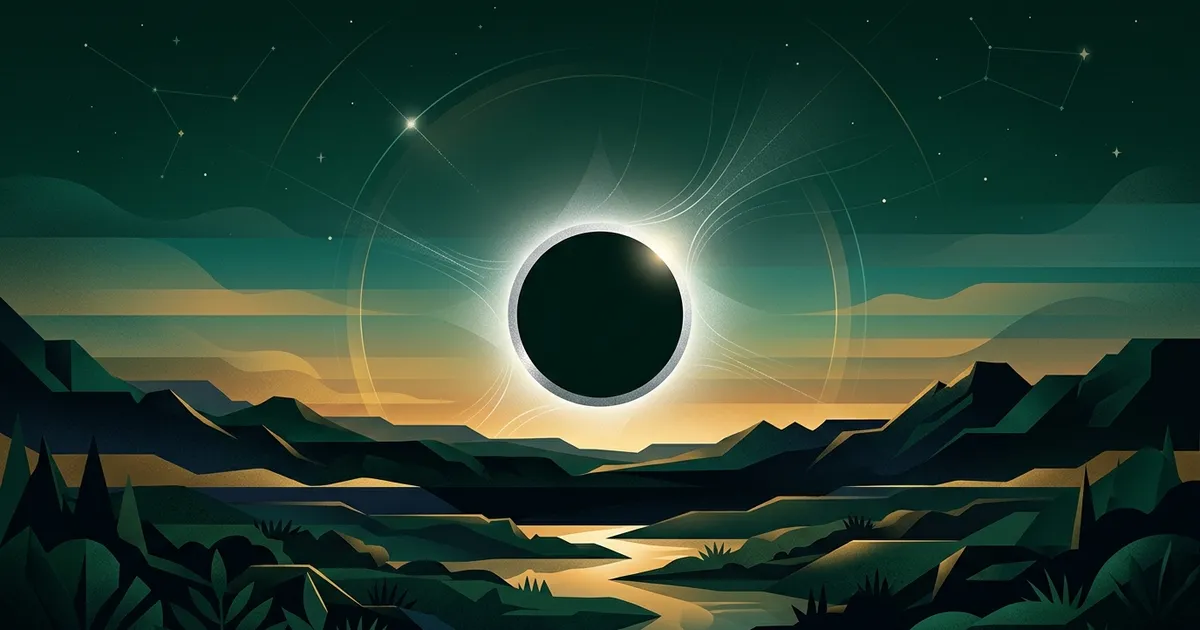
Quick answer
The total solar eclipse of 12 August 2026 sweeps from the Arctic across eastern Greenland and the west of Iceland, then reaches northern Spain and the Balearics in the final minutes before sunset. Maximum totality is about 2 minutes 18 seconds, and the path of totality is roughly 290 km wide at its broadest. Most of Europe, North Africa and eastern North America see a partial eclipse instead. Outside the few minutes of totality, you need ISO 12312-2 eclipse glasses to look at the Sun at all.
Watch the shadow cross Europe
This map is not an illustration. Every frame solves the published Besselian elements for this eclipse, so the umbra sits where it will actually sit and the shading is the real magnitude of the eclipse at each point. Drag the slider to move time, drag the globe to turn it, and scroll inside the frame to zoom in on the path.
Times are UT and CEST. Computed from the NASA Besselian elements for 2026 August 12 (ΔT = 75.4 s). The shadow centre at greatest eclipse resolves to 65.2° N, 25.2° W at 17:45:51 UT, and the ground ellipse to 298 km across, against NASA's published 293.9 km. · Press contact and previous coverage: media page.
Everything on this page
Free courses on this page
The August 2026 Total Solar Eclipse
02 Free courseMechanics of Solar Eclipses
03 Free course3 Eclipses That Changed Human History
Go deeper
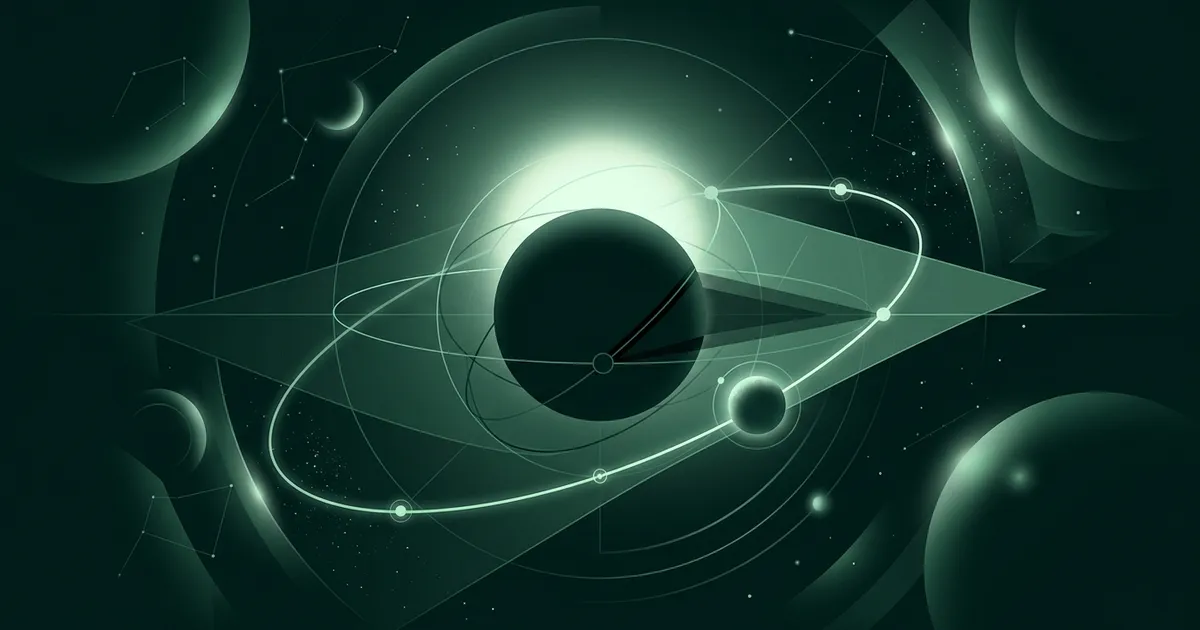 Explainer
Why do solar eclipses happen?
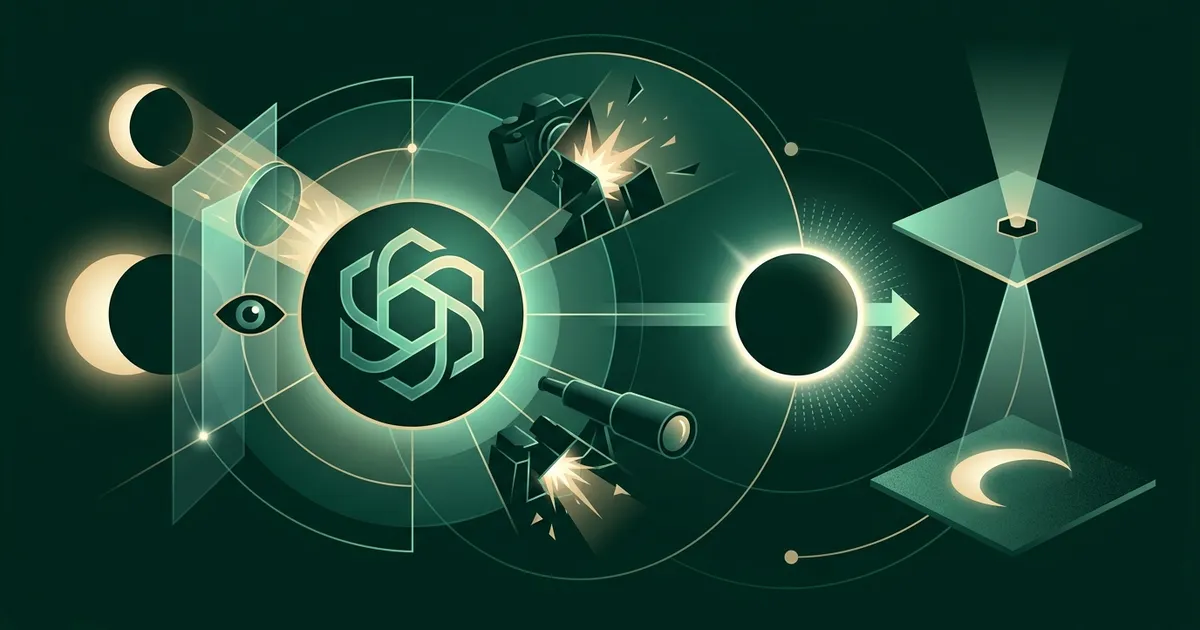 Safety
How to watch a solar eclipse safely
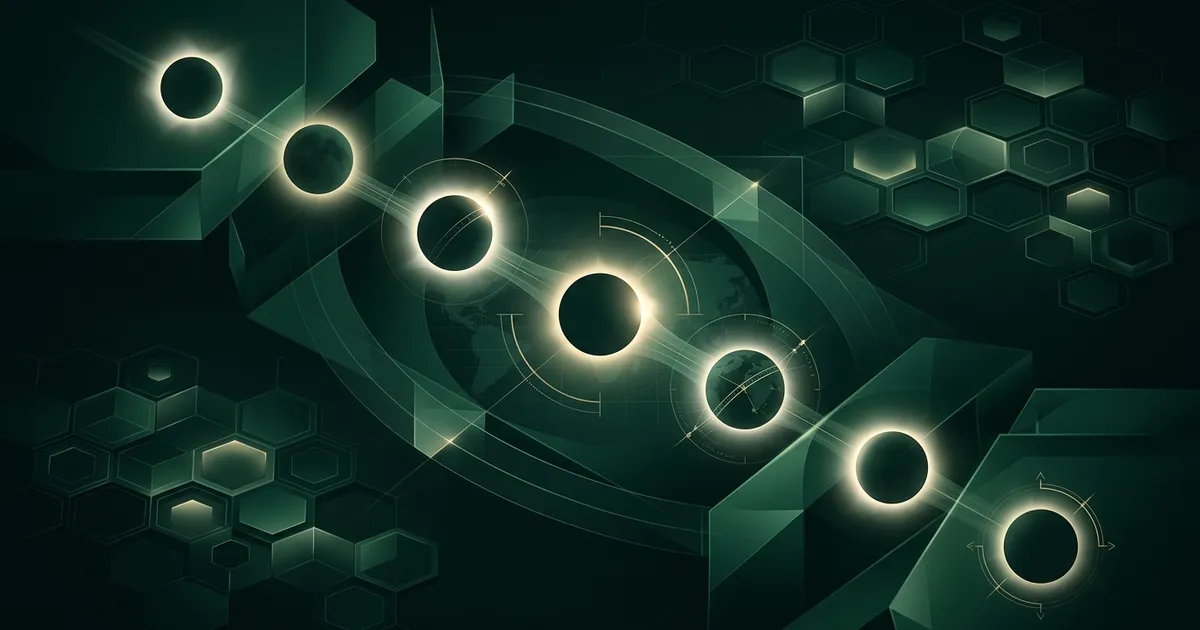 Planning
Where to see the next total solar eclipse
 Quiz
Quiz
40 solar eclipse trivia questions
 Reference
Total solar eclipses in Europe
Related courses in the app
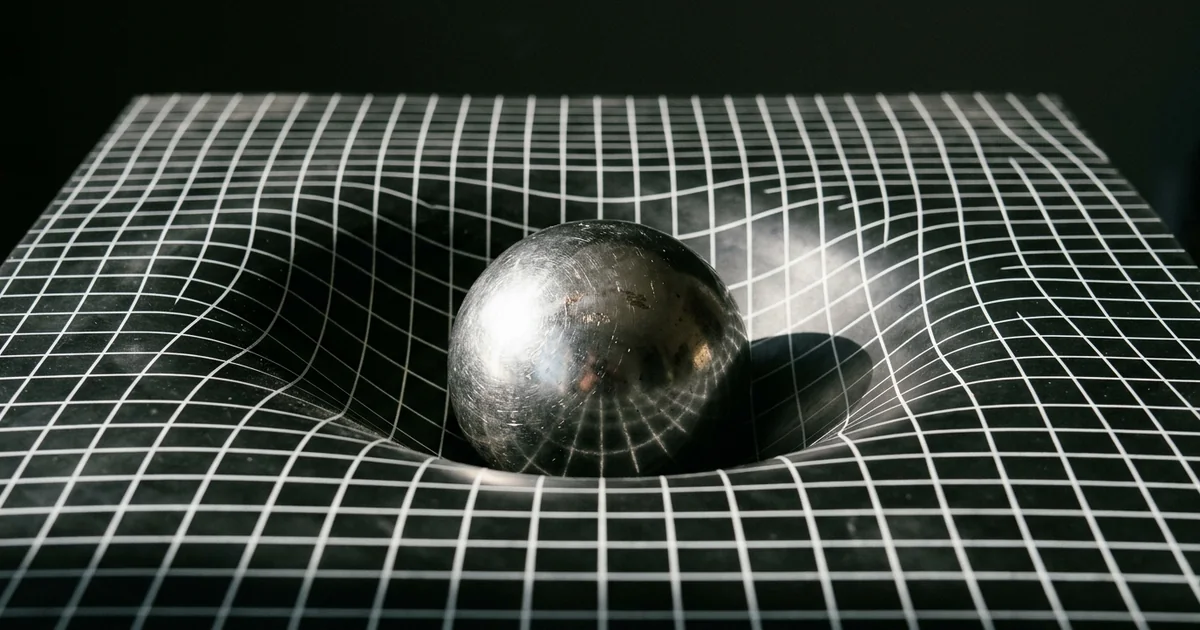
When
Wednesday 12 August 2026. Iceland sees totality in the late afternoon, Spain in the last minutes before sunset.
Where
Arctic Russia, eastern Greenland, western Iceland, northern Spain and the Balearics. Partial phases across Europe, North Africa and eastern North America.
How long
About 2 minutes 18 seconds at maximum over the North Atlantic. On land, expect 30 seconds to roughly 1 minute 40 seconds.
Where the Moon's shadow actually lands
A total solar eclipse is not a light show that fills the sky. It is a shadow roughly 290 km wide, racing across the planet faster than a passenger jet. Stand inside that shadow and the Sun disappears behind the Moon. Stand 50 km outside it and you get a bright crescent Sun, which is beautiful, but it is not the same event.
The 2026 shadow starts in the Arctic, clips eastern Greenland, crosses the west coast of Iceland including the Reykjavik area, then sweeps down the Atlantic and makes landfall in northern Spain. Spain sees the strangest version of it: the Sun is only a few degrees above the horizon, so totality arrives in a sky that is already turning gold.
| Location | Roughly how long totality lasts | Sun height above the horizon |
|---|---|---|
| Greatest eclipse (North Atlantic) | About 2 min 18 s | Low |
| Reykjavik area, Iceland | About 1 min 5 s | Around 25 degrees |
| Zaragoza, Spain | About 1 min 27 s | Around 6 degrees |
| Valencia, Spain | About 1 min 6 s | Very low |
| Palma de Mallorca, Spain | About 1 min 36 s | Around 4 degrees |
| Bilbao, Spain | About 36 s | Around 8 degrees |
Durations vary by a few seconds within each city because the edge of the path matters more than the city limits. Check an exact-location tool such as timeanddate or NASA before you travel.
A low Sun changes the experience. The corona will hang just above the landscape rather than overhead, which photographers love and mountains ruin. If you are heading to Spain, a clear western horizon matters more than a dark sky. An obscuration percentage will not warn you about a hill ten kilometres away, so check the terrain from your exact spot with Total Eclipse 2026 before you commit to a field.
Why this does not happen every month
The Moon passes between Earth and the Sun once a month. We do not get a monthly eclipse because the Moon's orbit is tilted about 5 degrees against Earth's orbit around the Sun. Most new moons, the shadow misses, passing above or below us. Only when the new moon happens near one of the two points where the orbits intersect, called nodes, does the shadow land on Earth.
Then there is the coincidence that makes totality possible at all. The Sun is about 400 times wider than the Moon and sits about 400 times farther away, so the two discs look almost exactly the same size from here. No other planet in the solar system has a moon that matches its sun this precisely. It is a temporary arrangement: the Moon drifts about 3.8 cm farther from Earth each year, and in roughly 600 million years it will be too small in the sky to cover the Sun completely.
Totality is common on a planetary scale and rare on a personal one. Somewhere on Earth, a total solar eclipse happens roughly every 18 months. For any single spot on the ground, the average wait is about 375 years. That gap between planetary frequency and personal rarity is why people fly across oceans for two minutes of darkness.
Take the free eclipse courses
Three short courses, straight from the NerdSip app. The first covers this specific eclipse, the second explains the geometry behind every eclipse, and the third covers the three eclipses that changed history. Read the lesson, then tap an answer. All three came out of the same engine as the rest of the library and went through the same checks, which the features page explains in full.
9 lessons, 3 courses, no signup needed. Tap an answer to check yourself as you read.
The August 2026 Total Solar Eclipse
The 2026 eclipse itself: why the Moon looks unusually large this time, where the shadow lands, and what a near-sunset totality actually looks like.
Lesson 1A Rare Celestial Spectacular
On August 12, 2026, a total solar eclipse will darken skies across parts of the Northern Hemisphere. This event marks mainland Europe’s first total solar eclipse in over 27 years. A total eclipse happens when the Moon passes directly between the Sun and Earth, completely blocking the Sun's bright face and revealing its outer atmosphere, the corona.
What makes the 2026 eclipse particularly unusual is its celestial geometry. The event occurs just two days after the Moon reaches perigee—its closest approach to Earth in its orbit. Because the Moon appears slightly larger in the sky than usual, it easily covers the entire solar disk, creating a deep, dramatic darkness along the shadow path.
While millions will see a partial eclipse across North America, Europe, and Africa, only those inside the narrow path of totality will witness daytime turn into twilight. In this zone, temperatures drop, birds grow quiet, and the solar corona shines with ghostly, glowing white streamers.
Key takeaway
The August 2026 eclipse is Europe's first total solar eclipse in decades, made extra dramatic by the Moon's close proximity to Earth.
Test yourself
Why will the Moon appear large enough to completely block the Sun during the August 2026 eclipse?
Lesson 2Tracking the Path of Totality
The narrow shadow trail, known as the path of totality, spans roughly 294 kilometers wide. It begins in remote arctic regions near northern Russia, sweeps past the North Pole, and crosses eastern Greenland. From there, it heads south over western Iceland, across the North Atlantic Ocean, and into northern and central Spain.
For viewers in Iceland, the eclipse occurs in the late afternoon, with the maximum duration of totality reaching about 2 minutes and 18 seconds off the western coast. In Spain, totality takes place late in the evening, positioning the eclipsed Sun extremely low on the horizon just before sunset.
Because the Sun sits low in the sky over Spain, observers will need a clear, unobstructed western horizon. The combination of a darkening sky, a glowing solar corona, and a golden sunset backdrop creates a rare visual spectacle that astrophotographers and travelers are actively planning to capture.
Key takeaway
The path of totality spans from the Arctic through Greenland, Iceland, and Spain, offering a unique low-horizon eclipse near sunset in Europe.
Test yourself
What unique viewing condition will observers face when watching the total eclipse in Spain?
Lesson 3How to Experience It Safely
Observing a solar eclipse requires strict safety measures. Except during the precise moments of totality, looking directly at the Sun without certified eye protection can cause permanent eye damage. Standard sunglasses, dark glass, or camera lenses are not safe. Viewers must use verified solar eclipse glasses or ISO-compliant solar filters.
During partial phases, you can safely watch the Moon slowly bite into the solar disk using eclipse glasses or indirect projection methods like a pinhole viewer. Ambient lighting takes on an eerie, silvery hue, and shadows cast by tree leaves transform into tiny crescent shapes on the ground.
Only when the Moon 100% covers the Sun—during true totality—is it safe to view the solar corona with naked eyes. The sudden mid-day darkness reveals bright stars and planets, while stunning phenomena like Baily's beads and the diamond ring effect appear right at the edges of totality.
Key takeaway
Proper ISO-certified solar glasses are mandatory for safely observing partial eclipse phases, while naked-eye viewing is safe only during brief totality.
Test yourself
When is it safe to view a solar eclipse without protective eye gear?
Want the XP, streaks, and progress tracking? Take this course in the NerdSip app.
Open in the appMechanics of Solar Eclipses
The mechanics behind every solar eclipse: the 400-times coincidence, the umbra and penumbra, and why the Moon's tilted orbit makes totality rare.
Lesson 1The Cosmic Alignment
A solar eclipse occurs when the Moon passes directly between Earth and the Sun, temporarily blocking sunlight. From our perspective on Earth, this event creates a stunning phenomenon where day briefly turns into night. While it seems like a simple cosmic overlap, the precise mechanical conditions required to produce a complete visual cover are extraordinarily rare in our solar system.
The secret behind this breathtaking display lies in a fascinating geometric ratio. The Sun's physical diameter is roughly 400 times larger than the Moon's. However, by pure chance, the Sun is also approximately 400 times farther away from Earth. This matching proportion means both celestial bodies appear to have almost identical angular sizes of about 0.5 degrees in our sky.
This cosmic alignment is actually a temporary feature of Earth's history. Due to tidal forces between Earth and the Moon, the Moon is slowly drifting away from us at a rate of roughly 3.8 centimeters per year. Millions of years from now, the Moon will be too distant to completely cover the Sun, making total solar eclipses a temporary privilege of our planet's modern era.
Key takeaway
The Sun is 400 times larger than the Moon but 400 times farther away, making them appear identical in size from Earth.
Test yourself
Why do the Sun and Moon appear roughly the same size in Earth's sky?
Lesson 2Anatomy of the Eclipse Shadow
When light hits an opaque object like the Moon, it does not cast a uniform shadow. Instead, because the Sun is an extended light source rather than a single point, the Moon projects a cone-shaped shadow structure into space. This shadow consists of two distinct regions: a dark inner core known as the umbra and a lighter, broader outer zone called the penumbra.
An observer standing inside the narrow path of the umbra experiences a total solar eclipse, where the Moon completely blocks the solar disk. Because the Moon's shadow tapers as it travels through space, this central shadow zone covers a tiny fraction of Earth's surface at any moment. The path traced by this dark spot across the planet is called the path of totality.
Surrounding the dark core, the penumbra covers a much larger geographic area. Anyone positioned within this outer shadow sees a partial solar eclipse, where the Moon obscures only a fraction of the Sun. Outside both shadow regions, the Sun remains completely visible. Understanding these two distinct shadow cones explains why total solar eclipses are localized, while partial eclipses are seen across continents.
Key takeaway
Total solar eclipses are visible only within the Moon's narrow dark inner shadow, called the umbra.
Test yourself
What happens if you are standing in the Moon's penumbra during an eclipse?
Lesson 3Orbital Tilts and Eclipse Types
If the Moon orbits Earth every month, you might wonder why we do not experience solar eclipses every single new moon. The key lies in orbital geometry. The Moon's orbital path around Earth is tilted by about 5 degrees relative to Earth's orbital plane around the Sun. Consequently, during most new moons, the Moon's shadow passes harmlessly above or below Earth in space.
Eclipses can only occur when the new moon intersects Earth's orbital plane at specific intersection points called nodes. When a new moon aligns precisely near a node—an alignment known as syzygy—a solar eclipse takes place. Because these alignments occur periodically as the orbital planes line up, humanity experiences specific eclipse seasons roughly every six months rather than monthly events.
Furthermore, because the Moon's orbit is slightly elliptical, its distance from Earth varies. When the Moon is near its farthest point (apogee) during an alignment, its apparent size is smaller than the Sun's disk. Instead of blocking the Sun completely, it leaves a bright ring of sunlight exposed, producing what astronomers call an annular eclipse or ring of fire.
Key takeaway
Eclipses are rare because the Moon's tilted orbit only aligns with Earth and the Sun at specific nodes.
Test yourself
Why does a solar eclipse NOT occur during every new moon?
Want the XP, streaks, and progress tracking? Take this course in the NerdSip app.
Open in the app3 Eclipses That Changed Human History
Three eclipses that changed history: the one that stopped a war in 585 BCE, the one that revealed helium, and the one that proved Einstein right.
Lesson 1The Eclipse That Stopped a War
In May 585 BCE, two ancient powers—the Lydians and the Medes—were locked in a fierce, five-year war in modern-day Turkey. During the climactic Battle of the Halys, the sky unexpectedly turned pitch black as a total solar eclipse swept over the battlefield. Both armies dropped their weapons in sheer terror, interpreting the sudden darkness as a divine demand to end the fighting.
The warring kings immediately agreed to a truce, negotiated a formal peace treaty, and solidified their new alliance through a royal marriage. This dramatic event, recorded by the historian Herodotus, completely reshaped the political landscape of the ancient Middle East. It demonstrated how deeply natural phenomena could influence human history, diplomacy, and military conflict.
Fascinatingly, ancient records suggest the Greek philosopher Thales of Miletus had predicted the eclipse would occur within that year. Because modern astronomers can calculate precise historical orbits, this battle became one of the earliest events in human history with an exact, verified date. A cosmic coincidence effectively brought years of bloodshed to an instant halt.
Key takeaway
A total solar eclipse in 585 BCE terrified two warring armies into declaring immediate peace.
Test yourself
Why did the Lydians and Medes instantly end their battle in 585 BCE?
Lesson 2The Discovery of Helium
In August 1868, astronomers turned their telescopes toward a total solar eclipse visible across Asia. French astronomer Pierre Janssen used a new tool called a spectroscope, which splits light into distinct colors like a prism. By analyzing the light coming from the Sun's fiery atmosphere, Janssen spotted a mysterious bright yellow spectral line that did not match any known element on Earth.
Around the same time, English astronomer Norman Lockyer independently observed the same unusual yellow signature in sunlight. Realizing this line belonged to an undiscovered chemical element, Lockyer named it helium, derived from Helios, the Greek word for the Sun. Remarkably, scientists discovered an element in outer space nearly thirty years before it was ever isolated on Earth.
Before this eclipse, scientists assumed chemical elements could only be identified in a laboratory. The discovery of helium proved that analyzing light from astronomical events could reveal the physical chemical composition of distant stars. Today, spectroscopy remains one of astrophysics' primary tools for studying the chemistry of the universe, all kickstarted by a brief moment of cosmic shadow.
Key takeaway
During an eclipse in 1868, astronomers used light analysis to discover helium decades before finding it on Earth.
Test yourself
How did astronomers discover helium during the 1868 solar eclipse?
Lesson 3Proving Einstein's Universe
In May 1919, British astronomer Arthur Eddington led an expedition to test Albert Einstein's revolutionary general theory of relativity. Einstein proposed that massive objects like the Sun actually warp space and time around them. If true, starlight passing near the Sun should curve, causing distant stars to appear slightly displaced from their normal positions in the night sky.
Testing this prediction was impossible during normal daylight because the Sun's glare completely hides background stars. A total solar eclipse provided the perfect natural shield, blocking bright sunlight so astronomers could photograph stars positioned right behind the Sun. Eddington traveled to Principe Island off West Africa, while another team took photos from Sobral, Brazil, waiting for totality.
When Eddington measured the precise positions of the stars in the eclipse photos, the data matched Einstein's mathematical predictions almost perfectly. Space was indeed curved by gravity. The dramatic announcement shocked the scientific world, instantly disproving Isaac Newton's traditional view of gravity and catapulting Albert Einstein into global fame as a legendary scientific genius.
Key takeaway
The 1919 solar eclipse allowed scientists to observe gravity bending starlight, confirming Einstein's theory of general relativity.
Test yourself
Why was a solar eclipse required to test Einstein's theory of gravity?
Want the XP, streaks, and progress tracking? Take this course in the NerdSip app.
Open in the appInteresting facts about the 2026 solar eclipse
Most of what circulates as solar eclipse facts belongs to a different eclipse. Here is what is true about this one, and what is worth learning before 12 August.
Spain has not seen one since 1905
The last total solar eclipse over mainland Spain was on 30 August 1905. Anyone who stayed put has waited 121 years.
It lands during the Perseids
The meteor shower peaks on the night of 12 to 13 August. Stand in the path with a clear sky and you can watch totality, then stay out for meteors.
The shadow is unusually wide
This far north the umbra meets the ground at a shallow angle and smears out to about 294 km across. A typical mid-latitude eclipse manages 100 to 150 km.
Venus will be easy to find
During totality Venus sits a few degrees from the blacked-out Sun, bright enough to spot without help. Mercury, Mars and the star Regulus are up as well.
Spain gets a second one 13 months later
Totality returns over southern Spain and Gibraltar on 2 August 2027. No other country in Europe gets two that close together.
Then the mainland waits 54 years
After 2027 there is no totality over the European mainland until 3 September 2081.
Iceland gets the longest European view
About 2 minutes 5 seconds on the west coast. Reykjavik sees roughly a minute.
In Spain the Sun is nearly down
In Valencia and Palma the eclipsed Sun sits under five degrees above the horizon. A clear western view matters more than a dark sky.
It belongs to Saros 126
The same family produced the eclipse of 1 August 2008 over Siberia and China, one saros cycle of 18 years and 11 days earlier.
Greatest eclipse lasts 2 min 18 s
The longest totality falls over the North Atlantic, with nobody standing under it.
If you want more than a list, the three free courses above are the fastest interesting things to learn about solar eclipses: the mechanics, the history, and this eclipse specifically, in about twenty minutes.
How to watch it without damaging your eyes
The Sun does not become more dangerous during an eclipse. What changes is human behaviour: people stare at it for minutes instead of glancing away. The retina has no pain receptors, so damage from staring at a partially eclipsed Sun can build without any warning sensation, and it can be permanent.
- Use ISO 12312-2 eclipse glasses for every phase except totality itself. Sunglasses, smoked glass, exposed film and welding glass below shade 14 are not substitutes.
- Only during totality, when the Sun's disc is fully covered, is naked-eye viewing safe. The moment the first sliver of photosphere returns, the glasses go back on.
- Never look through a camera, phone lens, binoculars or telescope while wearing eclipse glasses. Optics concentrate the light and burn straight through the filter. Solar filters belong on the front of the instrument, not on your face.
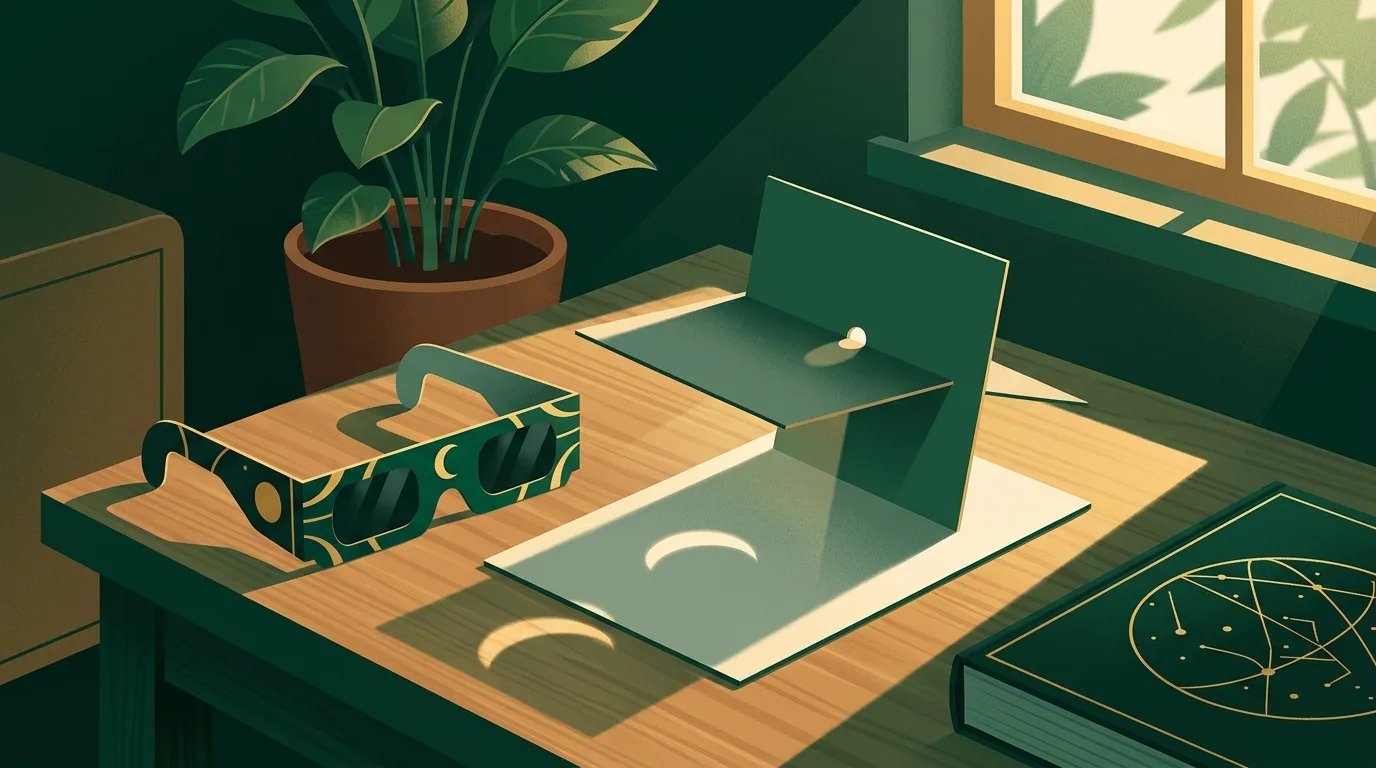
- Pinhole projection is free, safe and works with a sheet of card. Punch a small hole, let sunlight pass through onto a second sheet, and watch the crescent appear.
In Spain the Sun sets soon after totality, which means haze near the horizon can dim the view. That haze is not a filter. Keep the glasses on outside totality anyway.
The next total solar eclipses
If you miss this one, or if you catch it and immediately want another, the calendar is unusually generous over the next few years.
| Date | Where totality passes | Maximum totality |
|---|---|---|
| 12 August 2026 | Greenland, Iceland, northern Spain | About 2 min 18 s |
| 2 August 2027 | Southern Spain, North Africa, Egypt, Saudi Arabia | About 6 min 23 s |
| 22 July 2028 | Australia and New Zealand | About 5 min 10 s |
| 25 November 2030 | Southern Africa and Australia | About 3 min 44 s |
The 2027 eclipse is the one to plan for. Its totality over Luxor in Egypt runs past six minutes, the longest stretch of totality over land this century. Spain gets a rare double: totality in the north in 2026, totality in the south a year later.
Frequently asked questions
What are the most interesting facts about the 2026 solar eclipse?
It is the first total solar eclipse over mainland Spain since 1905, it falls on the peak night of the Perseid meteor shower, and its shadow is around 294 km wide because it strikes the Earth at such a shallow angle. Spain sees it with the Sun under ten degrees above the horizon, and gets a second totality only thirteen months later on 2 August 2027. After that the European mainland waits until 2081.
What time is the total solar eclipse on 12 August 2026?
It depends where you stand. Iceland sees totality in the late afternoon, around 17:48 local time in the Reykjavik area. Northern Spain sees it in the final minutes before sunset, roughly 20:27 to 20:32 CEST depending on the city. Partial phases begin over an hour earlier.
Where is the best place to see the 2026 eclipse?
For duration and Sun height, western Iceland is the strongest option, with roughly a minute of totality and the Sun around 25 degrees up. For weather odds and easier travel, inland northern Spain around Zaragoza offers about a minute and a half, though the Sun sits only a few degrees above the horizon, so a clear western view matters.
Will Germany, the UK or France see the total eclipse?
No. They see a deep partial eclipse. The path of totality only touches Greenland, Iceland and Spain on the European side. A 90 percent partial eclipse still leaves the sky bright, because the remaining sliver of Sun is thousands of times brighter than the full Moon.
How long will the 2026 eclipse last?
Totality lasts up to about 2 minutes 18 seconds at the point of greatest eclipse over the North Atlantic. On land, expect between 30 seconds and roughly 1 minute 40 seconds. The full sequence, from first contact to the end of the partial phase, runs well over two hours.
Why is the 2026 eclipse a big deal in Europe?
It is the first total solar eclipse visible from mainland Europe since 11 August 1999. A whole generation has grown up without seeing totality without leaving the continent.
Do I need eclipse glasses if the Sun is low and orange?
Yes. A low Sun looks gentler because the atmosphere scatters some of its light, but it still emits enough infrared and ultraviolet to damage the retina during a long stare. Use ISO 12312-2 filters for every phase except totality itself.
Can I photograph the eclipse with a phone?
You can, but a phone sensor will render the partial phases as a bright blob unless you put a certified solar filter over the lens. During totality, no filter is needed and phones capture the corona surprisingly well. Never point an unfiltered camera at the partial Sun while looking through the viewfinder.
Why do solar eclipses not happen every new moon?
The Moon's orbit is tilted roughly 5 degrees relative to Earth's orbit around the Sun, so most new moons the shadow passes above or below Earth. Eclipses only occur when a new moon lines up near one of the two nodes where the two orbital planes cross.
When is the next total solar eclipse after 2026?
2 August 2027, crossing southern Spain, North Africa and the Middle East. Totality near Luxor lasts more than six minutes, the longest over land this century.
How dark does it get during a total solar eclipse?
About as dark as the half hour after sunset, not pitch black. Daylight falls by a factor of roughly ten thousand in the final minute, which is fast enough to feel wrong. Venus and the brighter stars appear, the horizon stays lit in every direction because you are looking out from under a shadow only 294 km wide, and the temperature drops several degrees.
Can you look at a solar eclipse through sunglasses?
No, not even very dark ones. Certified eclipse filters cut visible light to roughly one part in three hundred thousand and block almost all infrared and ultraviolet. Sunglasses pass ten to twenty percent, thousands of times too much. The only moment filters come off is during totality itself, and only if you are standing inside the path.
What happens to animals during a total solar eclipse?
Birds stop singing and go to roost, crickets start up, bees return to the hive and cattle head for the gate. Citizen science projects during the 2017 eclipse across the United States logged the behaviour at hundreds of sites. The animals read it as an unusually abrupt dusk, then get a false dawn two minutes later.
How often does a total solar eclipse happen in the same place?
On average about once every 375 years for any given point on Earth, but the spacing is wildly uneven rather than regular. Northern Spain gets one in August 2026 and southern Spain gets another thirteen months later, after 121 years with none at all.
Read next
Why do solar eclipses happen?
The tilted orbit, the nodes, and the 400-times coincidence that makes totality possible.
SafetyHow to watch a solar eclipse safely
What ISO 12312-2 actually means, and the one moment when glasses come off.
PlanningWhere to see the next total solar eclipse
Every total eclipse through 2045, with dates, locations and how long totality lasts.
Quiz40 solar eclipse trivia questions
From Baily's beads to the eclipse that stopped a war, with answers.
ReferenceTotal solar eclipses in Europe
Every European totality from 1999 to 2090, including Germany in 2081.
CourseEinstein for everyone: relativity
The theory the 1919 eclipse confirmed, explained without the maths.
CourseMapping our solar system
Where the Moon sits in the bigger picture of orbits, distances and scale.
EventOktoberfest 2026
The next event pillar: 191 years of Munich's Wiesn, in numbers and free courses.
EventNobel Prize week 2026
The announcements run 5 to 12 October. Here is how the prize actually works.
Learn something new in 5 minutes a day
NerdSip turns any topic into a short course with quizzes, XP, and streaks. Free to start, no doomscrolling required.
4.7 stars from 510 reviews · 10,000+ learners