
Quick answer: A Maß costs €14.80 to €15.90 at Oktoberfest 2026. It cost 1.70 Deutsche Mark through the 1950s. Below is the complete year-by-year record from 1949 to 2026, with the Deutsche Mark years converted to euros so the whole series is comparable.
Every year around July, Munich publishes the Oktoberfest price list and every year the same headline runs. This page exists so you can check the actual number instead of the headline.
The full price table, 1949 to 2026
Prices are for one Maß, a full litre of Wiesn beer. Deutsche Mark figures are converted at the fixed 1999 conversion rate of 1.95583 DM to the euro, so the euro column is nominal, not inflation-adjusted.
| Year | Cheapest tent | Most expensive tent | In euros (converted) |
|---|---|---|---|
| 1949 to 1958 | 1.70 DM | 1.70 DM | €0.87 |
| 1959 to 1962 | 1.90 DM | 1.90 DM | €0.97 |
| 1963 to 1967 | 2.20 DM | 2.20 DM | €1.12 |
| 1968 to 1969 | 2.40 DM | 2.40 DM | €1.23 |
| 1970 | 2.65 DM | 2.65 DM | €1.35 |
| 1975 | 3.50 DM | 3.75 DM | €1.79 to €1.92 |
| 1980 | 4.80 DM | 4.90 DM | €2.45 to €2.51 |
| 1985 | 5.90 DM | 6.30 DM | €3.02 to €3.22 |
| 1990 | 6.95 DM | 7.55 DM | €3.55 to €3.86 |
| 1995 | 9.50 DM | 10.40 DM | €4.86 to €5.32 |
| 1999 | 10.70 DM | 11.80 DM | €5.47 to €6.03 |
| 2001 | 11.70 DM | 12.80 DM | €5.98 to €6.54 |
| 2002 | first euro year | €6.30 to €6.80 | |
| 2005 | €6.80 to €7.25 | ||
| 2010 | €8.30 to €8.90 | ||
| 2015 | €10.00 to €10.40 | ||
| 2018 | €10.70 to €11.50 | ||
| 2019 | €10.80 to €11.80 | ||
| 2020 and 2021 | Festival cancelled, COVID-19 pandemic | ||
| 2022 | €12.60 to €13.80 | ||
| 2023 | €12.60 to €14.90 | ||
| 2024 | €13.60 to €15.30 | ||
| 2025 | €14.50 to €15.80 | ||
| 2026 | €14.80 to €15.90 | ||
Sources: the published Oktoberfest price lists collected by pressenet and the official 2026 price list published by the City of Munich. Deutsche Mark converted at 1.95583 DM per euro. Full-year detail for every year between 1971 and 2019 exists in the same sources; the table above shows five-year markers for readability plus every year since 2018.
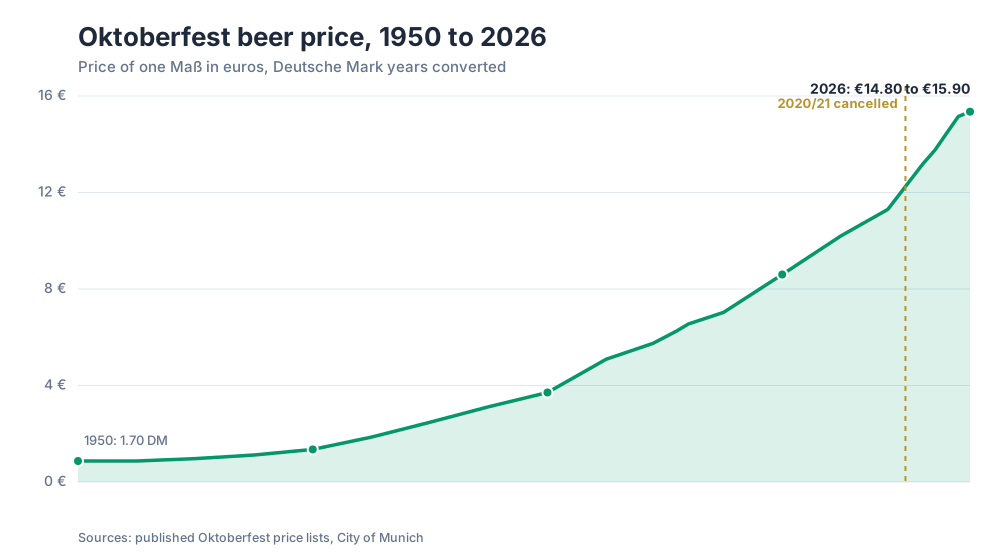
What the series actually shows
The price has never fallen. Not once in the modern record. It has been flat for stretches, most famously the nine years from 1949 to 1958, and it has risen every year since 2004. The only breaks in the line are 2020 and 2021, when there was no festival to price.
The pandemic gap did the damage. The last pre-COVID festival, in 2019, topped out at €11.80. The next one, in 2022, opened at €13.80 at the top end. Two festivals were skipped, three years of cost increases were not. By 2023 the top price hit €14.90, a 26 percent rise on 2019.
2026 is a mild year by recent standards. The average rise is about 2.4 percent, against 4.4 percent in 2025 and roughly 6 percent in 2023. In a decade of headlines about beer inflation, this one is close to ordinary German consumer inflation.
The spread between tents has widened. In 1970 every tent charged 2.65 DM. In 2026 the gap between cheapest and dearest is €1.10, which is more than the entire price of a Maß in 1963.
Who sets the price
Not the city, though people assume otherwise. Each tent operator negotiates with its brewery and submits a price, which the City of Munich reviews and publishes as a list. The city applies political pressure in years when the proposed jumps look excessive, but there is no legal cap.
What sits inside the price is easy to underestimate. A tent that seats several thousand people is built from nothing each summer and taken down after 16 days. That covers construction, the pitch fee, staff, security, insurance, waste, and the beer itself, which is brewed to a stronger festival specification than standard Munich Helles.
The one thing that has never changed is the vessel. Beer at the Wiesn comes in a litre, and only a litre, in the large tents. There is no small measure to retreat to when the price rises.
The prices nobody quotes
The beer headline hides that the alcohol-free side of the menu is not cheap either. In 2026, non-alcoholic drinks are also sold by the litre: table water lands around €11 and lemonade around €12.50. On a per-litre basis, choosing not to drink beer saves you roughly three or four euros, not half your bill.
Munich's own closing report shows why this matters. Alcohol-free beer demand rose 6 to 10 percent in 2025 depending on the tent, and beer consumption has fallen three years running while attendance stayed near six and a half million. The drinking is changing faster than the pricing is.
Using this data
This table is free to quote. If you use it, a link back to this page is appreciated, and the underlying sources are listed under the table so you can verify any single year yourself. Cite it as: NerdSip, "Oktoberfest Beer Price History, 1949 to 2026", nerdsip.com/blog/oktoberfest-beer-price-history, updated July 2026.
For the rest of the festival in numbers, see Oktoberfest by the numbers. For how the whole thing started, see the history of Oktoberfest. The dates, the rules and three free courses are on our Oktoberfest 2026 event page.
Frequently Asked Questions
How much does a beer cost at Oktoberfest 2026?
Between €14.80 and €15.90 for a Maß, one full litre, depending on the tent. That is an average increase of about 2.4 percent over 2025, one of the smaller rises of the past decade.
How much did a Maß cost in 1950?
1.70 Deutsche Mark, the price that held from 1949 to 1958. Converted at the fixed 1999 rate of 1.95583 DM to the euro, that is about €0.87 in nominal terms, before any inflation adjustment.
Has the Oktoberfest beer price ever fallen?
Not in the modern record. The price has risen or held flat every year since the 1950s and has risen every year since 2004. The only interruptions are the years with no festival at all: 2020 and 2021.
Why is Oktoberfest beer so expensive?
Three reasons stack. Wiesn beer is brewed to a stronger specification than standard Helles by one of six Munich breweries, it is sold by the litre rather than the half litre, and the price has to carry a tent that exists for 16 days: construction, staff, security, insurance and the pitch fee. The City of Munich reviews the prices but does not fix them.
Which tent has the cheapest beer at Oktoberfest?
The Augustiner-Festhalle has traditionally held the lowest price in the large tents, and did so again in 2025 and 2026. The most expensive prices are usually found in the newer or smaller tents.
How much has the Oktoberfest beer price risen since 2010?
The cheapest Maß went from €8.30 in 2010 to €14.80 in 2026, a rise of about 78 percent. The most expensive went from €8.90 to €15.90, about 79 percent. Over the same period German consumer prices rose far less, which is why the Wiesn price makes headlines every year.
Every NerdSip course clears a four-layer fact-checking pipeline before it reaches the app: grounded in live sources, scored nightly, gated on failure, and reviewable by a person at one tap. Articles on this blog are drafted with AI assistance, then researched, verified, and edited by our team.
Editorial responsibility: ai51 UG (haftungsbeschränkt). Responsible editor named in the imprint.
📚 Keep Learning
Explore the NerdSip learning hubs
The blog is our editorial layer. When you want to move from reading into doing, these hubs organize the rest of NerdSip by format, including the app itself and the press that has written about it.
Keep going: five-minute courses on this
Pick one and finish it before your coffee cools. Every lesson ends with a quick question, so it sticks instead of scrolling past.
Courses on this topic
4.7 stars from 510 reviews · 10,000+ learners