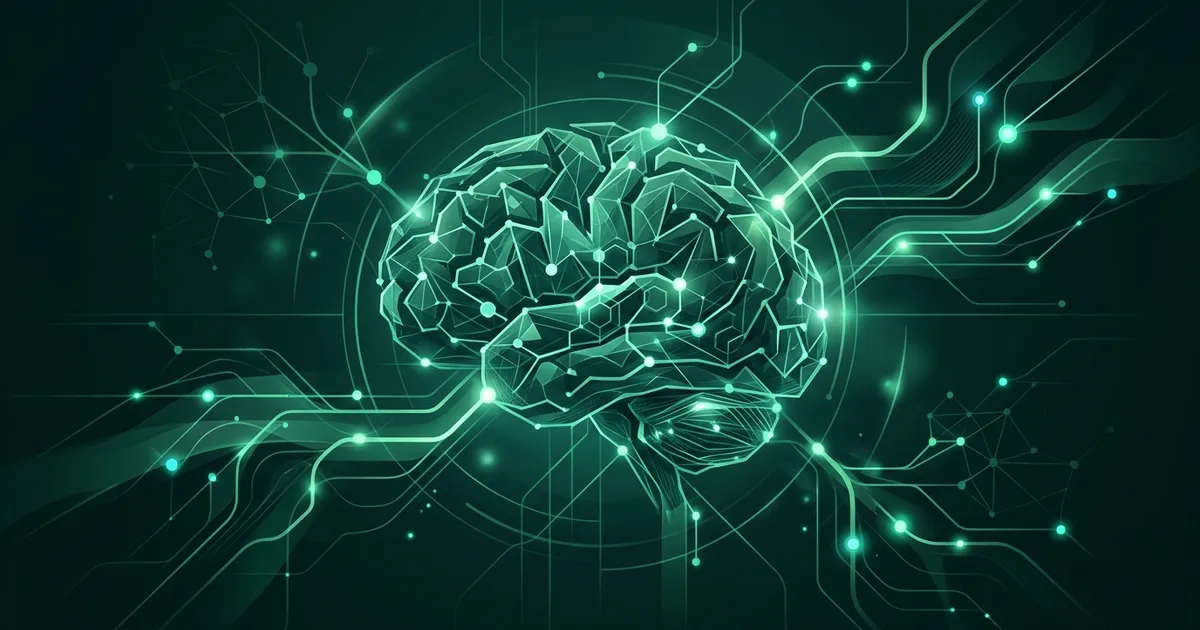
The textbook answer is that the brain processes information. That is true, and almost useless, because it describes a pocket calculator equally well.
A better answer has two parts, and neither of them is thinking.
Job one: keep the body alive
Breathing. Heart rate. Blood pressure. Body temperature. Hunger, thirst, swallowing, the switch between sleep and waking. These run continuously, without your involvement, and they are handled by the oldest structures in the brain: the brainstem and the hypothalamus.
This is not a background task. It is the load-bearing one. Damage to the cortex can cost a person language, or memory, or the ability to recognise faces, and they remain alive. Damage to the brainstem is a different category of event entirely. Every signal travelling between your brain and your body passes through it.
The hypothalamus deserves particular respect for its size. About four grams of tissue, roughly an almond, running your temperature, your appetite, your circadian clock and your entire hormone system. It has more influence over your day than any decision you consciously make.
Job two: predict what happens next
This is the part that reshaped how neuroscientists talk about the brain over the past two decades.
The intuitive model is a camera. Light hits your eyes, the signal travels to the visual cortex, an image appears in your awareness, you react. Clean, and mostly wrong.
What actually happens is closer to the reverse. The brain constantly generates predictions about what it expects to sense, sends those predictions down toward the sensory areas, and compares them against what arrives. What travels back up is largely the error: the part the prediction got wrong. When the prediction is accurate, very little needs to travel at all.
This is a much cheaper way to run a body. Your senses collect an enormous volume of raw data, and processing all of it in full would be metabolically ruinous for an organ already consuming a fifth of your energy budget. Predicting most of it and only paying attention to the surprises solves that problem.
It also explains things the camera model cannot. Why you can misjudge a staircase and lurch violently on a step that is not there, because your brain had already committed to the prediction. Why the same grey looks different against different backgrounds. Why you stop hearing a fridge hum until it stops.
Everything else is built on those two
Language, planning, empathy, doing your taxes. None of these are separate departments. They run on machinery that evolved for keeping a body alive and getting it to the right place before something ate it.
The clearest illustration in nature is the sea squirt. In its larval stage it swims, and it has a simple nervous system to do the swimming. When it matures it attaches itself permanently to a rock, stops moving, and then digests its own brain. It no longer needs one. A brain is what an organism has because it moves.
Thinking, on this account, is prediction that has run so far ahead of the present moment that it stops resembling perception. Planning next week is the same operation as catching a ball, extended in time.
Where each job lives
Survival functions concentrate in the brainstem and hypothalamus. Prediction is distributed across the cortex, with different regions specialising in different kinds of expectation: the occipital lobe for what you are about to see, the temporal lobe for what you are about to hear, the frontal lobe for what is about to happen if you act.
None of these boundaries are as clean as a diagram suggests. The lobes are named after the skull bones above them, not after any real seam in the tissue, and every interesting function turns out to live in a network cutting straight across the lines. Our interactive map of the human brain shows where each region sits and what it contributes.
The useful takeaway
If you want a one-sentence version: your brain's primary function is to keep you alive by guessing well.
That framing is worth carrying around, because it makes several otherwise strange facts obvious. Why surprise is exhausting. Why routine is comfortable and unpredictability is not. Why learning something new feels like effort in a way that recalling something familiar does not. Every one of those is a prediction system paying its running costs.
What this means for learning
If the brain runs on prediction, then learning is the business of improving your predictions, and the signal that drives it is being wrong.
That single idea explains why the study methods that feel productive are usually the weak ones. Rereading a chapter produces no prediction and therefore no error, which is why it feels smooth and leaves so little behind. Closing the book and trying to recall the chapter forces a prediction, exposes exactly where it fails, and that failure is the thing your brain updates on.
It also explains why the harder method feels worse. Testing yourself is uncomfortable precisely because it surfaces error, and error is the expensive signal the system was built to minimise. The discomfort is not a sign you are doing it wrong. It is the sign anything is happening at all.
So the practical version of this page is short. Predict before you check. Recall before you reread. Let yourself be wrong early, while being wrong is still cheap.
Frequently Asked Questions
What is the main function of the human brain?
Keeping the body alive and predicting what is about to happen. The brainstem and hypothalamus handle survival functions like breathing and temperature, while the cortex generates continuous predictions about incoming sensory information.
Does the brain react or predict?
Mostly predict. Rather than passively waiting for sensory input, the brain generates expectations about what it is about to sense and then processes the difference between the expectation and the actual signal. This is far cheaper in energy terms than processing everything from scratch.
What part of the brain keeps you alive?
The brainstem, made up of the midbrain, pons and medulla, controls breathing, heart rate, blood pressure and swallowing. The hypothalamus manages temperature, hunger, thirst and the sleep and wake cycle.
Is thinking the brain's main job?
No. Thinking is a late addition built on much older machinery. Every brain in nature exists to move a body through a world successfully, and organisms that stop moving, like the sea squirt, digest their own nervous systems.
Every NerdSip course clears a four-layer fact-checking pipeline before it reaches the app: grounded in live sources, scored nightly, gated on failure, and reviewable by a person at one tap. Articles on this blog are drafted with AI assistance, then researched, verified, and edited by our team.
Editorial responsibility: ai51 UG (haftungsbeschränkt). Responsible editor named in the imprint.
📚 Keep Learning
- How Many Brain Cells Does a Human Have?
- The Main Regions of the Human Brain, Explained
- When Does the Human Brain Fully Develop?
- How the Human Brain Processes Information
- 27 Mind-Blowing Brain Facts That Will Change How You Think About Thinking
- Neuroplasticity: How Your Brain Rewires Itself (At Any Age)
Explore the NerdSip learning hubs
The blog is our editorial layer. When you want to move from reading into doing, these hubs organize the rest of NerdSip by format, including the app itself and the press that has written about it.
Learn one real thing today
NerdSip turns any topic you type into a fact-checked five-minute course, brain science included. Free to start.
4.7 stars from 380 reviews · 8,900+ learners